China Signals Bigger Digital Yuan Push as Beijing Targets Wider Global Use of the RMB
Key Takeaways
- •The PBOC has placed digital yuan development and RMB internationalization among the priorities in its 15th Five-Year Reform and Development Plan, signaling a long-term policy commitment.
- •Pilot programs for the e-CNY launched in 2020 have expanded to cover retail payments, public transit, government salaries, and subsidy distributions across multiple Chinese cities.
- •By 2024, the RMB had become the fourth most-used currency in global payments tracked by SWIFT, though its share remained in the single digits compared to the dollar's approximately 47 percent.
- •China is developing cross-border digital payment capabilities through the mBridge project, a multi-CBDC platform involving the central banks of Hong Kong, Thailand, the United Arab Emirates, and Saudi Arabia.
- •The success of the digital yuan as an international currency will depend on factors beyond technology, including investor confidence, market liquidity, convertibility, and the depth of China's financial markets.
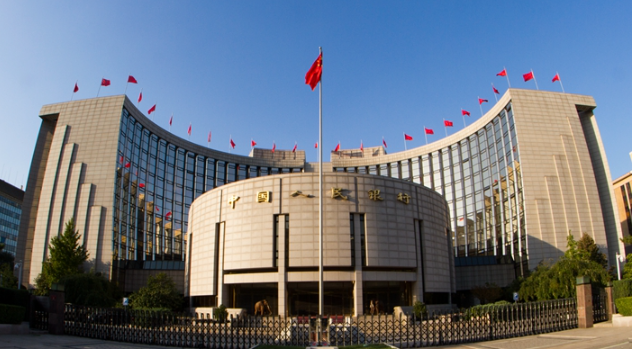
China Signals Bigger Digital Yuan Push as Beijing Targets Wider Global Use of the RMB
China's central bank has outlined a new long-term reform agenda that includes plans to steadily develop the digital yuan and expand the international use of the renminbi (RMB), reinforcing Beijing's broader effort to modernize its financial system and strengthen the currency's role in global trade.
The People's Bank of China (PBOC) included the digital yuan — officially known as the e-CNY — and the internationalization of the RMB among the priorities outlined in its 15th Five-Year Reform and Development Plan. The policy direction signals that China views digital payments and currency modernization as increasingly important components of its financial strategy.
The announcement comes as governments around the world explore central bank digital currencies (CBDCs), cross-border payment systems, and alternatives to traditional international settlement infrastructure. For China, the development of the digital yuan is not simply a technology project; it is connected to a broader effort to improve payment efficiency, strengthen financial infrastructure, and expand the role of the RMB in international commerce.
Digital Yuan Placed on Long-Term Reform Agenda
The PBOC's latest plan provides a roadmap for financial reform during the country's next five-year planning period. Among the priorities is the continued development of the digital yuan.
The central bank has already conducted extensive testing of the digital currency across numerous cities and economic sectors. Pilots that launched in 2020 in cities including Shenzhen, Suzhou, Chengdu, and the Xiong'an New Area have since expanded to additional regions, covering retail payments, public transit, government salary disbursements, and consumption subsidy programs. The next phase is expected to focus increasingly on expanding practical use cases and improving the infrastructure supporting digital payments.
The inclusion of the digital yuan in a national reform and development plan gives the project additional strategic importance. Rather than treating the digital currency as a limited pilot program, Beijing appears to be positioning it as part of the country's longer-term financial infrastructure.
What Is the Digital Yuan?
The digital yuan is a central bank digital currency issued by the People's Bank of China. Unlike decentralized cryptocurrencies such as Bitcoin, the digital yuan is centrally controlled by China's monetary authorities. It is designed to function as a digital form of China's existing currency and can be used for payments through supported digital wallets and payment platforms.
The system is intended to provide another layer of China's payment infrastructure while allowing the central bank to maintain oversight of the currency. China has spent years developing and testing the system, making it one of the most advanced major CBDC projects in the world.
Beijing Wants More International RMB Usage
The digital yuan is only one part of China's broader financial strategy. The latest plan also emphasizes expanding the use of the renminbi in global trade.
The RMB already plays an important role in China's international economic relationships, but the U.S. dollar remains the dominant currency for global trade and financial transactions. By 2024, the RMB had risen to become the fourth most-used currency in global payments tracked by SWIFT, though its share remained in the single digits compared to the dollar's roughly 47 percent. China has increasingly encouraged companies and trading partners to settle transactions in RMB. The goal is not necessarily to immediately replace the dollar; instead, Beijing appears focused on increasing the number of international transactions that can be conducted directly in its own currency.
Digital Payments Could Support Cross-Border Trade
One potential advantage of a digital currency is the ability to develop more efficient cross-border payment infrastructure. Traditional international payments can involve multiple banks, intermediaries, and settlement systems, processes that can increase costs and take time. Digital currency technology could potentially streamline parts of that process.
China has already been exploring this dimension through the mBridge project, a multi-CBDC cross-border settlement platform developed in collaboration with the central banks of Hong Kong, Thailand, and the United Arab Emirates, with Saudi Arabia's central bank later joining as a full participant. The project has demonstrated how CBDCs from different jurisdictions could settle cross-border transactions on a single shared ledger.
For China, a more integrated digital payment network could make RMB-based transactions easier for international businesses, supporting the government's broader efforts to increase the currency's use in trade.
China Is Not Alone in Exploring Digital Currency
The development of the digital yuan is taking place as central banks around the world examine their own digital currency projects. Countries and monetary authorities have been studying whether CBDCs could improve payment systems, increase financial inclusion, and modernize existing monetary infrastructure. Some jurisdictions have launched limited CBDC programs, while others remain in the research or testing phase.
China's early lead gives the digital yuan particular significance. The country has already accumulated years of experience testing digital currency payments in real-world environments.
The Digital Yuan and China's Domestic Economy
Domestically, the digital yuan could play several roles. It can provide consumers with another way to make payments and can also support government programs, targeted payments, and financial innovation. Businesses could potentially use the system for faster settlement and automated transactions.
China's large digital payment ecosystem provides a strong environment for testing these capabilities. The country already has widespread mobile payment adoption, meaning the digital yuan does not need to create digital payments from scratch. Instead, it is being introduced into an economy where consumers are already comfortable using smartphones for everyday transactions.
Competition in Global Financial Infrastructure
The push for greater RMB use also reflects broader competition over global financial infrastructure. For decades, the international financial system has been heavily influenced by the U.S. dollar and institutions connected to Western economies. China has increasingly sought to strengthen alternative payment channels and increase the use of the RMB in bilateral trade.
China already operates the Cross-Border Interbank Payment System (CIPS), established in 2015 to handle RMB-denominated cross-border clearing independently of traditional dollar-based settlement rails. The system has grown steadily in both participant numbers and transaction volume, providing an existing institutional foundation on which further RMB internationalization can build.
Digital technology could support that effort. If cross-border digital RMB transactions become easier and more efficient, businesses may have additional incentives to settle certain transactions directly in RMB.
The Role of China's Trade Relationships
China is one of the world's largest trading economies, and its extensive trade relationships provide a natural foundation for increasing RMB usage. Energy, commodities, manufactured goods, and infrastructure projects could all potentially involve RMB-based settlement. The more international companies use the currency for trade, the more useful the RMB becomes as a global settlement currency, creating a potential network effect in which greater adoption encourages further adoption.
China's Belt and Road Connections
China's international infrastructure and investment relationships could also provide opportunities for RMB expansion. Countries participating in Chinese-backed infrastructure and trade projects may have greater exposure to China's financial system, creating additional opportunities for RMB settlement. The expanded BRICS grouping, which admitted new members in 2024, has also discussed increasing trade settlement in local currencies rather than relying solely on the dollar, providing a further multilateral channel for RMB promotion.
A digital RMB infrastructure could eventually complement traditional banking arrangements and make certain cross-border transactions easier to process. However, widespread international adoption would depend on many factors beyond technology. Trust, liquidity, convertibility, and financial-market depth would all remain important considerations.
Can the Digital Yuan Challenge the Dollar?
The digital yuan has generated speculation about whether China could use the technology to challenge the dominance of the U.S. dollar. That outcome is far from guaranteed. Currency dominance depends on much more than payment technology. The size and openness of financial markets, investor confidence, legal institutions, liquidity, and geopolitical relationships all play major roles.
The dollar's position is supported by a deep global financial ecosystem that has developed over decades. China would therefore face a substantial challenge if it wanted the RMB to become a dominant global reserve currency. Still, increasing RMB usage could gradually reduce China's dependence on dollar-based settlement.
Digital Yuan Could Reduce Payment Friction
One of the strongest arguments for digital currencies is efficiency. If payment systems can connect more directly, transactions may require fewer intermediaries, potentially reducing costs for businesses. For international trade, even small improvements in payment efficiency can become significant when applied to billions of dollars in transactions.
China's latest policy direction suggests that the government sees these potential advantages as strategically important.
Privacy and Control Remain Important Questions
The digital yuan also raises questions about privacy and government oversight. Because the currency is issued and managed by a central bank, authorities have greater control over the system than they would with decentralized cryptocurrencies.
Supporters argue that this can improve financial security and help combat fraud and illegal transactions. Critics, however, have raised concerns about surveillance and the degree of control that authorities could potentially exercise over digital transactions. Those questions are likely to remain part of the international debate surrounding China's digital currency.
Implications for the Cryptocurrency Industry
The development of the digital yuan also has implications for the broader cryptocurrency market. Central bank digital currencies differ fundamentally from decentralized cryptocurrencies. Bitcoin operates through a decentralized network and is not controlled by a central bank, while the digital yuan is a sovereign currency managed by China's monetary authorities.
Nevertheless, both developments reflect the same broader transformation of money toward digital infrastructure. The rise of CBDCs could influence how consumers and businesses think about digital payments and financial assets.
China Wants Financial Technology Leadership
Beijing's latest plan is also part of a larger ambition to maintain China's position as a leader in financial technology. China has invested heavily in digital payments, mobile banking, fintech, and blockchain-related infrastructure. The digital yuan builds on that technological foundation.
The government appears to view financial technology as an important part of national competitiveness. The ability to develop and operate modern payment infrastructure could become increasingly valuable as global commerce becomes more digital.
What the Five-Year Plan Could Mean
The significance of the new plan lies partly in its long-term nature. Five-year planning remains an important tool for China's economic policy. By including digital yuan development and RMB internationalization in its reform agenda, Beijing is signaling that these objectives will remain priorities rather than temporary experiments.
That could mean continued investment in infrastructure, cross-border payment systems, and digital currency research. It may also encourage financial institutions and businesses to develop products that make greater use of the RMB.
A Gradual Strategy
China's approach appears likely to remain gradual. Rather than attempting to immediately replace existing international payment systems, authorities can expand the digital yuan through targeted use cases. Domestic adoption can provide experience, cross-border pilot programs can test international applications, and trade partners can gradually become more familiar with RMB settlement. Over time, those developments could increase the currency's international footprint.
Global Markets Will Be Watching
Financial markets are likely to pay close attention to China's progress. Investors will want to know whether the digital yuan can achieve meaningful adoption outside China, and whether RMB settlement becomes more common in international trade. Key milestones to watch include whether additional central banks join or deepen participation in multi-CBDC cross-border platforms like mBridge, whether the digital yuan expands beyond pilot cities into nationwide circulation, and whether more of China's bilateral trade agreements incorporate RMB settlement provisions.
The success of these initiatives could influence global payment companies, banks, and financial institutions. It could also affect the broader debate over the future of international monetary systems.
The Bigger Picture
China's latest financial reform plan shows that the digital yuan is becoming more deeply integrated into Beijing's long-term economic strategy. The objective is to build a modern financial infrastructure capable of supporting China's increasingly digital economy while potentially expanding the international role of its currency.
The push to increase RMB usage could become especially significant as global trade becomes more fragmented and countries explore ways to diversify their payment relationships. For China, greater use of the RMB could provide additional flexibility in international commerce, with the digital yuan eventually becoming one of the tools supporting that objective.
Whether it becomes a major international currency, however, will depend on factors that go well beyond technology. China will need to build confidence among international businesses, maintain sufficient liquidity, and make cross-border transactions attractive and reliable.
For now, the message from Beijing is clear: the digital yuan remains a long-term priority, and China intends to continue building the infrastructure needed to support it. As countries around the world rethink payments, digital currencies, and international settlement systems, China's approach could become one of the most closely watched experiments in the evolution of money.
