China Accelerates Its Economic Push Across Central Asia
Key Takeaways
- •China has become the largest trade partner for multiple Central Asian nations, including Uzbekistan, Tajikistan, and Turkmenistan, during the first half of 2026.
- •Kazakhstan and China are planning to connect their financial systems, including pilot programs for digital tenge and digital yuan transactions.
- •The number of Chinese joint ventures and companies operating in Uzbekistan has nearly doubled since 2022, reaching over 6,000 in early 2026.
- •Tajikistan is seeking to import gasoline and diesel from China to diversify its fuel supply following damage to Russian energy infrastructure.
- •Turkmenistan's state gas company has contracted a Chinese firm to service gas turbines, underscoring the deep energy interdependence between the two nations.
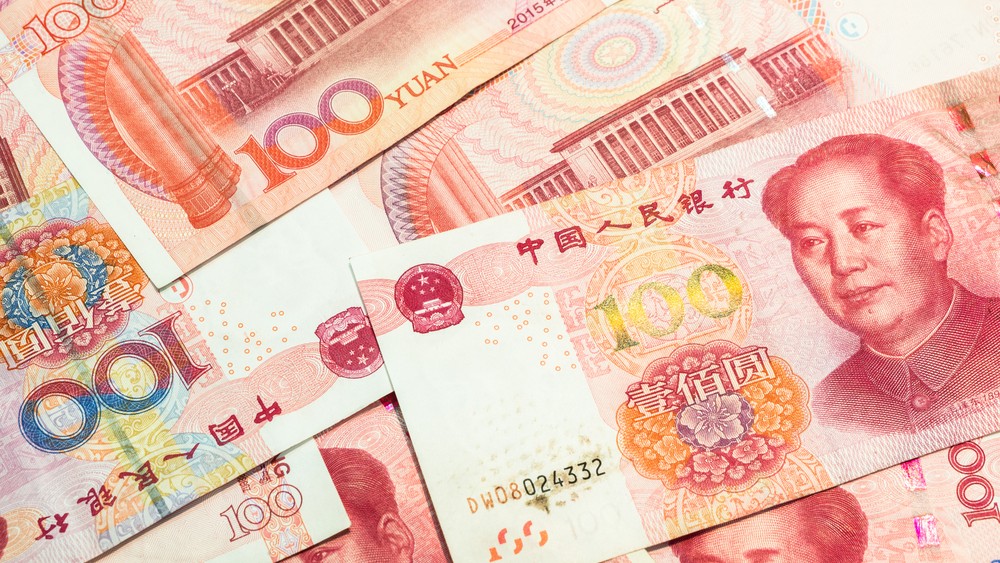
China is rapidly expanding its economic footprint across Central Asia, with new trade data, infrastructure deals, and institutional partnerships signaling a deepening of Beijing's influence throughout the region during the first half of 2026. The push builds on more than a decade of engagement under the Belt and Road Initiative, which identified Central Asia as a critical overland corridor connecting China to European markets, and follows the institutional framework established at the first China–Central Asia Summit in Xi'an in 2023, where Beijing pledged to deepen trade, energy, and infrastructure ties with all five republics.
Uzbekistan
Uzbekistan, one of Central Asia's key economic engines, has seen a marked expansion of Chinese economic influence. Bilateral trade during the first half of 2026 reached $7.7 billion, according to official Uzbek government data, cementing China's position as the country's largest trade partner by a wide margin. Beijing's own statistics put the figure even higher, at $8.9 billion. Russia, historically Uzbekistan's dominant partner, recorded bilateral trade turnover of $5.8 billion over the same period.
The number of Chinese-Uzbek joint ventures and wholly owned Chinese companies rose to 6,060 in the first half of 2026, spanning mining, industrial production, energy, and other strategic sectors. The pace of growth has accelerated sharply: there were 2,241 such entities in 2022 and 3,357 by 2024, meaning the total has nearly doubled since then. Russia, which led in the number of companies operating in Uzbekistan as recently as 2023, now has 3,454 firms active in the country. The surge in Chinese business activity coincides with Uzbekistan's broader economic liberalization agenda under President Shavkat Mirziyoyev, who has pursued privatization, currency convertibility, and foreign investment attraction since taking office in 2016.
Chinese tourism to Uzbekistan is also surging. In the first half of 2026, 223,479 Chinese citizens visited the country, compared to 278,900 for all of 2025 and just 74,300 in the year prior. The introduction of a visa-free regime for short-term visits in mid-2025 means all such trips are classified as tourism, though many visitors arrive for business purposes, including meetings, negotiations, and exploratory missions. The rising flow of visitors points to further growth in bilateral economic ties.
Kazakhstan
Kazakhstan, China's largest trade partner in Central Asia, and China are deepening financial integration, with plans to link their payment systems and broaden the use of digital financial technologies. Following discussions between Kazakhstan's National Bank, the People's Bank of China, and the Industrial and Commercial Bank of China, the parties agreed to roll out mutual QR payments, establish a connection to China's cross-border payment infrastructure, and launch pilot settlements between the digital tenge and digital yuan, according to DigitalBusiness.kz. The pilots align with Beijing's broader effort to internationalize the digital yuan through cross-border pilots in multiple jurisdictions.
Kazakhstan has also achieved record agricultural exports, with flax seed shipments surpassing 1 million tons for the first time, driven by robust demand from China—which absorbed roughly 40 percent of exports—and European markets, DigitalBusiness.kz reported.
In the scientific sphere, Kazakhstan and China have inaugurated an international laboratory at the Kazakh National Agrarian Research University focused on biological security, microbiology, and the One Health approach. The facility will support joint research on emerging infections, zoonotic disease monitoring, molecular diagnostics, and genomic technologies, giving Kazakh scientists access to Chinese research networks and advanced technologies, according to DKNews.kz.
Kyrgyzstan
The China Center for Information Industry Development, an influential in-house think tank advising China's Ministry of Industry and Information Technology, offered Kyrgyzstan free premium-class Chinese-made automobiles for the upcoming SCO summit in Bishkek. The gesture is intended to facilitate the center's entry into Central Asia, with center officials planning to begin cooperation with Kyrgyz experts before broadening contacts across the region, Economist.kg reported.
Tajikistan
Tajikistan's trade with China grew by approximately 50 percent during the first six months of 2026, reaching $1.78 billion and reinforcing China's status as the country's largest trade partner, according to Tajikistan's Statistics Agency. Beijing's figures differ significantly, placing bilateral turnover at $2.35 billion for the period.
China is also Tajikistan's largest single provider of humanitarian assistance, accounting for roughly one-sixth of the approximately $12.5 million in aid the country received during the first half of 2026.
The destruction of Russian energy infrastructure by Ukrainian drone strikes has pushed Tajikistan to diversify its fuel suppliers. Dushanbe has long relied on Russia for a substantial share of its fuel needs. Tajik officials are now in talks with China to import gasoline and diesel, Asia Plus reported. The two sides are still discussing potential supply routes, including direct deliveries through the Kulma border crossing or transit via neighboring countries. Tajikistan is also actively prospecting for domestic oil and gas reserves with Chinese assistance.
Turkmenistan
Chinese company NEW JCM has signed a contract with Turkmenistan's state gas company Turkmengaz to service eight DG-90L2 gas turbines at two compressor stations in the Dashoguz region, Takyk reported. The arrangement reinforces an already deep energy interdependence: Turkmenistan is the largest supplier of natural gas to China via the Central Asia–China gas pipeline, which has made Beijing Turkmenistan's dominant export customer since coming online in the late 2000s.
Source: Eurasianet
