Pollster G. Elliot Morris: Falling Gas Prices Won't Rescue Trump or Republicans in November
Key Takeaways
- •President Trump's approval rating has dropped to 36 percent with a net score of −25, representing the lowest point of his presidency and a historically poor rating compared to both Joe Biden's 2022 numbers and Trump's first-term figures.
- •Analyst G. Elliot Morris argues that declining gas prices will not reverse Trump's downward approval trajectory or meaningfully aid Republican candidates in the November midterms.
- •Average gas prices surged from roughly $3 to $4.50 per gallon after Trump's military engagement with Iran, briefly fell to $3.78 during a promoted ceasefire, and then rose again to $4.10 when that arrangement collapsed.
- •Political science research and recent electoral history demonstrate that voters form durable economic judgments that resist updating even when indicators such as inflation or fuel costs improve.
- •With the president's party historically losing ground in midterm cycles and Republicans holding slim margins in both chambers, entrenched negative public opinion poses a significant risk to their congressional majorities.
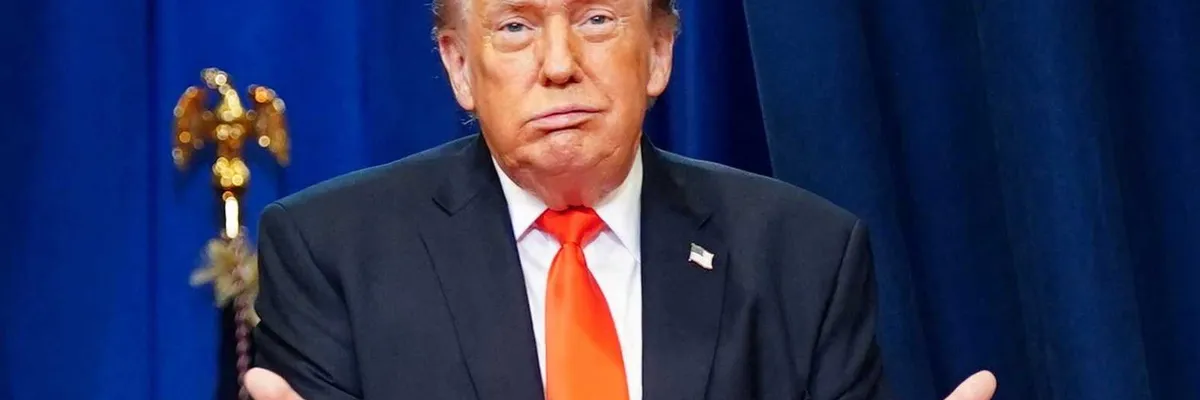
Republicans concerned with preserving their House or Senate majorities in November have been hoping for a turnaround driven by lower gas prices, but recent polling suggests those expectations may be misplaced. The president's party historically loses ground in midterm cycles, and with slim Republican margins in both chambers, even modest shifts could prove consequential. According to analyst G. Elliot Morris, public assessments of President Donald Trump and the Republican Party appear to be firmly established, leaving little room for improvement regardless of fuel cost trends.
Several new polls released this week pushed Trump to the lowest approval rating of his presidency. He reached a new low on consecutive days in the FiftyPlusOne approval tracker, registering 36 percent approval for a net score of −25. That figure represents a historically poor rating for a president at this stage of a term — worse than Joe Biden's corresponding numbers in 2022 and worse than Trump's own first-term ratings.
Morris, writing on his Substack, argued that declining gas prices will not reverse Trump's downward trajectory or aid the broader Republican ticket. "Cheaper gas didn't buy him much, if anything at all," Morris said, noting that Trump's popularity failed to rebound despite a brief drop in fuel costs over the summer.
Historically, a president's approval tends to decline as gas prices rise. Average prices surged from approximately $3 to $4.50 per gallon this spring following Trump's military engagement with Iran. Prices then fell to an average of $3.78 in early July when Trump and allied media promoted an Iran "ceasefire." However, national averages climbed back to $4.10 per gallon once that arrangement collapsed.
Morris observed that despite a temporary price decline before the ceasefire unraveled, Trump's approval ratings remained strikingly low. "While gas and approval had been closely linked from March through May, when Trump's approval fell, the June gas price ebbing did not result in a commensurate rise in approval for Trump," he wrote. "While gas prices recovered almost a dollar from peak, Trump's approval ticked up a few points. And then slides right back down to where it started."
The dynamic echoes a pattern seen during the Biden administration. Trump and the coalition that returned him to the White House never forgave Biden for the period of high inflation, even after it subsided. Trump repeatedly criticized Biden's economic record despite U.S. prices trending downward heading into November, when voters opted for Trump's promises over the incumbent Democrat.
Morris noted that voters in 2024 were reacting to the cumulative burden of elevated prices rather than the rate of inflation itself. When inflation "cools," prices do not decline — they simply rise at a slower pace. This finding aligns with longstanding research in political science showing that voters form durable judgments about economic conditions that resist updating even as underlying indicators improve.
"People loathe inflation precisely because they experience it as a permanent cut to their buying power, not a temporary rate that ticks up and down," Morris said. "… people tend to form their impressions of the president's handling of the economy and hold onto it."
Republicans are now banking on cheaper gas to improve their electoral prospects this November, Morris said, but the evidence from both Trump's presidency and Biden's suggests that Americans' evaluations are already fixed. Related coverage on Trump's declining standing and the broader economic landscape underscores the challenges facing the party, as does reporting on the Iran conflict's political fallout.
With approval at historic lows and voter perceptions described as entrenched, Morris concluded that there is little remaining opportunity for Trump or the Republican Party to shift public opinion before the midterm elections.

