Carbon Capture Industry Faces Mounting Scrutiny as Projects Underperform and Costs Climb
Key Takeaways
- •The World Economic Forum forecast in 2025 that the CCS industry could expand fourfold by the end of the decade.
- •Government support includes U.S. 45Q tax credits, Germany’s $5.7 billion scheme, and up to $29 billion in U.K. funding over 25 years.
- •An IEEFA review found most of 13 operating CCS projects captured less than their 90% design target, with some failing outright.
- •Only 50 CCS facilities were operating globally in 2024, with capacity equal to about one thousandth of global emissions.
- •Estimated CCS costs remain high, including $20 to $30 per MWh for U.S. gas power plants and $170 to $340 per tonne in Europe.
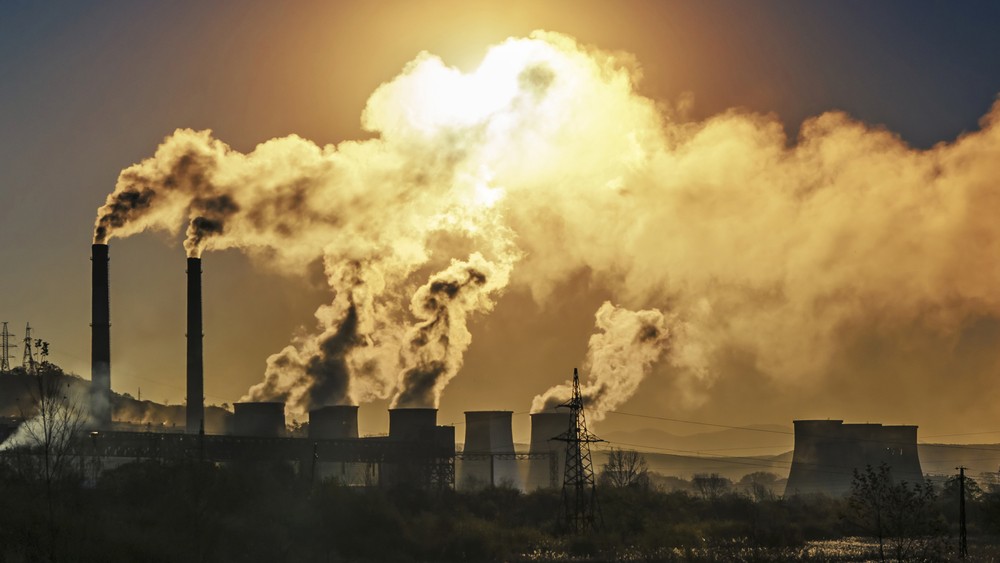
Carbon capture and storage (CCS) technology surged in popularity during the Covid-19 pandemic as governments and private companies pledged support for a green transition. The technology was positioned as a critical tool for decarbonising hard-to-abate industries — particularly cement, steel, and chemicals, where a significant share of emissions stems from chemical processes inherent to production rather than from fuel combustion alone, meaning electrification cannot fully eliminate them. In recent years, however, scepticism has grown as multiple high-profile projects have failed to deliver expected results.
CCS works by capturing carbon dioxide at emission sources, then transporting and storing it underground in suitable geological formations. Several variants have emerged, including conventional CCS installations and direct air capture (DAC), which removes CO₂ directly from the atmosphere. These approaches have gained particular traction in heavy industries unable to simply switch to renewable alternatives.
As governments intensify pressure on industries to decarbonise, companies without straightforward renewable options have poured investment into CCS to curb emissions. While critics argue that relying on carbon capture lets companies avoid cutting emissions at the source, CCS has been framed as a transitional measure while firms evaluate permanent solutions.
In 2025, the World Economic Forum predicted the CCS industry would grow fourfold by the end of the decade. That forecast is backed by a substantial project pipeline spanning multiple sectors. Within the oil and gas industry, ExxonMobil, Shell, Chevron, TotalEnergies, Equinor, and Occidental have all committed major investments to CCS technologies.
Several governments are also lending significant financial support. In the United States, the Inflation Reduction Act of 2022 expanded the 45Q tax credit to as much as $85 per tonne of CO₂ stored in saline formations and $180 per tonne for direct air capture, making CCS economics more favourable for project developers. In May, Germany launched a $5.7 billion Carbon Contracts for Difference scheme designed to promote CCS and carbon capture and utilisation (CCU) projects. In 2024, the United Kingdom government announced up to $29 billion in funding over 25 years to establish the country as an early leader in CCUS and hydrogen, with allocations split between two industrial clusters.
In Denmark, cement manufacturer Aalborg Portland signed a $2.55 billion CCS contract with the country's energy agency. CEO Soren Holm Christensen stated: "We can now take the decisive step toward realising a project that is not only significant in a Danish context, but is also among the largest industrial CO₂ capture projects in Europe."
Despite widespread optimism, cracks in the CCS narrative are appearing as companies struggle to achieve anticipated capture rates. An IEEFA review of 13 operating CCS projects worldwide found that most captured below their design level of 90 per cent, while some failed outright, underscoring persistent technical challenges and the potential for further cost escalation per tonne. According to the Global CCS Institute, only 50 facilities were operational worldwide in 2024, with the combined capacity to capture roughly one thousandth of global emissions — a fraction of what the IPCC says is needed to meet Paris Agreement targets.
Environmental groups contend that CCS amounts to greenwashing, arguing that public funds would be better directed toward alternative clean energy solutions for hard-to-abate industries. A particular point of contention is that several legacy CCS projects, including Chevron's Gorgon operation in Western Australia, have historically used captured CO₂ for enhanced oil recovery (EOR), a process that injects CO₂ into declining wells to extract additional crude — undercutting the climate rationale. Critics also warn that CCS gives companies a justification to prolong the use of natural gas as a so-called "transition fuel." Additionally, the oil industry has used CCS to support claims of producing "low-carbon oil," even though the combustion of fossil fuels remains a major driver of climate change.
The cost of integrating CCS into industrial operations remains substantial, and many projects depend on taxpayer backing. At a 2025 conference in London, key industry figures suggested CCS should only be pursued after other green solutions have been exhausted.
In the U.S. gas power sector, the cost of adding CCS to domestic plants is estimated at $20 to $30 per megawatt hour (MWh), potentially doubling the cost of electricity production. In Europe, the think tanks Agora Industry and Oeko-Institut estimate the cost of carbon capture, transport, and storage at between $170 and $340 per tonne. "According to these calculations, the costs of existing or planned CO₂ storage projects are at least 50 per cent higher than previous forecasts," the think tanks stated in a press release.
Fossil-fuel-dependent industries have long promoted CCS as central to decarbonising operations, bolstering the technology's public image and helping major oil companies and heavy industry secure government backing. Yet the high costs and persistent barriers to commercial-scale deployment suggest that much of the enthusiasm around CCS may have functioned as an effective public-relations campaign. While CCS may continue to play a limited role, the evidence indicates that governments should prioritise encouraging investment in durable decarbonisation solutions to achieve a genuine green transition.
By Felicity Bradstock for Oilprice.com

