Busan Biennale Opens 65-Day Run Examining Authority at Closed School
Key Takeaways
- •The Busan Biennale opens Saturday for a 65-day run ending Nov. 1, featuring 46 artists and collectives from more than 22 countries.
- •The exhibition, themed "Dissident Chorus," is staged across three venues, including the former Busan Nam High School, a campus closed as South Korea's school-age population shrank.
- •Co-artistic directors Evelyn Simons and Amal Khalaf frame the former school setting as central to exploring learning, authority, discipline and unlearning.
- •Notable works include Minouk Lim's piece incorporating recordings connected to labor activist Kim Jin-suk's 309-day crane protest at the Hanjin Heavy Industries shipyard on Yeongdo in 2011.
- •The biennale, which took its current form in 2002 from the citizen-run Busan Youth Biennale begun in 1981, will also present performances, concerts, workshops and other live programs throughout its run.
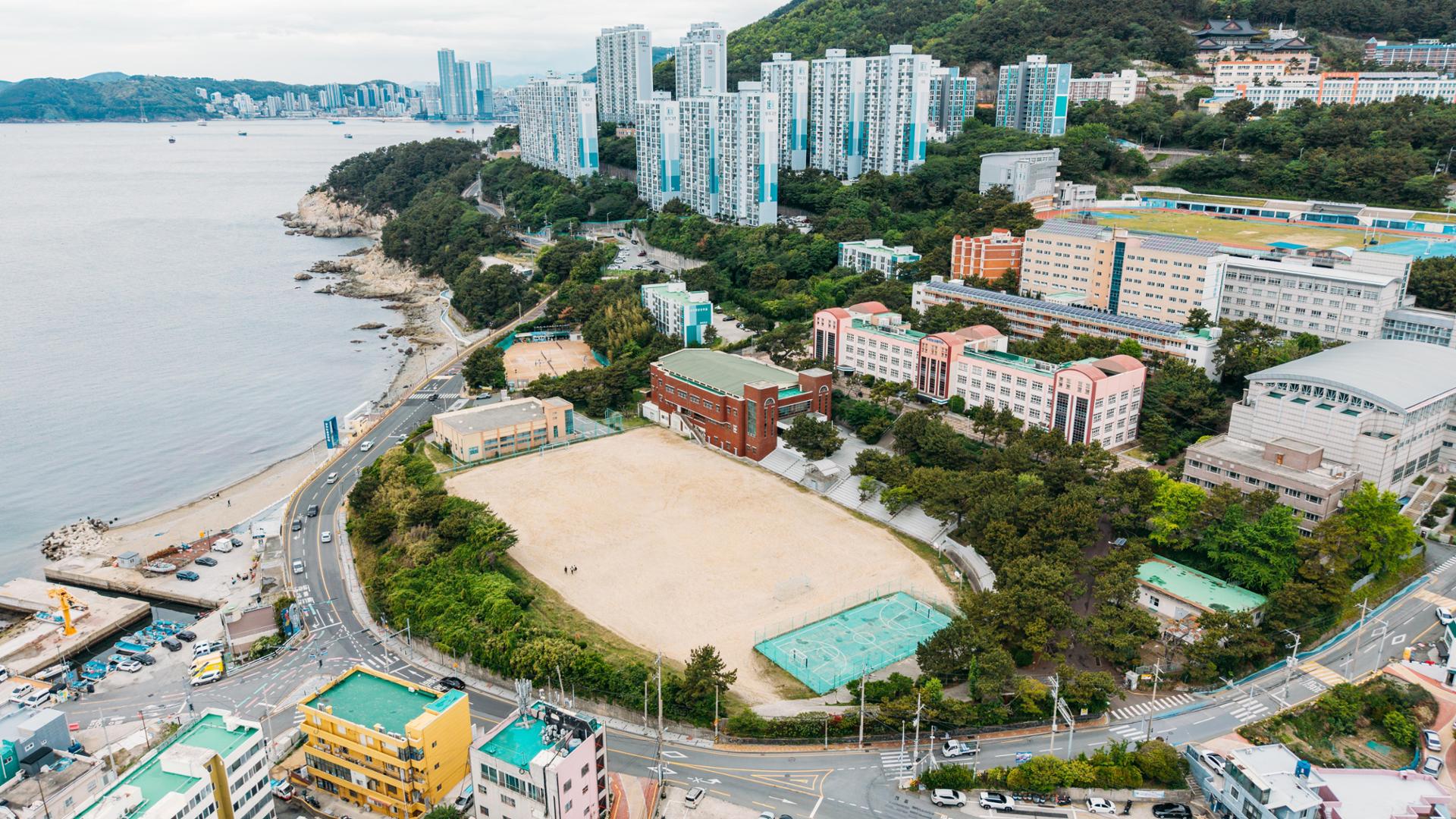
This year's Busan Biennale kicks off Saturday for a 65-day run, assembling 46 artists and collectives from over 22 countries around topics that embody the southeastern city's long history of resilience and solidarity.
That framing has concrete anchors: Busan served as South Korea's provisional capital during the 1950–53 Korean War, absorbing large numbers of displaced people, and its shipyard districts later became sites of protracted labor struggle. The biennale itself grew out of a tradition of citizen-run exhibition-making, taking its current form in 2002 from the Busan Youth Biennale begun in 1981.
The exhibition unfolds across three venues: Busan Museum of Contemporary Art, Space OneZ and the former Busan Nam High School. The school is among campuses closed across South Korea in recent years as a shrinking school-age population has shuttered schools, leaving cities to repurpose the buildings.
For co-artistic director Evelyn Simons, staging exhibitions inside a former school reinforces the biennale's central theme, "Dissident Chorus."
"We wanted to play with that atmosphere of being in a context where you come to learn, but also are in such a transformative moment in your life," she said. "These two layers coexist and sometimes conflict with one another: coming of age, learning to get to know yourself, navigating group dynamics, notions of authority, power being exerted onto your body and mind, discipline and expectations."
The curators set out to explore the tension between the way an old high school can evoke memories of childhood and the notions of authority it carries.
"What we wanted was for that residue to sit right up against the work, so a visitor isn't just looking at art about pedagogy, they're standing inside their own history of being taught, being disciplined, being formed, and hopefully the works in the site invite them to also think about unlearning," co-artistic director Amal Khalaf said.
A high school, she continued, "holds so much in the body, not just memory but posture, the way you learned to sit still, to wait to be called on, to perform obedience or hide from it."
That tension runs throughout the project. "This biennale goes beyond easy digestible statements, transcends images that can be consumed at first glance," Simons said.
While contemporary art exhibitions playing with opposing forces are not exactly novel premises, this year's biennale is.
"I think we did feel pressure around — and still do — that you can program dissidence flawlessly and still reproduce extraction in how the show gets made, who gets paid, whose labor disappears into the credits," Khalaf said. "That's the version of softening we have been thinking through and actually worry about, the conditions behind the word on the wall text. So no, we didn't soften dissident. What we tried to do instead was keep asking whether we'd earned the right to use it."
While it is impossible to ascertain the full reception and impact of a two-month show in advance, this year's curation showcases the curators' holistic approach to experimentation with sonic and embodied practices. There is an abundance of sharp, punchy work to be displayed, with notable highlights including Brahim Tall's speaker installation, which grows louder as more people enter the space; Lara Ögel and Guely Morató Loredo's collaborative piece, created around the atmosphere of rituals; Park Hyun-sung's work, unfolding through tensions between fabric, metal and theatrical sensibility; Natasha Tontey's special work for the biennale, which questions, among other things, patriarchal control and its haunting of memory; and Éric Baudelaire's installation, reflecting on the plurality of the senses.
"There will be many names on the wall labels; this isn't a biennale of objects, but a biennale of people and relationships. Many works came into being through collaborations with fellow artists, researchers, musicians, filmmakers — and in co-production with other institutions and organizations worldwide," Simons said.
"Yeongdo itself, and the two venues located there, Space OneZ and Busan Nam High School, shaped the works that were developed for it and also how we started to think about Dissident Chorus as a framework too: ideas of collective learning, ghosts, repetition and a concrete way to think through imagining futures," Khalaf added.
Another highlight comes from Seoul-based artist Minouk Lim's piece, which shows a ferry moving along the Yeongdo coast before ending in a rave, with a soundtrack that draws on recordings connected to labor activist Kim Jin-suk's 309-day crane protest in 2011, an occupation of a crane at the Hanjin Heavy Industries shipyard on Yeongdo — the same district hosting two of the biennale's venues — staged against mass layoffs.
Throughout the exhibition period, the Busan Biennale will present a range of performances, concerts, workshops and other programs centered on experiencing live art together.
The biennale runs until Nov. 1. More information is available on the official website.
The article's author, Daniela P. Solano (@ldymacca on Instagram), is a cultural researcher and the founder of Korean Wave Lab, a platform dedicated to promoting Korean underground subcultures.

