Brazil Blocks Stablecoins From Key Cross-Border Settlement Rail
Key Takeaways
- •Brazil has barred stablecoins from a key cross-border settlement rail, limiting one of their most practical uses: fast, low-cost international money transfers.
- •The restriction is not an outright ban, since stablecoins may still move through other channels, though the impact could be considerable if the rail was the primary licensed route for regulated cross-border flows.
- •The Banco Central do Brasil oversees Brazil's foreign exchange and payment infrastructure and was designated the crypto sector's regulator under the country's 2022 virtual assets law.
- •An earlier measure already prohibited crypto settlement in regulated cross-border eFX payments in Brazil, signaling a broader tightening of digital asset rules in cross-border finance.
- •The global stablecoin market is sized at roughly $1.1 trillion, and key details such as the official rule text, affected tokens, and possible exemptions had not been fully disclosed in early coverage.
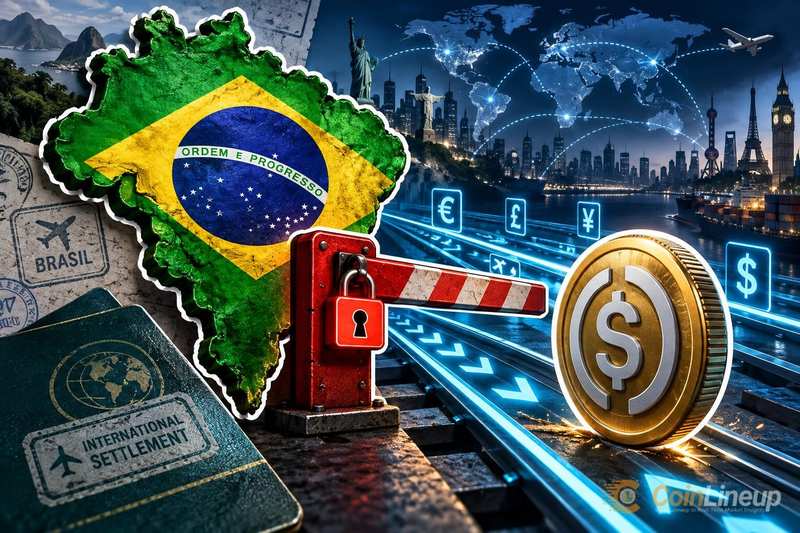
Brazil has moved to block stablecoins from a key cross-border settlement rail, adding fresh restrictions to how digital dollars can flow in and out of the country. The decision curtails one of the most practical everyday uses of stablecoins: moving money across borders quickly and at low cost.
Stablecoins are cryptocurrencies designed to hold a fixed value, typically pegged one-to-one with the US dollar. They have gained popularity for international payments because they can settle across borders faster and more cheaply than traditional wire transfers. Conventional cross-border transfers often pass through chains of correspondent banks, each link adding time and fees, while stablecoin transfers can move directly between wallets on public blockchains in minutes.
What the restriction covers
According to reporting from CryptoSlate, Brazil has barred stablecoins from a key cross-border payment rail, with the restriction arriving as the global stablecoin market — a sector the source's coverage sizes at roughly $1.1 trillion — faces heightened regulatory scrutiny. The precise regulator, the legal instrument involved, and the list of affected tokens had not been fully detailed in early coverage.
A settlement rail is the underlying infrastructure that completes a financial transaction, effectively the pipe through which money moves from one party to another. Blocking stablecoins from a specific rail does not amount to an outright ban, but it closes off a defined route they could previously use.
Brazil's central bank, the Banco Central do Brasil, oversees the country's foreign exchange and payment infrastructure. Any restriction on a cross-border settlement route would fall within its regulatory authority. The context is significant because an earlier, related measure already barred crypto settlement in regulated cross-border eFX payments in Brazil, pointing to a broader pattern of tightening rules around digital assets in cross-border finance. That supervisory role fits within the framework of Brazil's 2022 virtual assets law, under which the central bank was designated as the crypto sector's regulator, putting stablecoin oversight squarely within its remit.
Why it matters for international senders
For individuals who use stablecoins to send remittances or pay suppliers abroad, losing access to a settlement rail means fewer options and potentially higher costs. Transactions that previously settled through the restricted route would need to find an alternative path, one that may not always exist at the same speed or price. Because dollar-pegged tokens give users direct access to US dollar balances, their cross-border use also intersects with foreign exchange policy, an area regulators watch closely.
The distinction between blocking use on one specific rail and banning stablecoins outright is significant. Users and businesses may still be able to move stablecoins through other channels. However, if the restricted rail was the primary licensed route for institutional or regulated cross-border flows, the practical impact could be considerable even without a full prohibition.
Brazil has been an active market for crypto adoption. Coinbase, for example, expanded USDC lending services to Brazilian users through third-party protocols, and restrictions on cross-border stablecoin use could affect how those products interact with international capital flows.
What to watch as this develops
The real-world impact of the restriction depends on details that were not fully available at the time of initial reporting. Key items to follow include the official text of the rule defining which rail is affected, whether exemptions apply to specific transaction types or participants, and how payment providers operating in Brazil respond.
Stablecoin issuers and crypto exchanges with Brazilian operations will likely need to review their compliance obligations. Any transition or grace period built into the rule would shape how quickly the change affects live transactions.
Brazil has also seen parallel developments in traditional crypto finance. The B3 stock exchange listed a fund tied to Bitcoin treasury companies, while the central bank continues to develop its own digital currency pilot, known as Drex — a sign that the country is navigating institutional crypto adoption and tighter payment regulation at the same time.
For anyone holding stablecoins and using them for cross-border transfers involving Brazil, the practical next step is to check with the specific platform or payment provider in use. Rules applied to institutional settlement infrastructure do not always affect retail wallets directly, but the downstream effects on available services can be real. Official guidance from the Central do Brasil will be the authoritative source for the scope and timeline of the restriction.
Disclaimer: This article is for informational purposes only and does not constitute financial or investment advice. Cryptocurrency and digital asset markets carry significant risk. Always do your own research before making decisions.

