NYT Columnist Jamelle Bouie Says Republicans Can't Copy Trump's 'Sociopathic' Cruelty for One Key Reason
Key Takeaways
- •New York Times columnist Jamelle Bouie contended that Trump-style cruelty only works for Trump because voters see him as a celebrity entertainer rather than a politician, while the same behavior from imitators appears simply mean.
- •Ohio gubernatorial candidate Vivek Ramaswamy released an attack ad against Democratic nominee Amy Acton that features her estranged mother calling her a liar.
- •Observers noted that Acton has not seen her mother since 1978, when her mother lost custody of Acton and her brother amid alleged abuse by their stepfather.
- •Vice President JD Vance defended the ad and rebuked fellow Republicans who criticized it, creating intraparty friction and making the spot an early flashpoint of the general-election contest.
- •Bouie suggested Vance's embrace of the ad may stem from unresolved resentment over his own abusive upbringing, which he argues Vance has channeled into an ideology portraying independent women as a threat to the American family.
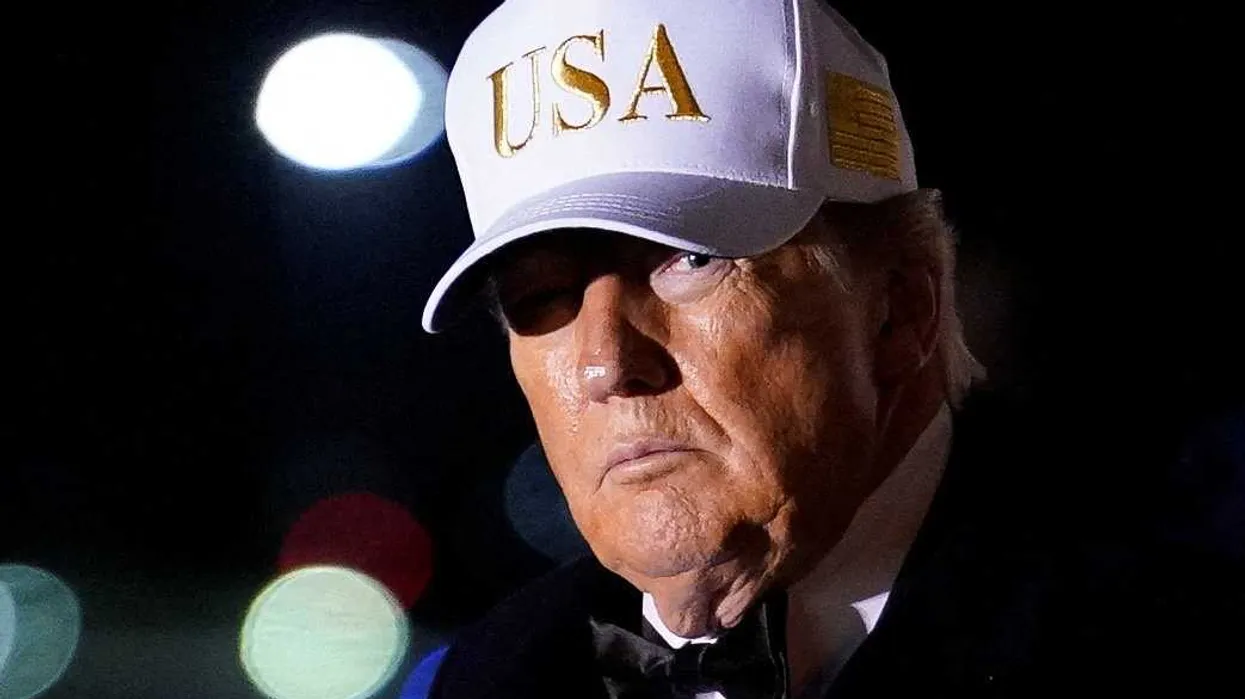
Republicans who attempt to mimic President Donald Trump's "sociopathic" cruelty are doomed to backfire for one key reason, according to a prominent New York Times columnist: voters do not regard Trump as a politician, and that distinction is one his imitators cannot replicate.
In the latest edition of his "Takes" video series on YouTube, liberal Times columnist Jamelle Bouie examined the continuing fallout from a widely criticized attack ad released by Ohio gubernatorial candidate Vivek Ramaswamy, a biotech entrepreneur and former 2024 presidential hopeful running to succeed term-limited Republican Governor Mike DeWine in 2026.
The ad targets Democratic nominee Amy Acton, a physician who served as director of the Ohio Department of Health during the state's early coronavirus response, and features her estranged mother calling her a liar. Many observers were quick to point out, however, that Acton has not seen her mother since 1978, when her mother lost custody of Acton and her brother due to abuse they allegedly suffered at the hands of their stepfather. Her mother remained with her second husband until his death, at one point fleeing the state so that he could not face charges.
The spot has since been denounced far and wide as one of the most morally bankrupt in the long history of political attack ads. Ramaswamy has nonetheless opted to stand by it, following support from Vice President JD Vance, who chastised fellow Republicans for criticizing the ad. That intraparty friction has made the spot an early flashpoint of the general-election contest.
In his latest video, Bouie said he was "not at all surprised" to see Ramaswamy — whom he called "a snot-nosed little weasel and all-around unpleasant person" — stand by the attack ad, given that the candidate and other MAGA Republicans appear to believe their "path to victory lies in embracing the most sociopathic aspects of the MAGA coalition, the cruelty, the disdain for basic decency."
That logic, Bouie argued, is flawed because would-be Trump successors are missing the true reason voters let such behavior slide from Trump.
"My view is that that stuff really only works when coming from Donald Trump because people don't associate Donald Trump as a politician," Bouie explained. "They think of him as a celebrity entertainer. So, there's an element of a nod and a wink when it comes to Trump's use of cruelty. Many people, I don't think they're right about this, but many people perceive it as being something like a joke, and they're in on the joke. Coming from Ramaswami, this stuff just seems mean."
Bouie added that he was struck by how fully Vance had embraced the ad.
"But I'll say I am a little struck that Vance has completely thrown himself behind this," he said. "I'm certain that some of it is a political calculation. He's trying to be the MAGA standard bearer, and that means not just being a vicious partisan, but being exceptionally cruel. It's also the case that Vance has a very real mean streak, a very real cruel streak. And I'm sure he just relishes in this."
Venturing into "a little bit of psychoanalysis," Bouie suggested there was likely something deeper in Vance's reaction to Acton, given their strikingly similar backgrounds: both come from "low-income working-class Ohio," both had "exceptionally difficult family lives," and both were shaped by abusive mothers. Vance has written about that upbringing himself in his 2016 memoir, "Hillbilly Elegy."
"Then I don't think it's too crazy to say that for all that Vance might say that he's basically forgiven his mother, that he hasn't," Bouie argued. "That he holds on to a lot of resentment towards his mother, a lot of anger towards his mother. And he is smart enough and sophisticated enough to have transmogrified this resentment into an ideology about how independent women are threatening the American family, of how independent women are threatening the United States, about how in the same way that his childhood would have been improved by a more stable family structure with a father and a mother in traditional roles, the United States will be brought back from dysfunction by establishing patriarchal rule and putting women back in their place."
Bouie concluded that one element of Vance's response is that he looks at Acton and "sees the kinds of women for whom he has real disdain."
"But there's another piece of this, if we're going to go even deeper into our amateur psychoanalysis, which is that I think Vance might see some of himself in Acton," he said. "What I mean by that is that in Acton, Vance sees a victim. In himself, he sees a victim."

