Boltz Suspends Bitcoin Swaps Amid Reported AI-Assisted Attacks
Key Takeaways
- •Boltz has halted its Bitcoin swap function in response to reported attacks.
- •The suspension affects only Bitcoin-related swaps and does not mean Boltz has shut down all of its services.
- •The claim that the attacks were AI-assisted has not been independently verified.
- •No confirmed information has been released about the attack’s scope, losses, or method.
- •Users needing Lightning-to-chain Bitcoin swaps may face delays until Boltz restores the service.
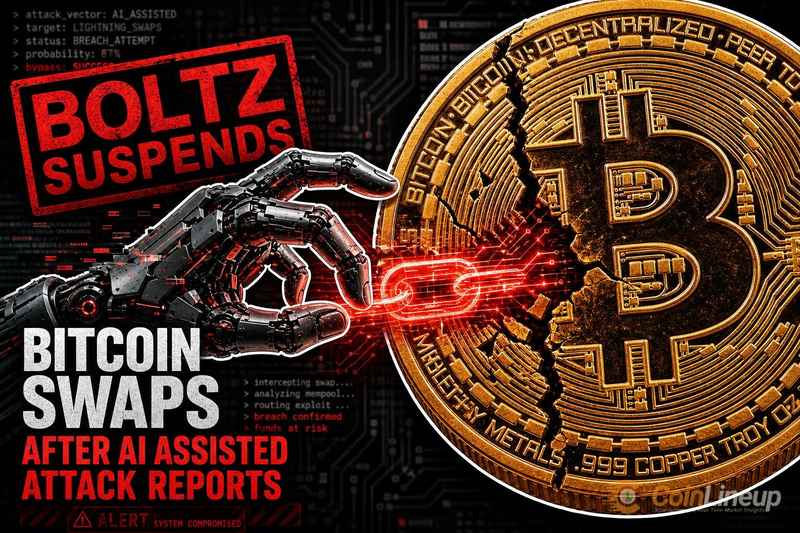
Boltz has suspended its Bitcoin swap service following reports of AI-assisted attacks targeting the platform. The pause halts a function that allows users to move in and out of Bitcoin liquidity while the situation is being addressed.
Boltz Halts Bitcoin Swap Function
Boltz is a non-custodial swap service that facilitates submarine swaps between the Bitcoin Lightning Network and on-chain Bitcoin, allowing users to rebalance Lightning channels or convert between layer types without surrendering control of their private keys. The service has halted Bitcoin swaps in response to the reported attacks. The suspension is specific to the Bitcoin-related swap function and does not constitute a general shutdown of Boltz's product offerings.
According to the reporting behind this incident, the trigger was a series of attacks described as AI-assisted. This characterization remains an unverified claim rather than an independently confirmed technical finding. Readers should treat the "AI-assisted" label cautiously until Boltz publishes its own account of the incident.
A security-driven suspension of this nature typically indicates risk containment rather than routine maintenance. By halting swaps, Boltz removes the exposed pathway while investigating the issue — a decision that carries greater significance than a scheduled downtime notice. For Lightning Network users who rely on submarine swaps to manage channel liquidity, the suspension cuts off a commonly used on-ramp and off-ramp path.
Swap-Service Risk and the Role of Automation
Swap services operate as an intermediary layer between users and Bitcoin liquidity flows. When that middle layer stops functioning, the interruption immediately affects anyone attempting to route funds through it, which makes this pause notable rather than routine.
The reported incident narrative ties automation — described as AI assistance — to the attack. If accurate, this framing raises the stakes for platform defenders, as automated or AI-assisted probing can test a service more rapidly and persistently than manual attempts. However, this remains a reported characterization, and no confirmed technical details are publicly available to substantiate the mechanism.
No verified data exists regarding the scope, potential losses, or specific methods used in the attack. The available evidence supports only that a suspension occurred and that attacks were the stated reason.
User Impact and What to Monitor
For users, the short-term impact is immediate: access to the affected swap functionality is paused, and any activity dependent on it is delayed until service is restored. Anyone with pending or planned swaps should not assume normal availability during the suspension period. Users who need to move between Lightning and on-chain Bitcoin during the outage may need to seek alternative swap providers or await restoration.
The most important development to monitor is an official restoration notice or incident-response update directly from Boltz. Information regarding timing, root-cause disclosure, and any guidance on user funds will come from the service itself, and that primary confirmation should take priority over secondhand accounts.
The incident also draws attention to the broader trust landscape surrounding non-custodial swap tools, an area where user confidence is particularly sensitive to security incidents. Non-custodial services are designed so that funds remain under user control throughout the swap process, which can limit exposure compared to custodial platforms — but operational disruptions still create friction for users depending on these tools for day-to-day liquidity management. A disruption at a single swap provider does not define the entire category, but it contributes to the ongoing scrutiny such tools face.
No confirmed price or market sentiment figures have been linked to the suspension itself.

