Bolt Integrates Ride-Hailing with ChatGPT Across Global Markets Including Africa
Key Takeaways
- •Bolt's ChatGPT integration is live across all of its markets, including eight African countries covering over 90 cities.
- •Users can request rides and compare fares through ChatGPT, but must complete the booking and payment within the Bolt app.
- •Bolt is among the first major ride-hailing platforms to integrate with a generative AI assistant at this scale, reaching ChatGPT's 900 million weekly active users.
- •Africa's ride-hailing market is projected to grow to $3.25 billion by 2031, with Kenya and South Africa introducing new regulations affecting platforms like Bolt and Uber.
- •Bolt intends to bring payment functionality directly into ChatGPT in the future, enabling users to complete the entire booking process within the AI assistant.
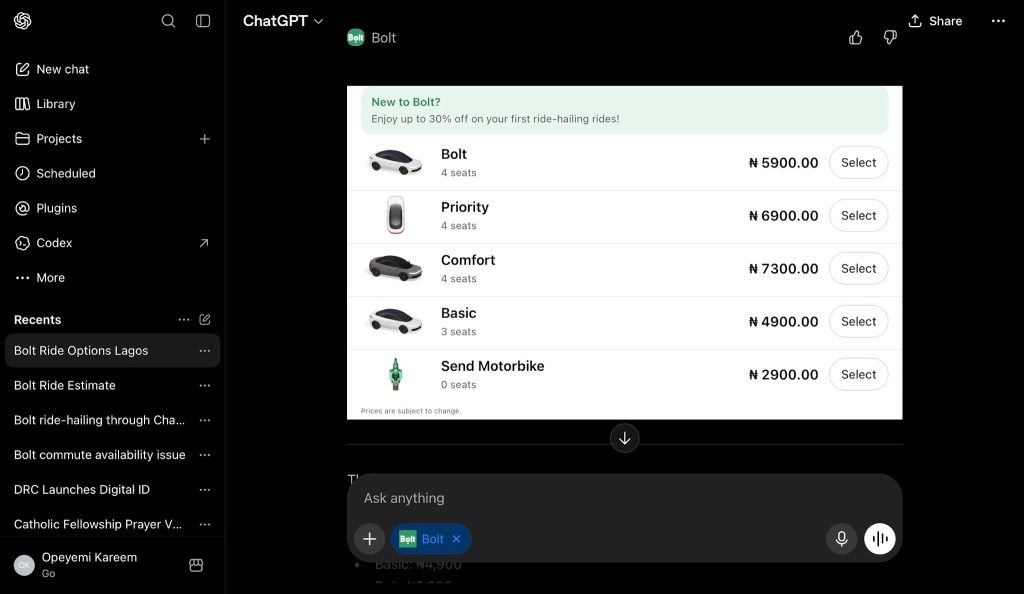
Bolt, the Estonia-headquartered mobility platform operating in more than 50 countries, has launched an integration of its ride-hailing service with ChatGPT, enabling users to search for and book rides directly through the AI chatbot.
The integration is now live across all of Bolt's markets, including eight African countries where the company operates in over 90 cities. It gives ChatGPT's 900 million weekly active users the ability to access Bolt's ride-hailing service through a conversational prompt, allowing them to compare fares and request rides before completing the booking in the Bolt app. Bolt is among the first major ride-hailing platforms to connect with a generative AI assistant at this scale, placing its service within OpenAI's expanding third-party ecosystem as chatbots evolve from answering questions to facilitating real-world transactions.
The launch comes as artificial intelligence becomes increasingly embedded in everyday tasks, including travel planning. According to Google's Our Life with AI survey, produced with Ipsos, 62% of Nigerians and 51% of South Africans used generative AI in 2025 for daily activities such as planning trips, meals, or workout routines. ChatGPT adoption is also growing faster in Africa and Asia than in any other region, though OpenAI has not disclosed specific user numbers on the continent. Bolt's integration with ChatGPT opens its service to that expanding user base while tapping into Africa's ride-hailing market, which is expected to grow to $3.25 billion by 2031.
"People don't plan their evening in five different apps anymore. A lot of that planning happens in one conversation with AI now," said Caroline Wanjihia, regional director of rides operations for Bolt Africa and South East Asia. "For years, booking a ride meant opening a dedicated ride-hailing app. As more everyday interactions take place through AI, we think requesting a ride should be just as straightforward: ask, see the price, and go."
To use the feature, riders need to enable Bolt inside ChatGPT from the chatbot's Plugins or Apps directory, which catalogs third-party services connectable to ChatGPT. Once enabled, users can type a request for a ride, and ChatGPT responds with available ride categories, fare estimates, expected arrival times, and the recommended pickup location. After selecting a ride, users continue booking in Bolt, which launches the app with trip details already filled in. The ride itself is paid for within the Bolt app, meaning existing payment methods such as cards or wallets linked to Bolt continue to handle the transaction.
The integration arrives at a time when Africa's ride-hailing industry is undergoing significant regulatory and commercial changes. Bolt competes directly with Uber and other operators across the continent, and the shifting requirements affect all platforms operating in these markets. In July, the Kenyan Ministry of Roads and Transport proposed new regulations requiring platforms such as Bolt and Uber to guarantee drivers a minimum payment per trip. If adopted, the move could nearly double the country's current base fare of around KES220 ($1.70).
In South Africa, regulators formally recognized e-hailing as a category of public transport under amendments to the National Land Transport Act that came into effect in September 2025. The legislation requires ride-hailing vehicles to hold an operating licence, mandates that platforms register with regulators, requires vehicles to display ride-hailing branding, and introduces additional safety measures such as panic buttons.
Although the ChatGPT integration currently stops at the booking stage, Bolt said it plans to bring payments directly into ChatGPT in the future. If implemented, users would be able to complete the entire ride-booking process without leaving the AI assistant.

