Body Language Expert Flags Trump's "Very, Very Strange" New Behavior
Key Takeaways
- •Dr. John Paul Garrison, a clinical and forensic psychologist and body language specialist, said President Trump's eye contact has changed in ways he described as 'very, very strange.'
- •Garrison linked the observed struggles with eye contact to possible neurocognitive issues and characterized them as further evidence of ongoing decline.
- •Garrison previously suggested in his video analyses that the president may have suffered a stroke at some point last year.
- •Garrison argued the new press ban signals weakening resilience, saying Trump appears to have abandoned rallying his base over negative coverage because he finds it too upsetting.
- •The Alternet report cites no formal medical evaluation or diagnosis of the president and includes no response from Trump or his team.
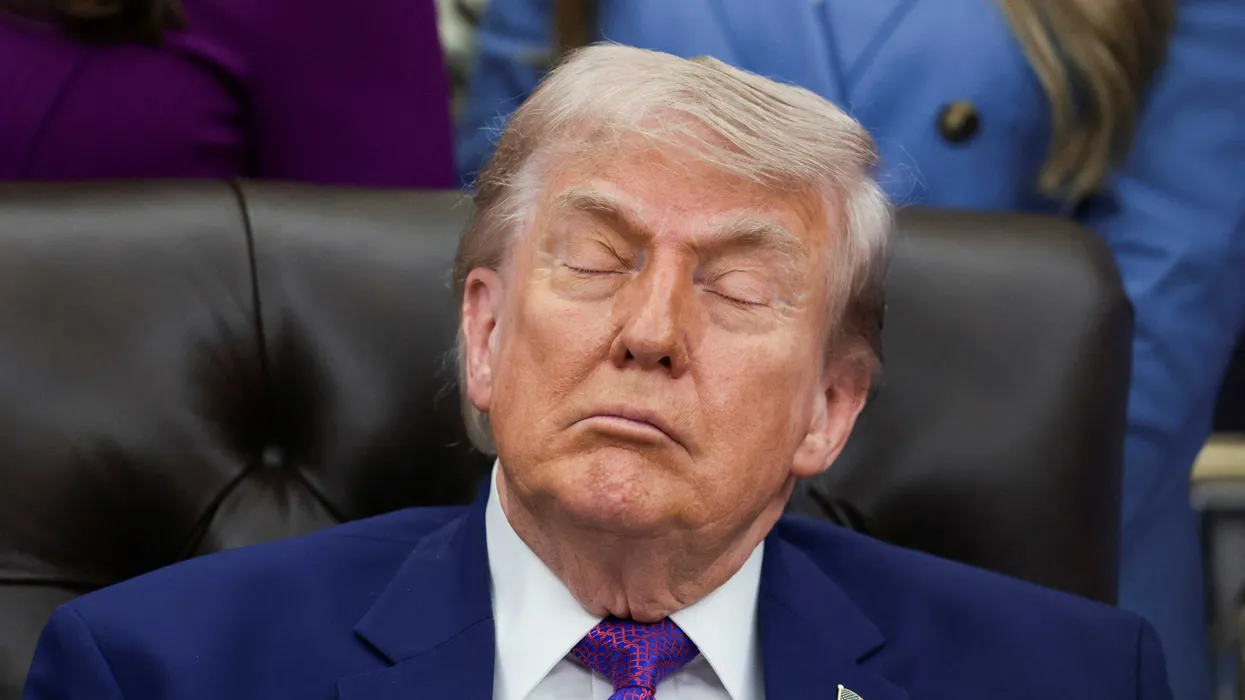
President Donald Trump has been exhibiting what one body language expert describes as "very, very strange" new behavior — the latest in a series of signs the expert says point to continuing physical and cognitive decline, according to a report published by Alternet.
Dr. John Paul Garrison, a clinical and forensic psychologist and body language specialist, produces videos offering professional insights into the behavior of major public figures. Over the past several months, he has frequently analyzed Trump's speeches and public appearances, noting what he describes as multiple signs of significant neurological decline — at one point suggesting the president may have suffered a stroke sometime last year. Garrison's conclusions are behavioral interpretations rather than medical findings; the Alternet report cites no formal evaluation or diagnosis of the president.
In his latest video, available on YouTube, Garrison examined several clips of Trump from the past week, including footage from an Oval Office event at which the president was questioned about his new press ban. As Trump spoke, Garrison identified an emerging trend he characterized as "very, very strange": the president appears to struggle with eye contact.
"Now, something I've been observing for months now is that President Trump's eye contact has gotten very, very strange," Garrison said. "When he's talking to people, he looks away. He struggles to maintain appropriate levels of eye contact. Obviously, people look away sometimes, but what I'm talking about are changes in his behavior because this is not what he used to do. We see issues in social cognition, gaze control [and] attention deficits after people have had strokes, when they have dementia, when they have frontal lobe dysfunction, when they have various neurocognitive issues. So, to see him struggling so much with eye contact now to me suggests this is more evidence of that continued decline."
Garrison also argued that the press ban itself is a sign of Trump's recent mental decline. In his view, the president's explanation that he has grown "sick of" negative press coverage indicates that Trump's "resilience" is weakening. The report does not detail how the press ban will operate, nor does it include a response from the president or his team.
"It used to be that he would try to use the fake news and make that something that would get his base excited," Garrison explained. "But at this point, he seems to have abandoned that because it's too upsetting for him. He doesn't have the ability to think through all of this the way that he once did. So at this point, that's why he's trying to get rid of it because it's not useful to him. At this point, it just confuses him. It upsets him and he doesn't know what to do with it. And this is because he is not able to think as clearly as he once was."

