BlackRock's Rick Rieder: Yen Recovery Hinges on BOJ Rate Signals, Not Intervention Alone
Key Takeaways
- •BlackRock CIO Rick Rieder stated that foreign-exchange interventions alone cannot produce durable yen strength without the Bank of Japan committing to a more hawkish monetary policy stance.
- •A joint U.S.-Japanese currency intervention in early August 2026—the first coordinated effort since 1998—temporarily lifted the yen from multi-decade lows near 164 per dollar before it retreated to around 160 by mid-August.
- •The persistent interest rate differential between the elevated U.S. Federal Reserve rates and the BOJ's near-zero policy creates structural incentives for capital to flow out of yen and into dollar-denominated assets.
- •Rieder recommended that the BOJ provide credible forward guidance about future tightening rather than immediate rate hikes, which could redirect capital flows without direct intervention.
- •The 2026 intervention involved unprecedented mechanics including the Federal Reserve's use of the FIMA repo facility, underscoring risks to U.S. Treasury markets given Japan's position as the largest foreign holder of U.S. government bonds.
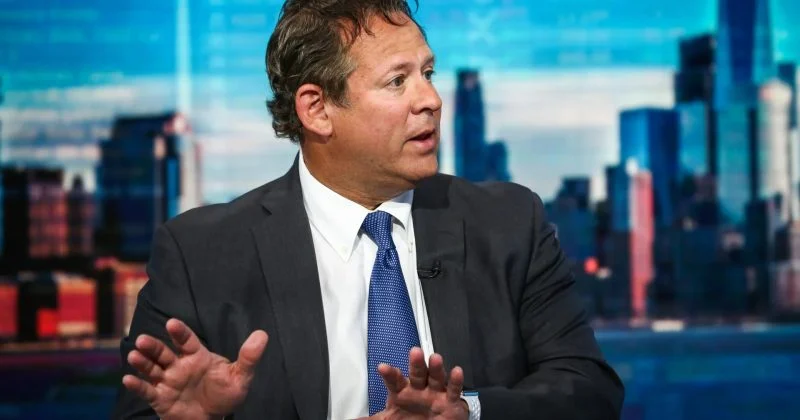
The Japanese yen has endured a sustained rough patch, and according to one of the world's most influential fixed income investors, quick fixes are proving insufficient. Rick Rieder, BlackRock's Chief Investment Officer for Global Fixed Income — at the world's largest asset manager, overseeing trillions in assets — told Bloomberg Television's Wall Street Week on August 13, 2026, that the only credible path to a stronger yen runs through the Bank of Japan's policy decisions.
Rieder's core argument is direct: foreign-exchange interventions are, in his words, "not the most durable" solution. Without the BOJ committing to a genuinely hawkish monetary stance, any yen rally driven by government action amounts to borrowed time. The assessment carries particular weight given BlackRock's vantage point across global bond and currency markets, where positioning decisions by institutional investors amplify or counteract central bank moves.
A Brief Rebound That Already Faded
Earlier in August 2026, U.S. and Japanese authorities executed a joint currency intervention — the first coordinated move of its kind since 1998. The operation targeted a yen that had sunk to levels near 164 per dollar, territory not seen in four decades.
The intervention achieved results, but only momentarily. The yen pulled back from those multi-decade lows before drifting back toward 160 per dollar by mid-August, erasing a significant portion of the ground gained.
The underlying issue is straightforward: the dollar pays investors considerably more than the yen does. As long as that interest rate gap persists, capital has a structural incentive to flow out of yen-denominated assets and into dollar-denominated ones. This dynamic is compounded by the yen's longstanding role as a funding currency in global carry trades, where investors borrow in low-yielding yen to purchase higher-yielding assets elsewhere — a strategy that exerts continuous downward pressure on the currency when the rate differential is wide.
The Interest Rate Gap Drives the Story
The U.S. Federal Reserve has maintained elevated rates throughout this cycle, while the BOJ has kept its policy rate in place, even as it presented an upgraded economic outlook at its most recent meetings. Japan's economy has been navigating a transition from decades of near-zero inflation and intermittent deflation toward more sustained price growth, a shift that has intensified scrutiny of the BOJ's policy trajectory and its implications for the yen.
Rieder's prescription is for the BOJ to send firmer signals about future monetary tightening — not necessarily an immediate rate hike, but a credible commitment indicating that the era of near-zero Japanese rates is approaching its end. Such forward guidance, if believed by markets, could shift capital flows without requiring a single yen of direct intervention.
Implications for Currency Markets and Global Portfolios
The 1998 parallel carries particular weight. That prior joint intervention occurred during a period of acute Asian financial contagion, when extraordinary measures were more widely accepted as crisis response tools. The 2026 coordinated effort, by contrast, involved yen purchases partly funded through euro sales, and the Federal Reserve utilized the Foreign and International Monetary Authorities (FIMA) repo facility to prevent substantial sell-offs of U.S. Treasuries amid the volatility — an unprecedented step in international currency intervention. The mechanics matter because Japan is the largest foreign holder of U.S. Treasuries, meaning that disorderly yen moves and potential Japanese asset repatriation carry direct implications for U.S. government bond markets and global borrowing costs.
Every policy meeting, every shift in language from BOJ Governor Kazuo Ueda, and every revision to Japan's economic projections carries the potential for sharp yen movements. For long-term fixed income investors like BlackRock, the central message in Rieder's comments is about durability: short-term trades may be built around intervention windows, but strategic positioning requires a policy foundation that the BOJ has not yet fully established.

