BitMart, BitMEX, and Dango Announce Shutdowns in Same Week, Signaling Crypto Exchange Consolidation
Key Takeaways
- •BitMart, BitMEX, and Dango each announced platform shutdowns during the same week of July 2026, with BitMart ending trading on August 26 and BitMEX ceasing operations on September 23 of that year.
- •The top five cryptocurrency exchanges now command an estimated 80% of global spot trading volume, placing severe pressure on mid-tier venues that face spread compression, high compliance costs, and insufficient liquidity.
- •BitMart's wallet holdings declined from approximately $102 million to $71 million in the weeks before its announcement, and its native BMX token dropped roughly 70%, while BitMEX's BMEX token fell approximately 90% following the closure news.
- •ARK Invest research associate Lorenzo Valente identified the closures as a systemic signal of unprecedented consolidation, noting that the top three crypto applications generate roughly 80% of total industry revenue.
- •The shutdowns underscore growing risks associated with custodial exchanges and may accelerate retail migration toward decentralized alternatives and self-custody solutions.
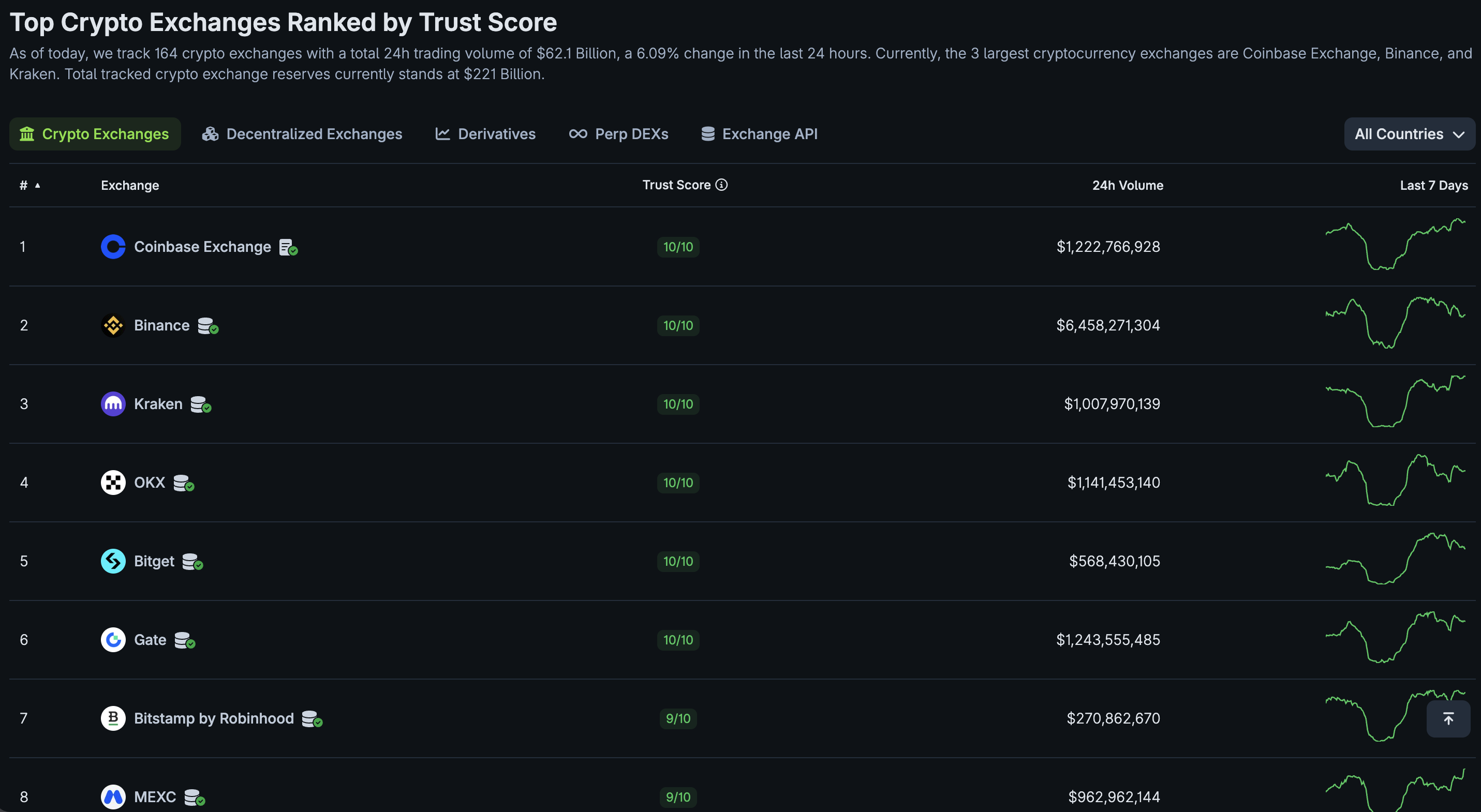
Three centralized cryptocurrency exchanges — BitMart, BitMEX, and Dango — announced platform shutdowns during the same week of July 2026, a convergence of closures that ARK Invest research associate Lorenzo Valente described as crypto entering its biggest consolidation phase in history. According to CoinGecko data, the top five exchange platforms now control an estimated 80% of global spot volume, leaving mid-tier and regional venues with shrinking margins and no viable path to scale. The closures arrive on the heels of heightened regulatory enforcement that has reshaped the exchange landscape since 2023, including the collapse of FTX in November 2022, the Binance settlement with US authorities, and the rollout of the EU's Markets in Crypto-Assets (MiCA) regulation, all of which have materially raised compliance costs for operators worldwide.
These shutdowns come amid a broader crypto market that is up 0.5% over the past 24 hours, sitting at a total capitalization of $2.29 trillion with daily trading volume of $65.4 billion.
BitMart announced its wind-down via its official X account on July 26, 2026:
Important Notice
After a careful evaluation of the Company's operating conditions, market environment, and future strategic direction, BitMart has made the difficult decision to commence an orderly wind-down of its trading platform operations. We deeply regret having to make… pic.twitter.com/KX3zczIrAh
— BitMart (@BitMartExchange) July 26, 2026
BitMart Shutdown Details
BitMart's trading is set to end on August 26, 2026, with full operations ceasing by January 31, 2027. The platform has already halted new user registrations and deposits, and its spot markets are closed to new orders.
On the day of the announcement, BitMart's wallets held approximately $71 million in crypto, down from $102 million just weeks prior, raising concerns about available liquidity for user withdrawals. The exchange's native token, BMX, plummeted approximately 70% following the news, with reports of pending USDT withdrawal requests. Former CEO Nenter Chow stated he learned about the shutdown through the public announcement.
BitMEX and Dango Closures
BitMEX is also closing, with its last operational date set for September 23, 2026. Its BMEX token dropped roughly 90% after the announcement, as competing regulated venues began offering similar products, effectively rendering BitMEX obsolete.
Dango similarly announced its shutdown, citing regulatory uncertainty and rising compliance costs. Together, these closures illustrate a shift not only from centralized to decentralized exchanges but also within the centralized exchange landscape itself.
An X post by user StarPlatinum compiled a broader list of projects that shut down or disappeared in 2026:
Projects that shut down or disappeared in 2026
BitMEX – Exchange
BitMart – Exchange
Dango – DeFi
Odos Protocol – DEX Aggregator
Across Protocol – Bridge
Moonbeam – L1
Exchange Art – NFT Marketplace
Ctrl Wallet – Wallet
Cypher – Wallet
ICON Network – L1
NFTfi – NFT Lending…— StarPlatinum (@StarPlatinum_) July 26, 2026
ARK Invest Analysis: Crypto's Largest Consolidation Phase
(SOURCE: CoinGecko)
ARK Invest's Lorenzo Valente described the simultaneous closures of Hyperliquid and Pump.fun as a systemic signal rather than isolated failures. Together, they account for approximately 67% of total crypto application revenue; with Ethena added, the top three account for roughly 80%, reflecting record-high revenue concentration. Valente views this as crypto's largest consolidation phase, which he considers bullish for the industry's long-term health.
The challenges facing mid-tier platforms are severe. The top five exchanges dominate around 80% of global spot volume, while smaller venues contend with spread compression, high compliance costs, and insufficient liquidity for market-making. This trend mirrors the previous closures of platforms such as Bittrex Global and Hotbit between 2023 and 2025, indicating a rapidly accelerating pace of CEX consolidation.
Bull case: Consolidation concentrates liquidity on regulated, well-capitalized venues, improving price discovery and reducing systemic fragility across the ecosystem.
Base case: Five to eight global CEXs capture the majority of institutional and retail spot volume, while DEXs absorb marginal retail flow seeking non-custodial execution.
Bear case: Accelerated closures trigger a wave of withdrawal freezes and token collapses at remaining mid-tier exchanges, elevating counterparty risk for retail users holding assets on platforms outside the top tier.
Self-Custody and DEX Considerations
The BitMart wind-down illustrates the risks associated with custodial exchanges, as users experienced delays in USDT withdrawals linked to liquidity and compliance issues. This situation reinforces the case for decentralized exchanges (DEXs), particularly following BitMEX's closure announcement.
Hyperliquid now holds approximately 40% of total crypto app revenue, and Uniswap has surpassed $2 trillion in cumulative trading volume as of mid-2024. While DEXs reduce custodial risks, they introduce challenges related to key security and smart contract risk. However, unlike centralized exchanges, which can restrict access to funds during operational disruptions, DEXs ensure asset accessibility even if a platform ceases operations.
The open question the market must now resolve is whether these three closures represent isolated strategic retreats, or the structural signal that accelerates the migration of retail capital toward DEX alternatives and self-custody.

