Bitcoin Whale Wallets Reach Six-Month High as Largest Holders Accumulate
Key Takeaways
- •Ninety Bitcoin wallets currently hold at least 10,000 BTC, representing a 7.1% increase over eight weeks and reaching a six-month high.
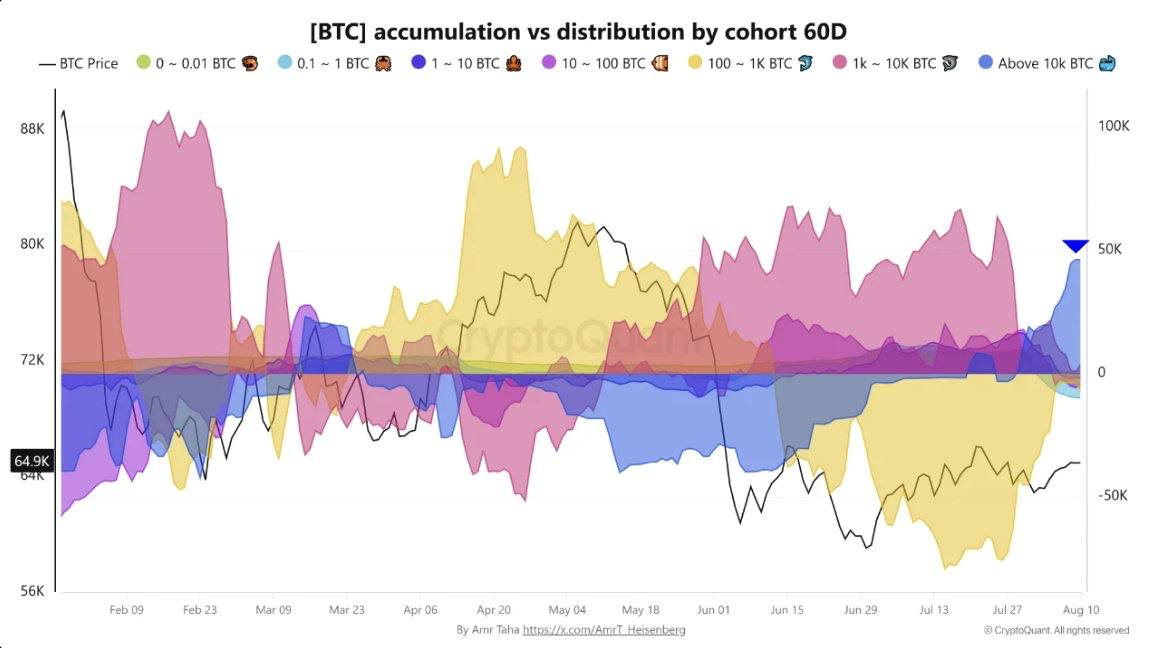
- •Large wallets accumulated 46,420 BTC on August 9, nearly double the 23,238 BTC recorded at the mid-March peak.
- •Wallets holding between 0.1 and 1 BTC distributed 9,700 BTC on August 9, marking a sharp reversal from their accumulation of 11,600 BTC on July 5.
- •Bitcoin fell approximately 2% to around $64,000 and is down about 28% year-to-date ahead of scheduled US CPI and PPI releases.
- •A weaker-than-expected July jobs report has strengthened expectations that the Federal Reserve will hold interest rates steady, which is generally viewed as supportive for risk assets.
The number of Bitcoin wallets holding at least 10,000 BTC has climbed to a six-month high, signaling renewed accumulation by the cryptocurrency's largest holders even as smaller investors continue to sell.
According to crypto intelligence firm Santiment, 90 wallets now fall into the elite category of addresses holding more than 10,000 BTC. Analysts at the firm noted a 7.1% increase over the past eight weeks, representing a net gain of six wallets in that tier — a sign that major holders are reentering the market.
By contrast, the number of micro wallets has been declining, with retail traders reducing their positions amid the Coldcard hack — a security incident involving the popular hardware wallet manufacturer that raised fresh concerns about self-custody safety — and delays surrounding the CLARITY Act, a proposed U.S. bill aimed at establishing clearer regulatory definitions for digital assets that has stalled in legislative proceedings.
Whale Accumulation Doubles From March Levels
Evidence of growing demand from the largest wallet cohort is further reflected in CryptoQuant's 60-day accumulation versus distribution by cohort metric. According to the data, wallets in the 10,000+ BTC category recorded a net accumulation of 46,420 BTC on August 9 — the highest single-day figure since March 15.
Notably, the same cohort accumulated only 23,238 BTC at its mid-March peak, meaning accumulation has effectively doubled compared to that period. Mid-March coincided with Bitcoin's run toward its all-time high above $73,000, making the current pace of whale buying particularly notable given that prices are now well below those levels.
On the other side of the trade, wallets holding between 0.1 and 1 BTC distributed 9,700 BTC on August 9. This marks a sharp reversal from July 5, when the same group accumulated 11,600 BTC.
The divergence highlights how the two trader segments are positioning for Bitcoin's next move: the largest whales are buying, while those with the smallest balances are selling. Such cohort divergences have historically been watched by market analysts as a potential contrarian signal, though past patterns do not guarantee future outcomes.
Santiment analysts suggested this pattern could indicate that Bitcoin's next major price movement may be bullish. However, crypto analyst Amr Taha cautioned that cohort data alone is insufficient to determine price direction, though it remains an important market-structure signal.
Bitcoin Slips Ahead of Key US Economic Data
Bitcoin fell nearly 2%, dropping as low as $63,500 before recovering to around $64,000. The pullback ended a streak that had pushed the asset to $65,000 earlier in August. Bitcoin is now down approximately 28% year-to-date.
CryptoQuant analysts had previously flagged a lack of trend strength, anticipating a potential pullback. Whether the August rally has concluded or Bitcoin is experiencing a brief correction remains uncertain.
Upcoming US economic data could significantly influence Bitcoin's next move. The US is scheduled to release both the Consumer Price Index (CPI) and Producer Price Index (PPI) reports this week — indicators that typically shape expectations around monetary policy and inflation. CPI measures changes in consumer prices, while PPI tracks wholesale price movements; together they provide a comprehensive view of inflationary pressure in the economy.
Markets had already been pricing in the possibility of at least one rate hike this year, but a weaker-than-expected July jobs report has strengthened expectations that the Federal Reserve will hold rates steady. Lower interest rates are generally viewed as supportive for risk assets, including cryptocurrencies, by reducing the opportunity cost of holding non-yielding assets. Bitcoin whales appear to be positioning accordingly, which may explain their decision to accelerate accumulation.
This article is for informational purposes only and does not constitute financial or investment advice.

