Bitcoin Stuck in Five-Week Range as Market Eyes Upcoming U.S. CPI Report
Key Takeaways
- •Bitcoin has remained rangebound between $62,000 and $66,000 for five weeks, with trading volumes dropping to their lowest level in three years.
- •Strategy has sold 6,916 BTC valued at over $440 million since June across four consecutive sales, marking a departure from its previous policy of never selling Bitcoin.
- •Steady institutional demand through U.S. spot Bitcoin ETFs has been counterbalanced by OTC selling from miners and corporate treasury activity, limiting upward price momentum.
- •The upcoming U.S. CPI inflation report on Wednesday is the market's primary catalyst, as Bitcoin rose over 7% in the week following each of the last two CPI releases.
- •An RSI-based buy signal remains active on the weekly chart, but $60,000 serves as the critical support level to monitor for further downside risk.
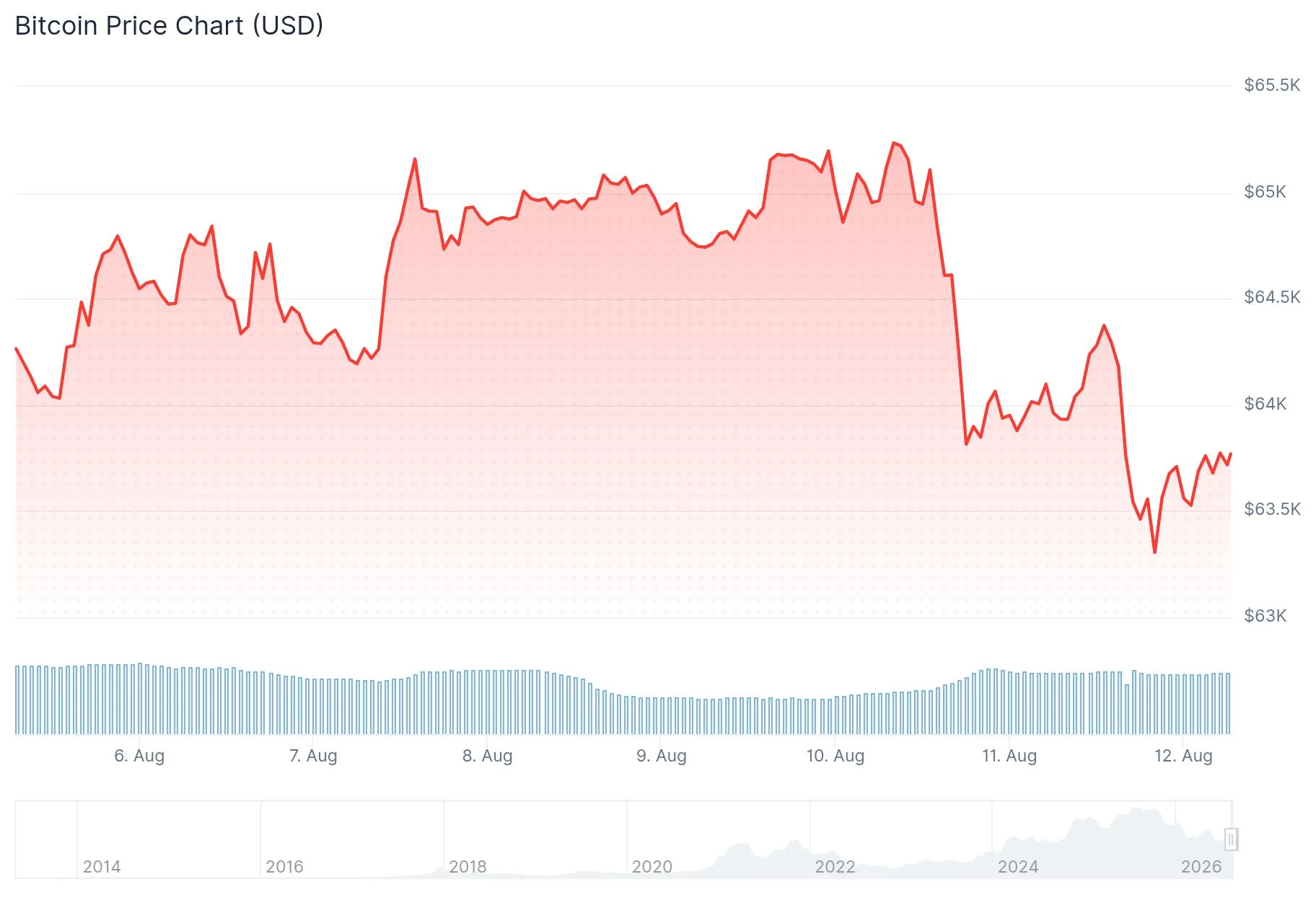
Bitcoin has been trading in a tight range between $62,000 and $66,000 for much of the summer, and Tuesday was no exception. BTC slipped to approximately $63,500, down 0.6% over 24 hours, extending a five-week standstill.
Crypto trading volumes have dropped to their lowest point in three years, leaving little momentum to push prices in either direction. The lull reflects a broader pattern across digital asset markets, where participants have largely de-risked heading into a seasonally weak period and a congested macroeconomic calendar.
"Bitcoin's recent price action has largely been driven by steady ETF inflows being offset by OTC selling from miners and Strategy," said Paul Howard, senior director at trading firm Wincent.
ETF buying has been consistent, but it continues to be offset by other market participants. U.S. spot Bitcoin ETFs, approved in January 2024, have channeled billions in institutional demand into BTC, yet their impact on price has been blunted by countervailing outflows. Bitfinex analysts noted that corporate treasury activity has provided additional selling pressure, which is why BTC gained only around 2% last week despite strong ETF inflows.
Strategy's Bitcoin Sales Draw Attention
Michael Saylor's Strategy has sold 6,916 BTC — worth over $440 million — since June, marking four consecutive sales. Two of the sales were used to fund a USD reserve, while the other two funded MSTR share buybacks.
This represents a clear departure from Saylor's previously held position of never selling Bitcoin. Whale wallets have purchased approximately 30,000 BTC in August alone, but Strategy's selling has contributed to downward pressure on the price.
The Coldcard wallet hack added another layer of uncertainty to the market. Losses are estimated between 1,400 and 1,700 BTC, valued at over $100 million.
CPI Report Takes Center Stage
Wednesday's U.S. CPI inflation report is now the market's primary focus. It will be the first major inflation reading since Fed Chair Kevin Warsh's inflation-focused press conference following the July Fed meeting. Inflation prints have become a recurring catalyst for Bitcoin: softer-than-expected data has reinforced expectations of monetary easing, historically benefiting risk assets, while hotter readings have tightened financial conditions and pressured prices.
"Conviction is thin on both sides as summer illiquidity reigns supreme," said Jeff Anderson, managing partner at STS Digital.
Technical Outlook
On the weekly chart, a buy signal triggered when the RSI hit 30 remains active. This signal has marked the end of bear markets on two out of the past three occasions. However, $60,000 is the key support level to monitor. A break below that threshold would weaken the case for the signal playing out again.
Analyst Ted Pillows noted on X that Bitcoin rose 10.75% in the week following June's CPI release and 7.58% after July's. With another CPI report due Wednesday, he posed the question: "What'll happen this time?"
$BTC pumped after the last 2 CPI data. June CPI: Bitcoin pumped 10.75% in a week. July CPI: Bitcoin pumped 7.58% in a week. Tomorrow, US CPI data will released again. What'll happen this time? pic.twitter.com/IYfFCl70PT — Ted (@TedPillows) August 11, 2026
September has historically been Bitcoin's weakest month, averaging a 4% decline since 2013, according to CoinGlass data, adding a seasonal headwind to an already rangebound market.

