Bitcoin (BTC) Rebounds Above $83,000 as Asian Chip Stock Selloff and Elevated Oil Prices Weigh on Markets
Key Takeaways
- •Bitcoin recovered from an early drop below $,000 to trade near $83,530 on Tuesday, with Ether, XRP, Zcash, and Solana also bouncing from their lows.
- •South Korea's KOSPI plunged 6.50% to 6,001.81, its lowest level since late July, as Samsung Electronics and SK Hynix each dropped about 8% on AI-valuation concerns and competition from Chinese memory-chip makers.
- •Brent crude hovered around $106 and WTI near $92.67 following attacks in Saudi Arabia and threats to Strait of Hormuz shipping, while the Dollar Index held near 102.50, its highest since April of last year.
- •Spot Bitcoin ETFs recorded $681 million in net outflows for the week to October 9, ending a three-week inflow streak, and spot Ethereum ETFs saw $542 million in withdrawals over the same window.
- •Strategy bought 250 Bitcoin for roughly $21.5 million at an average of $86,194 per coin, lifting its holdings to 848,250 BTC valued near $70.6 billion.
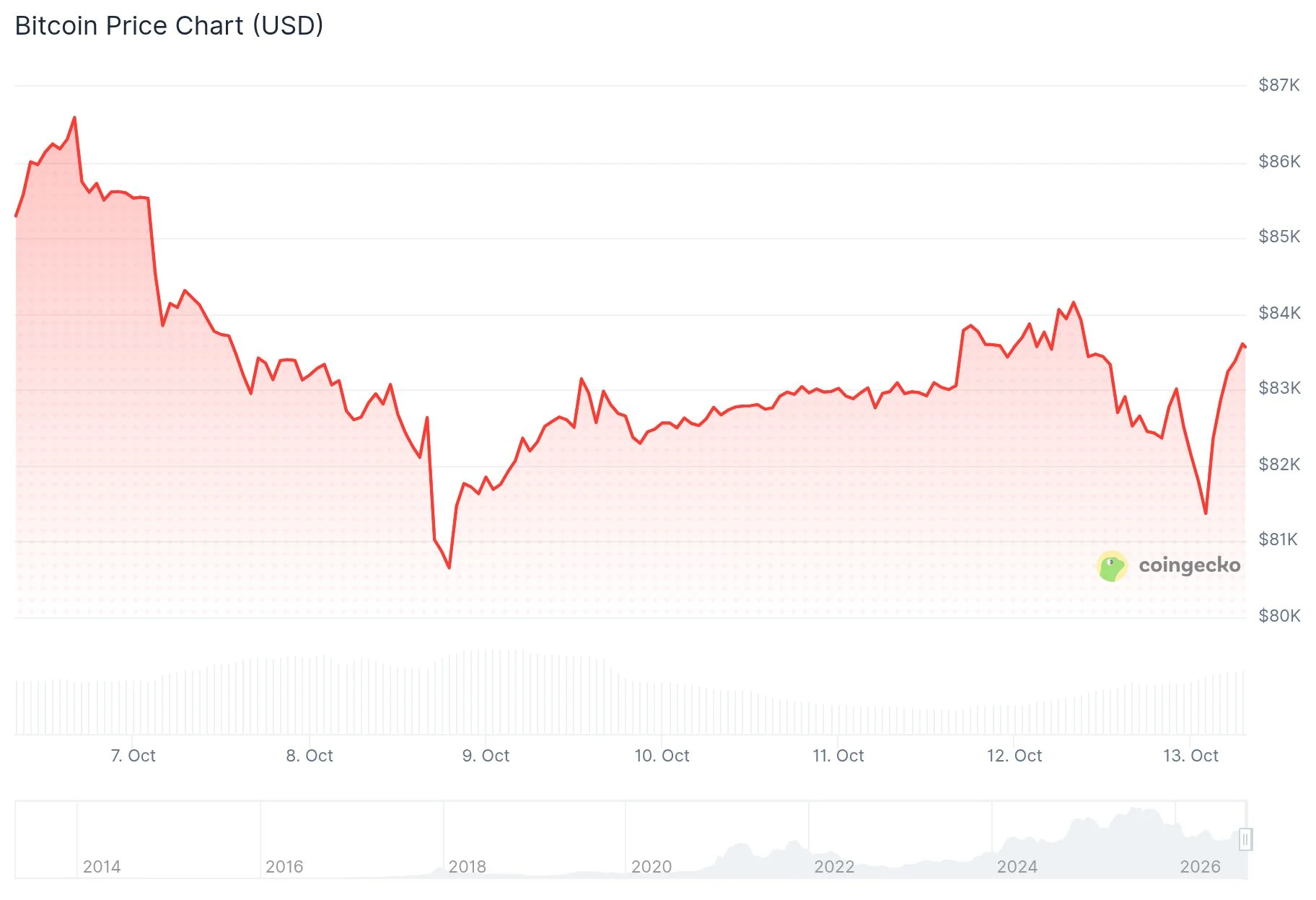
Bitcoin (BTC) climbed back above $83,000 on Tuesday after an early drop, with the largest cryptocurrency sinking to just under $81,000 at 00:50 UTC before staging its recovery, according to CoinDesk data. It was trading near $83,530 at the time of writing.
The intraday rebound came against a tense backdrop across traditional markets. Asian equities sold off sharply, crude oil prices remained elevated on Middle East supply concerns, and investors were positioning cautiously ahead of key US inflation data due later in the week.
Other major digital assets followed a similar pattern. Ether (ETH) bounced from five-day lows, while XRP turned higher after touching three-week lows. Zcash (ZEC) and Solana (SOL) also recovered alongside the market leader after early weakness.
Asian Stocks Fall While Oil Stays High
South Korea's KOSPI index plunged more than 6% intraday, breaching the 6,000 level to reach its lowest point since late July. The index fell 6.50% to 6,001.81, with semiconductor heavyweights bearing the brunt of the selling pressure in early trading.
The selloff, driven by rising geopolitical tensions and a semiconductor-led rout, dragged all six major Asian indices lower on the session, according to market commentary shared widely on X.
🚨BREAKING: Asian markets turn into a sea of RED as geopolitical tensions and a semiconductor selloff drag ALL six major indices lower. – South Korea's KOSPI plunges -6.50% to 6,001.81, with SK Hynix shares tumbling over 8%. – Japan's Nikkei 225 drops -2.77%, shedding 1,911… pic.twitter.com/BgzxFaZQHU
— Coin Bureau (@coinbureau) October 13, 2026
Chipmakers led the regional decline. Samsung Electronics and SK Hynix each fell about 8%, extending their losing streaks to five consecutive sessions, as investors weighed concerns over elevated AI-related valuations and rising competition from Chinese memory-chip makers. Samsung and SK Hynix rank among the world's largest memory-chip producers and sit among the heaviest-weighted stocks in the KOSPI, giving their swings an outsized effect on the index.
The weakness extended beyond Korea. Hong Kong's Hang Seng slipped 0.4%, while Nasdaq futures fell 0.6%, following a 0.78% decline in the Nasdaq during Monday's session.
Oil prices also stayed high. WTI crude traded near $92.67 a barrel, while Brent hovered around $106. Fresh attacks in Saudi Arabia and threats to shipping through the Strait of Hormuz have kept energy markets on edge. The strait is one of the world's most important transit routes for oil, giving threats to shipping there outsized influence over energy prices. Higher oil can raise inflation risks, which strengthens the case for Federal Reserve rate hikes. The Dollar Index held near 102.50, its highest level since April of last year.
On Monday, Bitcoin had slipped 1.3% to $82,553, according to Investing.com. Oil climbed above $106 after deadly weekend attacks on Riyadh's international airport. President Donald Trump announced an “energy ceasefire” between Russia and Ukraine, which limited some of the pressure on markets, although Moscow and Kyiv had not yet acknowledged the announcement.
ETF Outflows and Strategy Purchase
Spot Bitcoin ETFs posted $681 million in net outflows in the week to October 9, the worst weekly figure since late June. The withdrawals ended a three-week streak of net inflows, as investors took profits following a strong September quarter. Bitcoin itself fell about 2% over the same period. The outflow data covers the week from October 5 to October 9 (ET). Spot Bitcoin ETFs hold the asset directly on US-listed exchanges, and their weekly flow figures are among the most closely tracked gauges of institutional crypto demand.
Spot Ethereum ETFs separately recorded $542 million in net outflows over the same window, according to data shared by Wu Blockchain.
Spot Bitcoin ETFs Saw $681 Million in Net Outflows Last Week; Spot Ethereum ETFs Recorded $542 Million in Net Outflows From October 5 to October 9 (ET), spot Bitcoin ETFs posted net outflows of $681 million, ending a three-week streak of net inflows. Spot Ethereum ETFs recorded… pic.twitter.com/GoEWFIpBlv
— Wu Blockchain (@WuBlockchain) October 12, 2026
Buying activity on the corporate side continued, however. Strategy, the business-intelligence software firm turned Bitcoin treasury company, purchased another 250 Bitcoin for approximately $21.5 million between Oct. 5 and Oct. 11, paying an average price of $86,194 per coin.
The acquisition lifts the company's total holdings to 848,250 BTC, currently valued at about $70.6 billion. Co-founder Michael Saylor said the firm has paid an average of $75,444 per Bitcoin.
Among market watchers, analyst Daan Crypto Trades noted on X that Bitcoin closed its latest weekly candle above the May highs. He said the trend still looks good as long as that level holds, that the May highs otherwise serve as an easy level to monitor.
$BTC Did end up closing above the May highs on this weekly candle. Still looks good as long as it keeps doing that. If not, you got your easy to follow level right there to watch. If at some point during this trend up, we'd see a larger drawdown, the bull market support band… pic.twitter.com/N5hVMkcQUK
— Daan Crypto Trades (@DaanCrypto) October 12, 2026
He added that if a larger drawdown occurs at some point during the uptrend, the bull market support band would be the first level to watch. That band, he noted, is rising by about 1% each week.
Paul Howard, senior director at market maker Wincent, said he expects institutions to add protection through derivatives ahead of Thursday's inflation print. In his view, institutional players are likely to hedge their exposure rather than cut their core positions. Derivatives-based hedging allows traders to keep their underlying holdings while limiting potential downside around scheduled data releases.
Traders are now focused on Thursday's US consumer price index report, the next major macro event on the calendar. CPI readings feed directly into Federal Reserve rate expectations, making the report a key input for liquidity conditions across crypto and broader risk markets. Bitcoin was changing hands near $83,530 on Tuesday, according to CoinDesk data.
This article first appeared on CoinCentral.

