Crypto Short Squeeze Liquidates Over $4 Billion as Bitcoin Reaches $75,000
Key Takeaways
- •More than $4 billion in leveraged short positions were forcibly liquidated within a 48-hour window, marking the most significant liquidation event since 2021.
- •The U.S. Treasury's August 19 announcement doubling its bond buyback purchase cap to $4 billion per session, effective September 9 through November 4, lifted Bitcoin from $64,100 to $66,800 within the first hour and ignited the cascade.
- •Short position closures totaled roughly $2.77 billion, or 92% of all liquidations, after six weeks of bearish positioning had pushed shorts above 51% of open interest across major exchanges by August 18.
- •President Trump's call for lawmakers to pass the Digital Asset Market Clarity Act, which passed the House in July and would divide oversight between the SEC and CFTC, drove Bitcoin from $68,000 to above $71,000 on August 20.
- •Ethereum posted an 18% single-day gain, its strongest advance since March 2024, while Bitcoin's $1.5 trillion market capitalization remains approximately 40% below its October peak above $126,000.
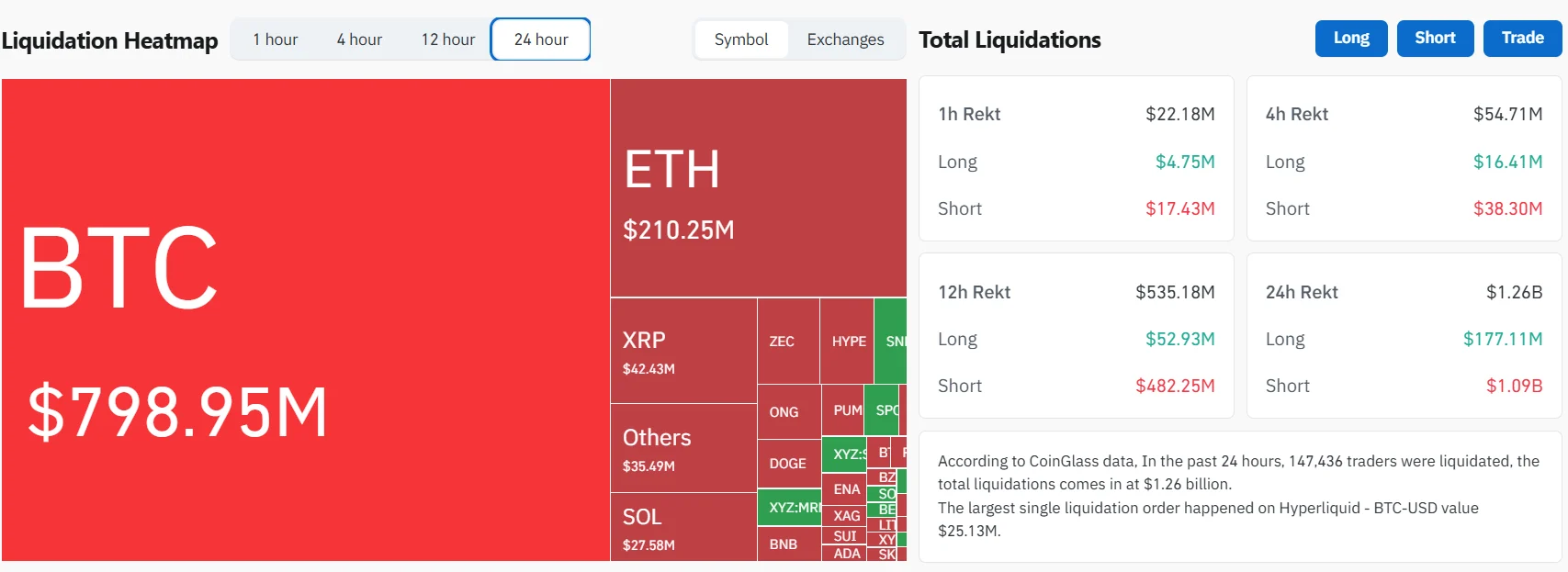
Cryptocurrency markets staged a dramatic rally this week after more than $4 billion in leveraged short positions were forcibly liquidated within a 48-hour window, driving Bitcoin and other digital assets to their highest levels in weeks. The wave of forced closures marks the most significant liquidation event since 2021.
Bitcoin climbed to approximately $75,000 during Friday's Asian session, an 8% gain on the day and nearly 18% over the past seven days. Just 48 hours earlier, the largest cryptocurrency had been trading near $64,100.
Treasury Announcement Ignites the Move
The turning point came on August 19, when the U.S. Treasury Department announced it would expand its bond repurchase program for longer-dated securities. The maximum purchase size per session doubled from $2 billion to $4 billion, with the new parameters taking effect September 9 and running through November 4. The program itself is a recent addition to Treasury's toolkit: the department restarted regular buyback operations in 2024, reviving a liquidity-management instrument it had largely shelved since the early 2000s.
Bond buyback programs withdraw older, less liquid securities from circulation while introducing new issuance. This mechanism compresses yields on the long end of the curve and creates a more favorable environment for risk-oriented assets, including cryptocurrencies.
Bitcoin jumped from $64,100 to $66,800 in the first hour after the Treasury's statement — an initial move large enough to trigger the first round of automatic closures on leveraged bearish positions.
How the Liquidation Cascade Unfolded
Liquidations occur when traders hold leveraged positions betting on price declines. Once prices move against them beyond a certain threshold, exchanges automatically close those positions through market buy orders. The forced purchases then push prices higher still, producing a cascading effect that triggers additional liquidations.
The cascade continued for roughly 18 hours. Short position closures totaled about $2.77 billion, representing 92% of all forced liquidations during the period. The single largest position terminated was a $25.13 million Bitcoin position on the Hyperliquid exchange. Cascades on this scale are rare, and the 2021 episodes — when successive multi-billion-dollar liquidation waves accompanied Bitcoin's sharpest swings of that cycle — remain the standard reference point for how quickly crowded, one-sided leverage can unwind.
Six Weeks of Bearish Positioning
The squeeze had been building for weeks. Short-heavy positioning had accumulated over the six weeks preceding the event, with funding rates on Bitcoin perpetual futures — the no-expiry contracts that account for the bulk of crypto derivatives activity — turning negative in late July and remaining negative through mid-August. Because bearish traders were actually paid to maintain their positions under negative funding, additional participants were drawn into shorts for the income opportunity rather than out of bearish conviction.
By August 18 — one day before the liquidation event began — short positions accounted for more than 51% of open interest across major exchanges including Binance, OKX, and Bybit. When the Treasury news provided upward momentum, that concentrated positioning could not withstand the price movement without triggering widespread forced buying.
A Secondary Catalyst from Washington
A second catalyst emerged shortly afterward. President Trump called on lawmakers to pass the Digital Asset Market Clarity Act during a White House meeting attended by representatives from Coinbase, Gemini, Ripple, and Chainlink Labs. The development pushed Bitcoin from $68,000 to beyond $71,000 on August 20. The bill passed the House in July and would divide regulatory jurisdiction over digital assets between the Securities and Exchange Commission and the Commodity Futures Trading Commission — a split the industry has long sought, since crypto assets currently occupy a gray zone between the two regulators.
Ethereum posted an 18% single-day gain — its most powerful advance since March 2024 — exceeding Bitcoin's performance, driven partly by short positioning even more concentrated relative to its open interest. Solana climbed more than 5% daily and 17% weekly, Dogecoin advanced nearly 9%, and other altcoins recorded double-digit weekly gains.
Exchange-Level Liquidation Figures
Binance processed approximately $518 million in liquidations, Hyperliquid handled roughly $513 million, and Bybit registered around $303 million in forced closures.
Bitcoin's market capitalization currently stands at $1.5 trillion, though that remains approximately 40% below its October peak above $126,000.
The Road to November 4
The Treasury's enhanced buyback program concludes on November 4. Two signposts stand out before then: the September 9 start of the expanded purchase parameters, and whether the Senate takes up the Clarity Act following the White House meeting. The sustainability of the rally beyond that date will hinge on whether fresh capital flows into the market or whether traders are merely adjusting their positioning ahead of the next directional move.

