U.S. Bitcoin ETFs Draw $731M in Largest Single-Day Inflows Since January
Key Takeaways
- •U.S. spot Bitcoin ETFs recorded $730.9 million in net inflows on Thursday, the largest daily total since January 14.
- •BlackRock's IBIT led with about $454 million, while Ark Invest, Fidelity, Grayscale, and Bitwise also received inflows.
- •Bitcoin retreated to $79,338.54 after U.S. jobs data showed 162,000 jobs added in August versus roughly 56,000 expected, reviving talk of a September Fed rate hike.
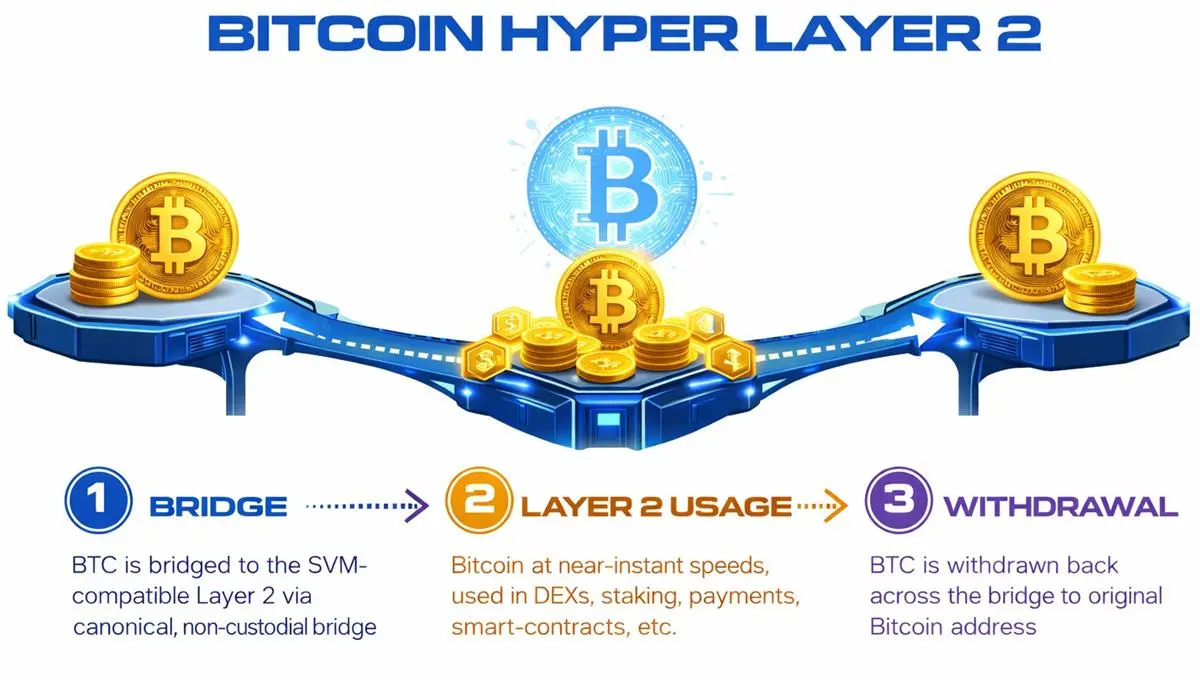
- •Bitcoin Hyper is developing a Layer 2 using the Solana Virtual Machine to enable faster BTC transactions, settling periodically to Bitcoin's base chain.
- •Bitcoin Hyper has raised $33 million in presale at $0.01368 per token, with presale staking offered at 35% APY.
U.S. spot Bitcoin ETFs recorded their strongest day of inflows in nearly eight months this week, pulling in $730.9 million in net flows on Thursday — the largest daily total since January 14.
BlackRock’s IBIT led the buying with roughly $454 million, followed by Ark Invest’s ARKB and Fidelity’s FBTC. The inflows were broadly based rather than concentrated in a single fund: Ark Invest, Fidelity, Grayscale, and Bitwise all attracted fresh capital alongside BlackRock. The breadth is a reminder of how quickly the ETF market has matured since the U.S. Securities and Exchange Commission approved spot Bitcoin funds in January 2024, converting what was once a retail-dominated access route into a routine channel for institutional money.
Bitcoin itself has since retreated, trading at $79,338.54 after briefly climbing above $81,000. The reversal followed stronger-than-expected U.S. employment data: the economy added 162,000 jobs in August against expectations of roughly 56,000, putting a September Federal Reserve rate hike firmly back into the conversation. Strong labor data typically strengthen the case for higher-for-longer interest rates, a backdrop that has repeatedly weighed on risk assets, Bitcoin included.
The volatility, however, does not erase Thursday’s ETF flows — and the contrast is notable. Bitcoin can shed $2,000 in a matter of hours on a jobs report, while regulated funds quietly accumulate hundreds of millions of dollars in BTC. Buying Bitcoin has become easy; Bitcoin Hyper (HYPER) raises a different question: what happens when all that Bitcoin becomes easier to use?
Wall Street Has Solved the Bitcoin Access Problem
The ETF numbers illustrate how far Bitcoin has come as a financial asset. Institutions no longer need to set up wallets, manage private keys, or build specialized crypto infrastructure simply to hold BTC exposure. BlackRock alone can attract nearly half a billion dollars to its Bitcoin ETF in a single trading session.
That marks an extraordinary transformation for an asset that spent much of its early history outside mainstream finance.
The next chapter is less settled. Bitcoin now has an enormous pool of capital around it, but nowhere near the speed or utility of chains designed from the outset for smart contracts and high-speed transactions. Layer 2 development has become one of the most active corners of the Bitcoin ecosystem in recent years, with multiple teams racing to bring faster, cheaper transactions to a base chain that has deliberately prioritized security and decentralization over throughput.
Bitcoin Hyper Gives Developers Somewhere to Build Around BTC
Bitcoin Hyper is developing a Layer 2 built on the Solana Virtual Machine (SVM), the execution environment behind Solana applications. Rather than inventing another proprietary programming environment, Bitcoin Hyper gives builders access to tooling drawn from a mature ecosystem.
Applications that demand fast execution — such as real-world payments — can run off Bitcoin’s base layer while remaining centered on BTC. That means BTC can be used in trading applications, decentralized finance products, and payment systems where users expect an immediate response.
A checkout payment is an obvious example: Bitcoin may work extremely well as scarce digital money, but waiting 10 minutes for a transaction to settle is not how people expect a modern payment to behave.
For years, Bitcoin scaling debates have sometimes implied that Bitcoin needs to become something fundamentally different. Bitcoin Hyper takes the opposite approach: Bitcoin can keep being Bitcoin — but it can now move at Solana speeds (thousands of transactions per second) rather than Bitcoin’s 10 transactions per second. Periodically, transactions are bundled and settled on Bitcoin’s base chain. Whether Bitcoin Hyper and similar projects can deliver on that promise remains to be seen: past Bitcoin Layer 2 launches have faced scrutiny over security assumptions and actual settlement guarantees, so the mainnet launch will be a key test.
Is HYPER the Next Crypto to Explode?
Investors have already committed $33 million to the Bitcoin Hyper raise ahead of launch, giving HYPER one of the largest presale totals of 2026.
The token is currently available at $0.01368. After mainnet launch, HYPER will be used for transaction and application fees, as well as for staking and governance. Presale holders can currently stake their tokens for 35% APY. Coinsult and SpyWolf have audited the token contracts.
The fit is charged. The mission is clear. pic.twitter.com/BvWcrTMbWC — Bitcoin Hyper (@BTC_Hyper2) September 4, 2026
The $33 million figure matters because it reflects holder interest in the protocol’s potential — and in the simplicity of Bitcoin as the Layer 1 and Solana as the Layer 2. Presale-stage tokens, however, carry their own risks — audits and presale totals are not guarantees of post-launch performance — so the months after mainnet go live will show whether usage follows the fundraising.
Bitcoin’s latest move below $80,000 is a reminder that even an increasingly institutional asset remains volatile. The deeper story is what is being built around it.
Spot ETFs have made Bitcoin considerably easier for traditional investors to own: $731 million arriving in a single day shows how large that market has become, even before counting BTC held directly by companies, funds, and individual investors. Continued inflow data, upcoming Federal Reserve decisions, and Bitcoin Hyper’s mainnet launch are the developments to watch in the weeks ahead.
Bitcoin Hyper aims to take the next step — making that enormous asset base more useful, and returning Bitcoin to its roots as a currency people can actually spend. At $0.01368, HYPER offers presale investors early exposure.
The post Next Crypto to Explode as Bitcoin ETFs Pull in $731M in Biggest Day Since January appeared first on icobench.com.
