Bitcoin (BTC) Drops Below $83,000 as US Bond Yields Hit 24-Year High on Iran Tensions
Key Takeaways
- •Bitcoin dropped to $82,734 on Bitstamp on Wednesday, its lowest level this month, after Iran-related remarks about the Strait of Hormuz lifted oil prices and pushed the 30-year US Treasury yield to its highest level since 2002.
- •The 10-year Treasury yield reached 5.36% and the 30-year rose to 5.73%, while Brent crude briefly touched $102 a barrel before settling 0.6% higher at $101.17.
- •Federal Reserve minutes showed most FOMC members expect one more rate hike by year-end, but CME FedWatch data puts the probability of no change at the next meeting at about 83%, up from 54% a month earlier.
- •CryptoQuant reported that Bitcoin open interest fell from about $28.8 billion to $26.0 billion since late September, a nearly 10% drop read as leveraged positions unwinding amid weak spot and futures demand.
- •Analyst Ted Pillows identified large buy orders between $81,000 and $82,500 as a potential bounceback zone, while Bitcoin faces resistance near $87,000 and trades below its 21-day moving average of $83,850.
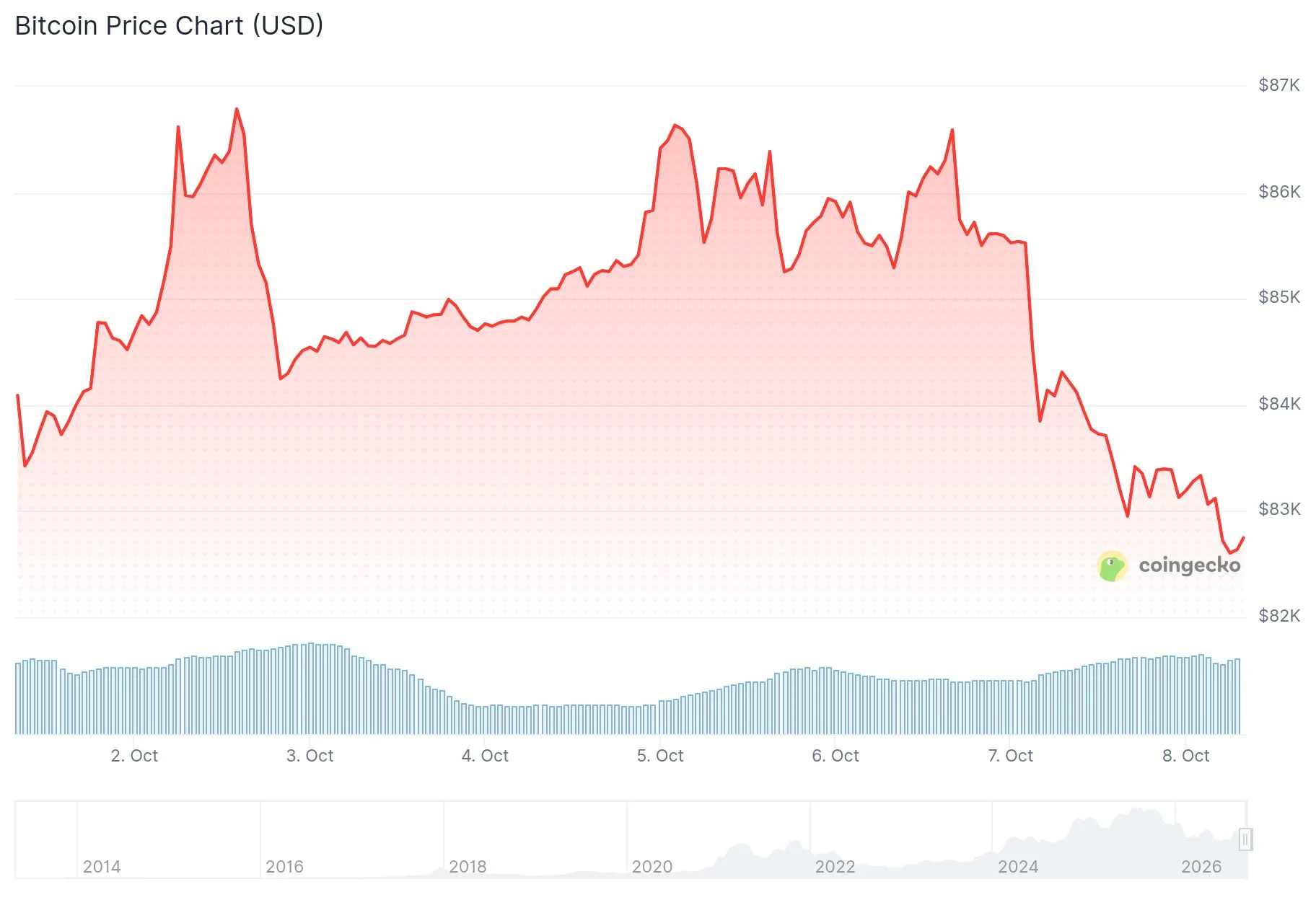
Bitcoin dropped below $83,000 on Wednesday, marking its lowest level so far this month, as US bond yields spiked and oil prices climbed on tensions in the Middle East.
Data from Bitstamp showed BTC/USD sliding to $82,734, while a separate reading from Investing.com put the decline at 2.8%, with Bitcoin trading at $83,198.5 by late afternoon.
The sell-off followed comments from an adviser to Iran's Revolutionary Guards, who said the Strait of Hormuz was under full military control and would remain that way "until Iran's legitimate demands are met." The strait is one of the world's most important corridors for global oil shipments, which is why remarks about its status tend to move energy markets quickly. Brent crude rose to $102 a barrel on the news before settling 0.6% higher at $101.17, while WTI crude touched $91 during the session.
Bond Yields Reach Levels Not Seen in Decades
US bond yields jumped as investors reacted to the oil news and persistent inflation worries. The 10-year yield reached 5.36%, while the 30-year yield climbed to 5.73%. The 10-year Treasury yield is a widely followed benchmark that influences borrowing costs across mortgages, corporate debt and other credit markets.
Ash Crypto, an analyst with a large following on X, summed up the move in a post, writing that Bitcoin "just dropped below $83,000 as the US 30-year yield hit its highest level since 2002."
$BTC just dropped below $83,000 as the US 30-year yield hit its highest level since 2002. pic.twitter.com/TO2Kde8WNE
— Ash Crypto (@AshCrypto) October 7, 2026
Higher yields tend to pull money away from riskier assets such as Bitcoin, since Treasuries deliver that benchmark return with far less risk, raising the opportunity cost of holding a non-yielding asset. Stocks also pulled back, with the S&P 500 falling 0.6% to 7,773 points after setting a record high the day before.
Yields eased somewhat in the afternoon after a $39 billion 10-year Treasury auction drew strong demand. Even so, the auction cleared at the highest yield for that type of sale since November 2000.
Minutes released this week by the Federal Reserve added to the pressure. Most Federal Open Market Committee members said they expect one more rate hike by the end of the year. The Fed raised its benchmark rate by 25 basis points in September, its first hike in more than three years.
Despite the minutes, traders still view a hold as the likely outcome at the next meeting. The CME FedWatch tool put the odds of no change at about 83%, up from 54% a month earlier — making that decision one of the most closely watched items on the calendar for markets sizing up the yield environment.
Demand Signals Point to a Quieter Market
Onchain analytics firm CryptoQuant said Bitcoin demand has cooled since late September. Open interest, which tracks the total value of outstanding futures positions, fell from about $28.8 billion to $26.0 billion over that period, a drop of nearly 10%. According to the firm, the decline points to limited appetite from both spot buyers and futures traders; a drop of that scale is typically read as leveraged positions being unwound rather than new capital flowing in.
CryptoQuant also flagged $69,500 as a level worth watching, noting that it marks the average cost basis for short-term Bitcoin holders.
The drop to $83,000 pushed Bitcoin below its 21-day simple moving average of $83,850, a level that had served as support earlier in the month.
Not every trader views the pullback as bad news. Analyst Ted Pillows posted that large buy orders have been placed between $81,000 and $82,500, describing the range as a possible "bounceback zone" for Bitcoin.
Large $BTC buy orders placed between $81,000-$82,500. This could be the bounceback zone for Bitcoin. pic.twitter.com/tfnRJyTdsM
— Ted (@TedPillows) October 7, 2026
Bitcoin has struggled to clear resistance near $87,000 in recent weeks. Broader cryptocurrency prices also declined on Wednesday, with Ether, XRP, Dogecoin, Solana and Cardano all trading lower on the day. With Bitcoin now positioned between the bid zone near $81,000–$82,500 and resistance around $87,000, traders are watching the Fed's next meeting and any shift in Middle East tensions as the near-term developments that could set the tone.
This article was originally reported by CoinCentral.

