Bitcoin Has Become Boring, Finally — and That's Worth Celebrating
Key Takeaways
- •The commentary argues that bitcoin's transformation into reliable, 'boring' financial infrastructure mirrors the maturation path of earlier world-changing technologies such as electricity during the war of the currents.
- •Bitcoin's market cap now exceeds one trillion dollars, with roughly $100 billion held in ETFs following the January 2024 launch of U.S. spot bitcoin ETFs.
- •Strategy, formerly MicroStrategy, is valued at about $55 billion and holds roughly $63 billion worth of bitcoin, and major banks now accept bitcoin as collateral.
- •Between Q1 and Q3 2026, an estimated $1.6 trillion to $4.1 trillion was settled on-chain, with the average bitcoin transaction around $10,000 versus PayPal's average payment of about $70.
- •The radical vision of bitcoin as everyday peer-to-peer cash has faded as the network evolved into a global value-transfer medium, a store of value, and settlement rails that even stablecoins use.
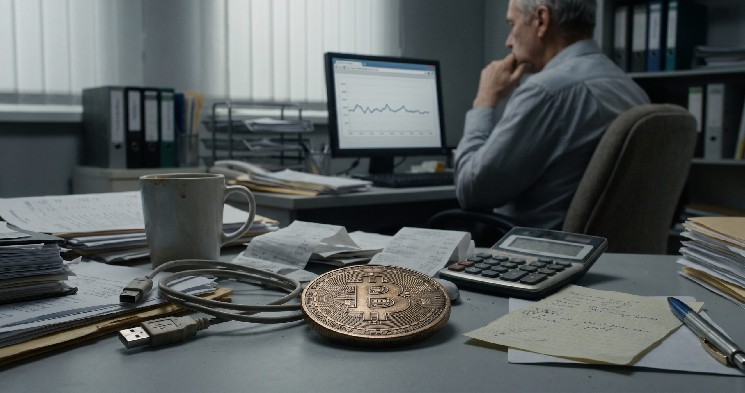
A commentary published by Bitcoin Magazine argues that bitcoin's transformation from a rebellious subculture into dependable financial infrastructure should be read as a triumph rather than a letdown. The piece, written by Roy Sheinfeld, traces how the network's journey to “boring” mirrors the maturation of earlier world-changing technologies — and why that dullness is a mark of success.
When Bitcoin Conferences Felt Like a Party
The 2019 Lightning conference in Berlin — centered on the payments protocol built on top of bitcoin — was electric: five hundred “cypherpunks” feeding one another's excitement over visions of a future built on peer-to-peer electronic cash. Attending a bitcoin conference in that era, the author recalls, felt like being a teenager at a friend's house party while the parents were out of town. It was exciting and new — the opposite of FOMO. Something big was happening, attendees were on the inside, and the rest of the world would soon envy them. Whenever someone bought a beer with bitcoin, the crowd would whoop and holler and record the moment for Instagram or Twitter (it was still called Twitter).
Lightning was the bleeding edge. Enthusiasts insisted on calling it “the Lightning Network” — capitalized, if you please — and talking about it felt like talking about string theory: something so far out that one couldn't be sure it was real. The author admits he spent a lot of time invoking the abacus.
Those are the memories many long-time participants keep trying to relive at bitcoin conferences today, through rituals like drone shows, Satoshi Rockamoto sets, beefsteak dinners, and video game tournaments paying out sats (satoshis, bitcoin's smallest unit). But it is not the same. The ratio of bitcoin OG speakers to suits keeps shifting, many event rooms sit half empty, and the halls and meeting rooms are full of people negotiating cap tables and profit-sharing splits.
The adults never shut the party down, Sheinfeld notes — but they have crashed it, and it now feels like their party. The most striking thing he noticed at the last bitcoin conference he attended was that nothing exciting happened. And that, he argues, is worth celebrating.
From Tech Subcultures to Mainstream Adoption
The road to boring is seldom smooth. Technological innovation feeds on passion and bold ideas: people work harder on a project when they feel strongly about it and identify closely with like-minded collaborators. That is where tech subcultures, their rituals, and their dogmas come from. But such passion and tribalism feed conflict — at least until the technology goes mainstream and users who couldn't care less about subculture squabbles take over.
This progression from thrilling new technology to humdrum utility is not unusual. World-changing innovations often begin with a committed subculture that identifies fiercely with its oddball technology before the mainstream adopts it and soon expects it. The trajectory has become standard doctrine in tech marketing. In the internet's early days, early adopters wrote a Declaration of the Independence of Cyberspace in 1996, picking a fight with states and corporations armed with nothing but chatrooms and dreams.
One case that closely resembles bitcoin's early years was the war of the currents between high-voltage AC and low-voltage DC in the 1880s and 1890s. Both contests featured big personalities stunning audiences with flashy conference demos: Edison and Westinghouse wowed crowds with lightbulbs that made artificial light, just as bitcoiners in 2019 wowed YouTube by buying beer with bitcoin. Both spawned rabid subcultures accusing each other of putting the future of the technology — if not humanity — at stake. In the 1880s, the dispute was whether AC was more deadly to humans and animals than DC; in the 2010s, it was whether capping bitcoin's block size at 1MB would perpetuate monetary servitude forever.
In both cases, devoted subcultures whose disagreements helped the technology mature eventually watched it cross the chasm of exoticism into the new, boring normal. Both are now largely managed by experts on pragmatic principles rather than passionate conviction. Conferences evolved from spectacular showcases of technological miracles into sedate affairs where professionals debate and agree on industry standards. Pragmatism and consensus replaced ideology and dissent. In both instances things got boring — and boring was actually better.
Mainstream Adoption Is Boring
What “boring” means for bitcoin, and how it got that way, depends on the observer's vantage point. Broadly, there are two schools of thought on what bitcoin is and what it is for — and though they started in different places, both are reaching the same conclusion: bitcoin is more boring than ever.
Bitcoin as a Tradable Asset
The existential question that defined bitcoin's first decade is settled: bitcoin is not a scam, and it is not going away. That status is stable largely because bitcoin is now too big to fail, with a market cap exceeding a trillion dollars.
Much of that scale comes from millions of people who want to own bitcoin as part of their savings without necessarily trading or circulating it. In other words, they see it as a better form of gold, not cash. These savers want bitcoin integrated into their fiat portfolios like any other asset, and they are not terribly concerned with its role as a medium of exchange so long as it is firmly established as a viable, tradable commodity.
Investors in bitcoin are happy when the number goes up — and historically it generally has, though depending on the week one may need to zoom out on the price graph. Bitcoin used to be a rollercoaster; now it is more of a hike. The ups and downs still happen, but they are gentler and somewhat more predictable.
The price settled down as mainstream finance grew more comfortable with the asset. Whereas conventional finance once wanted governments to shut bitcoin down, roughly $100B worth of bitcoin is now held in ETFs — U.S. spot bitcoin ETFs launched in January 2024 — and traded on ordinary equity markets. Major banks that once shunned bitcoin now accept it as collateral. Bitcoin is a regular feature of corporate treasuries, and some companies exist purely to hold it. Strategy — the company formerly known as MicroStrategy — is worth about $55B on the open market and holds about $63B worth of bitcoin, making the entire company effectively a discounted bitcoin wallet. Bitcoin also appears routinely in retirement accounts, pension allocations, and sovereign wealth funds. Treating it as another asset class for institutional and retail investors now makes sense, because that is what it has become.
Why are these canny investors bored? Because the exciting developments that led bitcoin to become a valuable asset have already happened. If the goal was integration into conventional finance, it has incontrovertibly been achieved. You can't YOLO on bitcoin any more than you can YOLO on gold. The milestones sit in the history section of the Wikipedia page, not on the roadmap. These investors are bored because mainstream finance has effectively tamed bitcoin: it is easily tradable, its trading volumes are remarkable, and it is digital gold with a slightly steeper curve and a little more volatility — exactly what they always wanted.
Bitcoin as P2P Electronic Cash
The main alternative view casts bitcoin not as a mainstream investment asset but as monetary dynamite to ignite a revolution. Adherents wanted bitcoin to blossom into a system of peer-to-peer electronic cash that would first run parallel to the mainstream monetary system, then supplant it. These radicals wanted banks to collapse — not to accept bitcoin as collateral. It was monetary insurrection, not incremental change.
That radical perspective persists, but the wind has gone out of its combative sails for several reasons.
First, a generational shift. Many who championed the revolutionary vision in their twenties fifteen years ago have moved on. Some got rich and retired, or came to see and use bitcoin as a tradable asset. For others, bitcoin never achieved the success they dreamt of — but it was successful enough that fighting for its future no longer felt necessary.
Second, AI is the new cool kid on the tech block. Instead of building beer vending machines that accept bitcoin, enthusiasts who want to hack the system now decompile games with AI. No VC will waste a second on a pitch deck that doesn't feature AI on at least half of the slides. Miners are turning their server stacks and power contracts into AI data centers. Curious engineers have a new, much bigger toy to play with.
Third, mainstream bitcoin fans on Wall Street consume too much bandwidth. Banks, publicly traded companies, and financial institutions with billions at their disposal dominate conference panels and supply the talking heads for financial news shows. They want to discuss volatility and discount rates rather than personal sovereignty and individual financial freedom. Fighting against the system is not a narrative they can sell while representing the interests of that very system.
Fourth, bitcoin usage has moved past the radical mantras and progressed in a different direction. The dream of bitcoin becoming the standard payment medium of a circular economy — where everyone buys coffee with bitcoin (why is it always coffee?) — increasingly feels like an alternative history in a parallel universe.
A circular economy is simply not the role bitcoin has grown into. Instead of everyday payments, bitcoin has become a medium of global value transfer: a technology for moving real money across borders as remittances, a settlement layer between crypto assets, and a store of value that people constantly buy, sell, and trade. It has evolved into a network of rails that even stablecoins are happy to use.
Fixating on coffee purchases obscures the remarkable scale bitcoin has reached. Somewhere between $1.6 trillion and $4.1 trillion was settled on-chain between Q1 and Q3 2026, depending on the counting method. PayPal processed $1.79 trillion across all of 2025. The average PayPal payment is about $70, while the average bitcoin transaction, using the strict counting method, is $10,000. With bitcoin moving trillions in value, coffee is beside the point. (Sources: Bitcoin, Mastercard, PayPal.)
Bitcoin may not have cornered retail payments, but it is a mature and highly liquid asset — an industry unto itself. It has found its place in the economy and is thriving. Despite the lack of revolutionary fireworks, bitcoin is changing mainstream finance by opening new possibilities and financially enfranchising new user groups. That is still worth celebrating.
Awesome Reality Beats Perfect Fantasy
What is really boring? Electricity infrastructure. What can no one live without despite how boring it is? Electricity infrastructure.
When revolutionary technologies fade into the background of everyday life — used constantly and without a second thought — they become boring, and they become essential. Buying a beer with Lightning is no longer exciting because we can now expect it to simply work without fanfare. “It will just work” sounds dull, but it is a clear sign of triumph.
Bitcoiners and builders, the author contends, need to adjust to this beautiful, boring reality. The neighbors can be spared the orange-pill evangelism; the focus now is utility, not evangelism. That means building rails bitcoin and stablecoins can use together seamlessly, adding bitcoin to mainstream fintech apps, and building new financial applications on top of the bitcoin chain. Perhaps none of it will light fireworks at the radicals' victory party or replace T-bills — short-term U.S. Treasury debt — as the base layer of global finance, but every user who discovers bitcoin's unique utility is further evidence of its mainstream adoption.
What exists today is a thriving technology that enables miraculous new things and has achieved undeniable scale — so much so that it is now too big to fail. It may not be the future dreamed about in Berlin seven years ago, but it is wonderful in its own right, and worth cultivating and celebrating.
Nobody sets out to grow up and become boring one day, yet boring remains a valid kind of success. It means you have made it, and you are doing fine. Boring is what happens when things just work — and when things have just worked out. Bitcoin did not break the world; those building on it are making a new one. A party with adults present is still a party, and perhaps bitcoiners are now the adults. The author's closing line: “So dance while you wait for the dollar to collapse.”
This article, “Bitcoin Has Become Boring, Finally,” first appeared on Bitcoin Magazine and is written by Roy Sheinfeld. Original publication: Bitcoin Magazine

