Hyperscalers Commit Nearly $2.4 Trillion to Data Center Buildout as AI Infrastructure Race Accelerates
Key Takeaways
- •The four largest hyperscalers have committed approximately $2.4 trillion to infrastructure, with combined capital expenditure guidance of roughly $725 billion for 2026 representing a 77% year-over-year increase.
- •Meeting surging AI demand requires 55 to 60 gigawatts of additional data center capacity, equivalent to the output of roughly 55 to 60 nuclear reactors, which is already straining electrical grids in key markets.
- •Former Bitcoin mining facilities are being repurposed for AI workloads, exemplified by Cipher Mining's $5.5 billion contract with AWS, as their existing power infrastructure suits AI data center requirements.
- •Advanced AI semiconductors from Nvidia, AMD, and custom silicon programs remain in persistent short supply, with TSMC manufacturing the majority of these critical chips.
- •Antitrust regulators in the United States and European Union are monitoring whether infrastructure investments of this magnitude further entrench the dominant market positions of the largest cloud and AI providers.
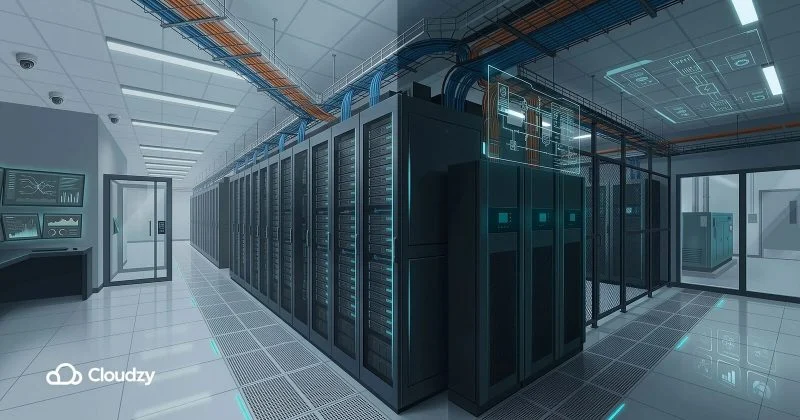
Amazon, Microsoft, Alphabet, and Meta—the world's four largest data center operators—have collectively committed to spending nearly $2.4 trillion on infrastructure in the coming years, escalating an AI-driven capacity race whose effects extend far beyond Silicon Valley. To put the figure in perspective, the combined commitment exceeds the annual GDP of countries such as Brazil or Canada, making it one of the largest sustained corporate capital deployments in modern history.
According to S&P Global estimates, data center capacity will need to expand by 55 to 60 gigawatts to meet surging demand, with associated spending projected to land between $1.8 trillion and $2.4 trillion through 2030. The combined commitment from these four hyperscalers sits at the upper end of that range.
Capital Expenditure Scaling Rapidly
Combined capital expenditure guidance for the four companies reaches approximately $725 billion for 2026 alone, representing a 77% year-over-year increase. Between 2026 and 2027, the group is expected to deploy roughly $1.5 trillion.
Goldman Sachs has projected that total spending could reach $5.3 trillion or more by the end of the decade. Cumulative big-tech AI infrastructure spending has already surpassed $1 trillion since 2023, with each quarterly earnings cycle bringing further upward revisions to capital expenditure plans. These escalating budgets reflect a strategic imperative: as training and inference workloads for large language models require exponentially more processing power than traditional cloud applications, computing capacity has become a direct proxy for competitive position in the commercial AI market.
Former Bitcoin Mining Sites Repurposed for AI
Former Bitcoin mining facilities are increasingly being repurposed for AI workloads, as hyperscalers compete for sites equipped with existing power infrastructure. Cryptocurrency mining operations were originally built to consume large volumes of electricity at locations with reliable grid connections—characteristics that make them well-suited for AI data centers with comparable power requirements.
Cipher Mining's $5.5 billion contract with AWS represents one of the most prominent examples of this shift. Deals involving hundreds of millions of dollars for power access and facility conversions have become routine across the sector.
For crypto miners, the value of their physical infrastructure—including land, power purchase agreements, and cooling systems—may now exceed its worth as Bitcoin mining operations. Several publicly traded mining companies have already pivoted to or announced dual-use strategies, effectively leasing capacity to AI tenants while retaining some mining operations.
Energy and Semiconductor Implications
The 55 to 60 gigawatts of additional data center capacity required will demand power generation equivalent to roughly 55 to 60 nuclear reactors. This demand is already straining grid capacity in critical markets such as Northern Virginia, where data center density has raised concerns about electricity availability for residential and commercial consumers. The scale of projected load growth has prompted several utility companies to delay planned retirements of fossil fuel plants and accelerate new generation projects to accommodate data center demand.
Each new facility requires advanced semiconductors, and AI accelerators from Nvidia, AMD, and increasingly from the hyperscalers' own custom silicon programs remain in persistent short supply. The majority of these advanced chips are manufactured by Taiwan Semiconductor Manufacturing Company (TSMC), concentrating a critical link in the global supply chain. US government efforts under the CHIPS and Science Act to expand domestic fabrication capacity are aimed in part at reducing this dependency. Spending commitments of this scale effectively ensure sustained elevated demand for semiconductors for the foreseeable future.
As hyperscalers secure power capacity through long-term contracts, available supply for mining operations could tighten, potentially raising marginal production costs for Bitcoin. Conversely, miners holding valuable power contracts retain assets that may appreciate independently of Bitcoin's price, with the flexibility to mine when profitable or lease capacity to AI firms when not. Meanwhile, antitrust regulators in the United States and European Union are monitoring whether infrastructure investments of this magnitude further entrench the dominant market positions of the largest cloud and AI providers.

