Treasury Secretary Scott Bessent Urges Senate to Pass CLARITY Act, Warns U.S. Risks Losing Digital Asset Leadership
Key Takeaways
- •Treasury Secretary Scott Bessent has called for an immediate Senate vote on the CLARITY Act, warning that legislative delays could cost the United States its leadership position in the digital asset sector.
- •The CLARITY Act has already passed the House and seeks to clarify the regulatory jurisdictions of the SEC and CFTC over digital assets, addressing longstanding compliance ambiguity for cryptocurrency businesses.
- •Multiple jurisdictions including the EU, Singapore, the UAE, and Hong Kong have implemented comprehensive digital asset frameworks, intensifying global competition for blockchain investment and innovation.
- •Industry leaders and institutional investors broadly support the bill, viewing regulatory certainty as a prerequisite for expanded capital allocation, startup formation, and market participation in U.S. digital assets.
- •The legislation must still proceed through the full Senate legislative process, including potential floor debate, committee review, and amendments, before it can be sent to the president for signature.
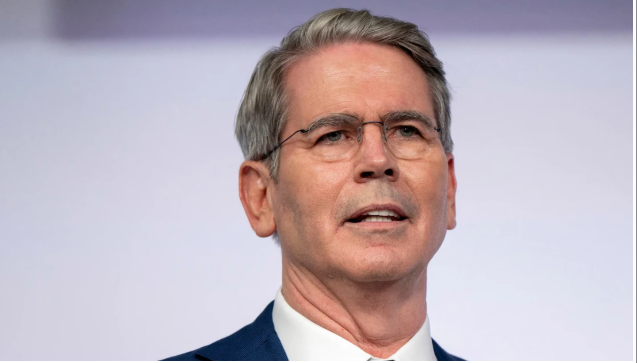
Treasury Secretary Scott Bessent Urges Senate to Pass CLARITY Act, Warns U.S. Risks Losing Digital Asset Leadership
Treasury Secretary Scott Bessent has called on the Senate to vote immediately on the CLARITY Act, warning that further legislative delays could cost the United States its leadership position in the digital asset industry. His remarks come amid intensifying global competition among nations seeking to attract blockchain companies, cryptocurrency investment, and financial technology innovation.
"The Senate should vote on the CLARITY Act now or risk ceding U.S. leadership in the digital asset industry," Bessent said.
His statement was highlighted by Cointelegraph on X (source), reflecting the growing attention surrounding the legislation.
The broader significance of Bessent's comments extends well beyond cryptocurrency markets, touching on national competitiveness, financial innovation, and America's role in shaping the future of digital finance. As Treasury Secretary, Bessent's public push adds executive-branch weight to a bill that has already cleared the House, placing additional pressure on Senate leadership to schedule a floor vote.
CLARITY Act at the Center of U.S. Crypto Policy
The CLARITY Act has become one of the most closely watched legislative proposals affecting the cryptocurrency industry. Supporters argue the bill would deliver long-awaited legal certainty by establishing a clearer regulatory framework for digital assets, an issue that has persisted as a source of uncertainty for cryptocurrency exchanges, blockchain developers, institutional investors, and financial firms operating in the United States.
A central feature of the bill is its attempt to draw a clearer line between the regulatory jurisdictions of the Securities and Exchange Commission and the Commodity Futures Trading Commission — two agencies that have frequently debated whether various digital tokens qualify as securities, commodities, or something else entirely. For years, cryptocurrency businesses have navigated overlapping oversight from these and other federal bodies, creating ambiguity around compliance requirements and legal responsibilities. Advocates believe the legislation could help resolve many of these longstanding questions.
Bessent Emphasizes Urgency
Bessent stressed that timing has become critical. According to his remarks, postponing legislative action could diminish America's ability to compete with jurisdictions that have already adopted comprehensive digital asset regulations. He argued that blockchain innovation continues to advance rapidly worldwide and that regulatory delays could push companies to expand operations in other countries.
His comments reflect a growing concern among policymakers that digital asset innovation may increasingly migrate toward nations offering greater legal certainty — a trend already visible as major exchanges and token issuers have established operations in jurisdictions with finalized crypto rulebooks.
Why Regulatory Clarity Matters
One of the industry's most persistent challenges has been the absence of comprehensive federal legislation governing digital assets. Current regulations frequently involve multiple agencies with overlapping jurisdictions, leaving companies seeking greater certainty on several fronts:
- Asset classification
- Exchange registration
- Consumer protections
- Market oversight
- Compliance obligations
Supporters believe standardized rules would encourage responsible innovation while strengthening investor confidence.
Global Competition Intensifies
Digital asset regulation has become an increasingly competitive international issue. The European Union's Markets in Crypto-Assets framework, fully effective since late 2024, has provided a unified rulebook across member states for token issuance, trading, and custody. Several jurisdictions across Asia and the Middle East — including Singapore, the United Arab Emirates, and Hong Kong — have also introduced comprehensive regulatory frameworks designed to attract blockchain businesses. These legal structures continue expanding to support:
- Cryptocurrency exchanges
- Blockchain infrastructure
- Stablecoins
- Digital payment systems
- Institutional investment
Bessent suggested the United States risks falling behind if Congress does not act quickly.
The Economic Stakes of Blockchain Innovation
Blockchain technology has evolved far beyond cryptocurrency trading. Digital asset infrastructure now underpins innovation across financial services, payments, tokenization, smart contracts, supply chain management, and digital identity. Supporters of the CLARITY Act argue that maintaining leadership in these technologies could generate long-term economic benefits for the United States in terms of investment, employment, and technological development.
Industry Leaders Rally Behind the Bill
Bessent joins a growing number of business leaders, technology executives, and digital asset companies urging lawmakers to approve comprehensive cryptocurrency legislation. Many industry participants believe regulatory certainty would encourage institutional investment, startup formation, capital allocation, research and development, and market expansion. Several major cryptocurrency companies have publicly supported efforts to modernize digital asset regulation.
Congressional Path Forward
Although momentum continues to build, the CLARITY Act must still proceed through the full legislative process. Having passed the House, the proposal now awaits Senate action, which may involve floor debate, committee review, possible amendments, and ultimately a presidential signature. Legislative negotiations could continue as lawmakers evaluate technical provisions within the bill, and the final legislation may differ from earlier versions.
Institutional Investors Watching Closely
Financial institutions increasingly view regulatory clarity as an essential prerequisite for expanding digital asset operations. Many firms continue evaluating opportunities involving Bitcoin investment, Ethereum products, stablecoins, tokenized securities, and blockchain infrastructure. Clear legal standards may encourage additional institutional participation across financial markets.
Balancing Innovation and Consumer Protection
Supporters argue that comprehensive regulation need not conflict with innovation. Rather, many believe effective legislation should balance consumer protection, financial stability, technological innovation, market integrity, and economic competitiveness. The CLARITY Act seeks to provide clearer legal standards while maintaining oversight of digital asset markets.
Political Momentum Builds in Washington
Cryptocurrency regulation has become an increasingly prominent policy issue in Washington. Recent discussions have involved lawmakers, regulators, financial institutions, technology companies, and consumer advocates. This growing political engagement reflects the expanding economic significance of blockchain technology. Whether Congress ultimately approves the legislation remains uncertain, but interest continues to increase across multiple sectors.
The United States has historically led many areas of financial innovation. Supporters of the CLARITY Act argue that maintaining this leadership now requires modern regulatory frameworks capable of supporting emerging technologies. Failure to provide legal certainty, they contend, could reduce America's attractiveness as a destination for blockchain investment and entrepreneurship — extending the debate beyond cryptocurrency into broader questions of national economic competitiveness.
What Comes Next
The Senate's next steps will be closely watched by financial markets and blockchain companies around the world. Future developments may depend on legislative negotiations, bipartisan cooperation, committee recommendations, industry feedback, and regulatory priorities. If enacted, the CLARITY Act could become one of the most significant cryptocurrency laws adopted by the United States.
Bessent's call for the Senate to vote underscores the growing urgency surrounding cryptocurrency regulation. By warning that legislative delays could allow other countries to strengthen their leadership in digital assets, he highlighted the increasingly global competition shaping blockchain innovation and financial technology. The outcome may influence not only the future of cryptocurrency regulation but also America's broader role in the rapidly evolving digital economy. As blockchain adoption expands worldwide, regulatory clarity is expected to remain a central issue for policymakers, investors, and technology companies alike.
Source: hokanews.com

