Bessent's $4 Billion Bond Buyback Wanted Lower Yields — It Got a Bitcoin Surge Instead
Key Takeaways
- •The Treasury increased the maximum size of each buyback operation for longer-dated bonds to at least $4 billion.
- •The buyback program was originally launched in 2024 to improve liquidity by repurchasing older, less-traded Treasury securities.
- •Bitcoin and gold rallied after the announcement, and bitcoin briefly approached $80,000 while short positions were liquidated.
- •Long-term Treasury yields stayed high, with the 30-year yield around 5.25% and near its highest level since 2007.
- •Analysts said rising U.S. debt, interest costs, and expected future borrowing are keeping yields elevated beyond the Treasury’s control.
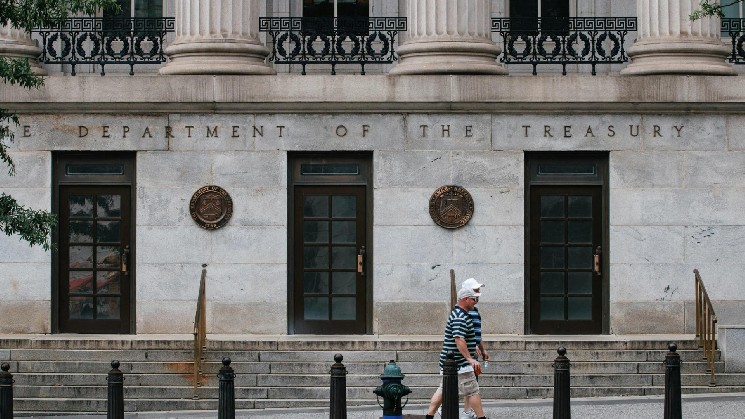
Last week, U.S. Treasury Secretary Scott Bessent unveiled a measure designed to calm the Treasury market. What he has gotten since then is not meaningfully lower yields, but a rally in bitcoin (BTC) at $76,920.16 and in gold.
On Aug. 19, Bessent announced an expansion of the Treasury's bond buyback program, raising the maximum per-operation amount for repurchases of 10-, 20-, and 30-year bonds to at least $4 billion, up from the previous $2 billion cap. The decision came as longer-duration yields hovered at their highest levels since 2007 — a challenge for both fiscal management and risk assets broadly. Long-term Treasury yields serve as benchmarks for borrowing costs across the economy, from mortgages to corporate debt, which is why a climb to multi-decade highs has implications well beyond the bond market.
The Treasury launched its regular buyback program in 2024 as a liquidity-management tool, using cash raised from new debt issuance to repurchase older, harder-to-trade "off-the-run" securities in the world's largest government bond market.
The market's response was immediate, and it showed up almost entirely in hard assets rather than bonds. Bitcoin surged to nearly $80,000, a move that rippled through the broader crypto market and triggered billions of dollars in short-position liquidations. Gold rallied as well.
Analysts said the announcement made clear how uneasy officials have become about rising long-duration borrowing costs, and it fed hopes that a more aggressive liquidity-easing operation could follow. Hard assets benefited naturally from that expectation. No further expansion has been announced, leaving the Treasury's regular buyback operations and its quarterly refunding statements as the next scheduled points where the program's size could change.
"Bitcoin's move reflects an alignment of macro and policy catalysts. The Treasury's decision to double its buybacks of long-dated government debt is aimed at calming the bond market and providing liquidity at the long end of the curve, where borrowing costs have been rising on concerns over U.S. debt levels and inflation," Fabian Dori, chief investment officer at Sygnum, said in an email.
"This is not money printing, the mechanism sits with the Treasury rather than the central bank balance sheet, but the signal matters: managing the cost of US debt has become an active policy priority, and that reignites the currency debasement narrative. It is telling that gold and silver rallied alongside bitcoin, with capital rotating into scarce, non-sovereign stores of value," Dori added.
Treasury yields remain high
The actual target of the intervention — bond yields — has not budged in any meaningful way. The 30-year yield continues to hover around 5.25%, up from an Aug. 19 low of 5.19% and just short of the 5.33% touched on Aug. 18, the highest level since 2007. The 10-year and 2-year yields tell a similar story, according to data source TradingView.
That disconnect points to forces larger than the buyback itself. The pressures pushing yields higher — chiefly a national debt that has hit the $40 trillion mark, on which annual interest costs have grown into one of the largest items of federal spending, along with expected deficit spending that implies more borrowing and more bond supply ahead, and therefore lower bond prices and higher yields — appear to be largely outside Bessent's control. As one framing put it, those forces act like a "fire hose on an ocean," making it hard for a $4 billion buyback program to meaningfully push yields lower.
Source: CoinDesk

