Bank of Korea Researchers Warn Dollar Stablecoins Could Weaken Local Currencies
Key Takeaways
- •Bank of Korea researchers stated that dollar stablecoins can weaken local currencies, describing a possibility rather than a confirmed effect.
- •The statement reflects researchers' views and does not represent an official policy position of the Bank of Korea.
- •The combined market capitalization of stablecoins has surpassed $200 billion, with dollar-pegged tokens making up the vast majority of that value.
- •The warning aligns with concerns raised by the Bank for International Settlements and the IMF about potential crypto dollarization in smaller economies.
- •The underlying research paper, its data, and its methods have not been made available, leaving the claim unverified.
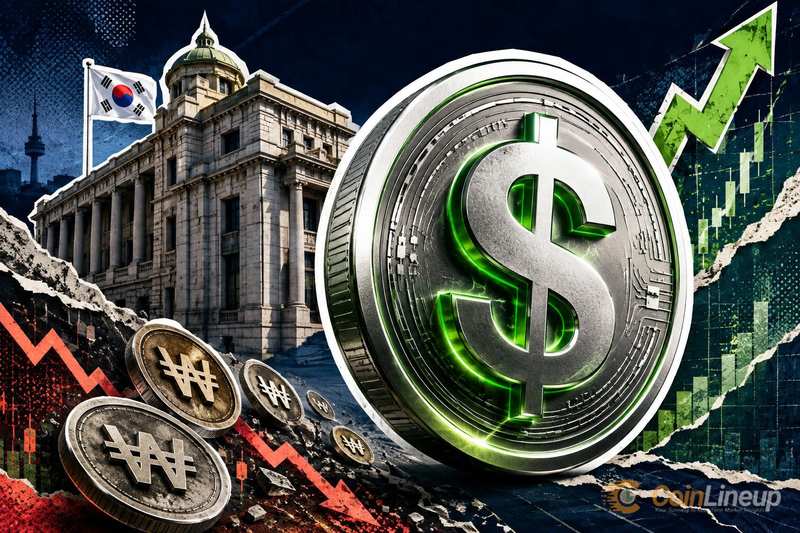
Researchers at the Bank of Korea have stated that dollar stablecoins can weaken local currencies. The claim is attributed to central bank researchers rather than to official policy, and it points to a possible risk rather than a proven outcome.
Dollar stablecoins are digital tokens designed to hold a steady value of one U.S. dollar. The largest of them is Tether (USDT). The Bank of Korea researchers have raised a concern about how such tokens interact with national currencies.
The concern comes amid rapid growth in the stablecoin sector, where the combined market capitalization of stablecoins has reached well over $200 billion, with dollar-pegged tokens accounting for the vast majority of that value. Regulators in the United States have moved to establish a federal framework for payment stablecoins, which has added to the attention the asset class receives from policymakers worldwide.
What the researchers said
The central point is straightforward: researchers at the Bank of Korea say dollar stablecoins can weaken local currencies. That is the full extent of the attributed claim.
The source of the statement matters. It comes from researchers, not from the Bank of Korea as an official policy position, and the two are not the same thing.
The wording also matters. The researchers say these tokens "can" weaken local currencies. That describes a possibility, not an effect that has already been measured or confirmed to have occurred.
What the warning covers
The concern is specific to dollar stablecoins. It does not extend to all stablecoins or to cryptocurrencies in general, and tokens pegged to other currencies fall outside this particular claim.
The phrase "local currencies" is broad. No single currency is named as an affected example, and the Korean won is not singled out.
The word "weaken" is also undefined in the available material. It could mean many things and should not be read as a specific exchange-rate decline without more detail from the underlying research.
Similar concerns have been raised elsewhere. Discussions at international institutions such as the Bank for International Settlements and the International Monetary Fund have noted that widespread adoption of foreign-currency-pegged digital tokens could, in principle, increase currency substitution in smaller economies, an effect sometimes described as crypto dollarization. The Bank of Korea researchers' warning sits within that broader policy debate.
South Korea is already active in this area. Local firms have explored won-based stablecoin payments, and a major bank has moved toward blockchain-based U.S. dollar transfers. These efforts illustrate why dollar-denominated tokens draw close attention from policymakers there.
What remains unclear
Much about the claim is still open. The available material does not include the underlying paper, its data, or its methods, and it contains no policy recommendation and no documented market reaction.
It is worth separating two gaps: some details are simply missing from the information available, which is different from saying the research itself lacks evidence.
To assess the claim properly, several things would need confirmation from the source, including how the study was conducted, under what conditions the effect would appear, and exactly what "weaken" means in this context.
Readers seeking more should look for the primary research. The original paper, rather than general web results, is the document that matters.
The practical takeaway is caution about the framing. This is a researchers' warning about a possible risk, not a confirmed effect or a new rule. It is a question worth watching rather than a settled fact.
Disclaimer: This article is for informational purposes only and does not constitute financial or investment advice. Cryptocurrency and digital asset markets carry significant risk. Always do your own research before making decisions.
