U.S. CPI Rose 0.4% in August as Firmer Core Reading Complicated Fed Outlook
Key Takeaways
- •August headline CPI accelerated from July’s 0.1% increase to 0.4%, while core CPI rose from 0.2% to 0.3%.
- •Gasoline prices increased 3.9% and contributed more than one-third of the monthly headline CPI gain.
- •Annual core inflation declined to 2.4%, but the monthly reading exceeded economists’ 0.2% forecast.
- •The mixed inflation data may make a rapid Federal Reserve shift toward easier policy more difficult to justify without further evidence.
- •After the CPI release, the CMC20 index gained 1%, Bitcoin rose 1% to about $77,870, and Ethereum advanced 2% to $2,500.
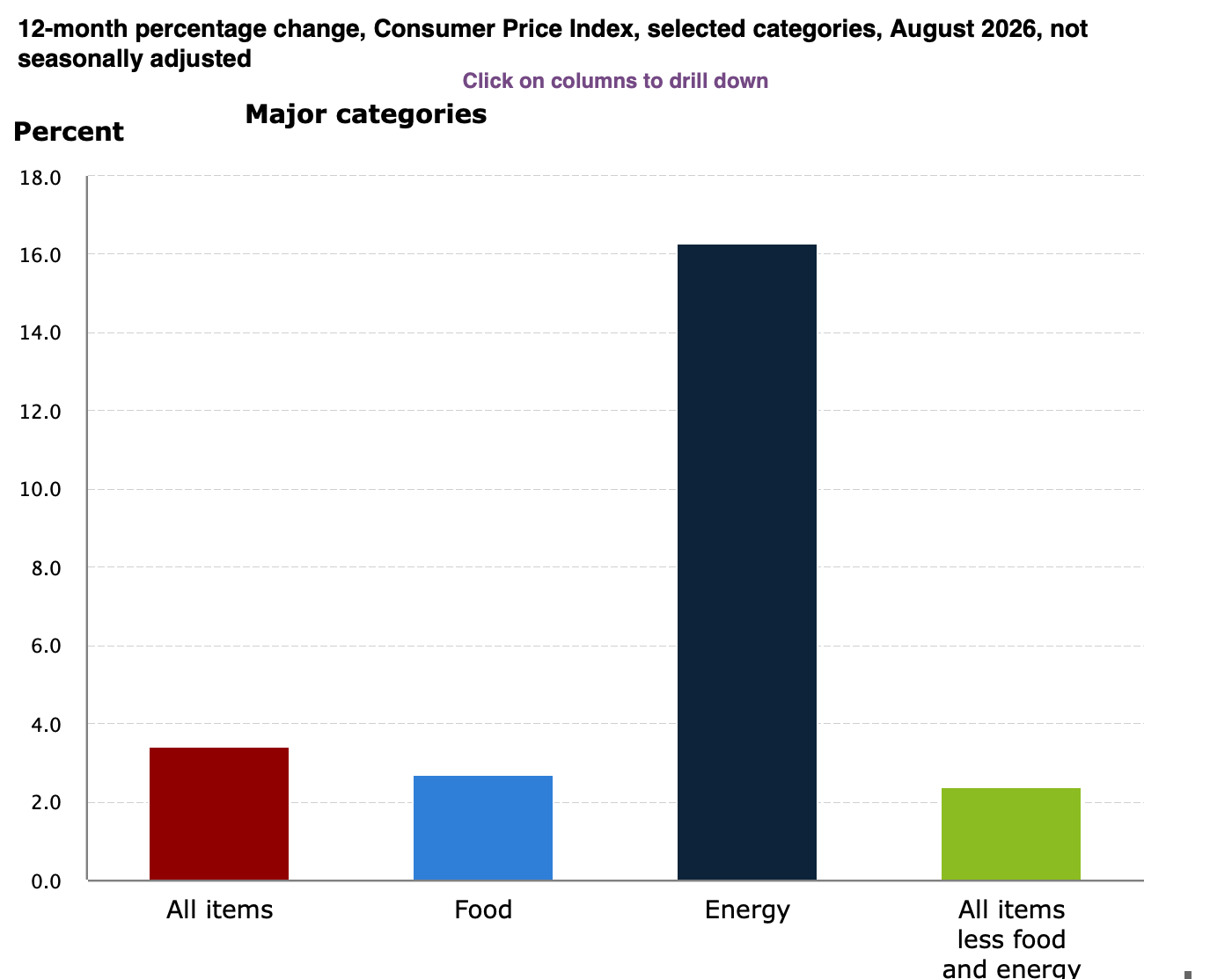
The U.S. Consumer Price Index (CPI) rose 0.4% in August, matching economists’ expectations, while annual inflation reached 3.4%, unchanged from July. Core CPI, which excludes food and energy, increased 0.3% during the month, exceeding the 0.2% forecast and rising from July’s 0.2% increase.
According to the Bureau of Labor Statistics, gasoline prices rose 3.9% in August and accounted for more than one-third of the headline CPI increase. Shelter prices increased 0.3%.
Economists surveyed by Reuters had expected headline CPI to rise 0.4% month over month and 3.4% year over year. They had also forecast a 0.2% monthly increase in core CPI and a 2.4% annual increase.
The report therefore matched forecasts for headline CPI and annual core inflation, which eased to 2.4%. The monthly core reading was firmer than expected, however, coming in one-tenth of a percentage point above the forecast.
August Reading Was Firmer Than July’s
July’s CPI report showed a 0.1% headline increase and a 0.2% rise in core prices. August accelerated to 0.4% and 0.3%, respectively, ending the clearer cooling signal seen in the previous month.
Gasoline drove much of the headline acceleration, while the higher core reading kept questions about underlying inflation open. Although annual core inflation declined to 2.4%, policymakers may require more evidence before treating July’s slowdown as an established trend.
PPI Had Already Put Inflation Back in Focus
Producer-price data released Thursday had already brought inflation back to the center of the market debate. As Coindoo reported, producer prices rose 5.4% annually in August, with higher goods and energy costs accounting for much of the increase.
That report raised the question of whether higher producer costs would appear more broadly in consumer prices. August’s CPI report did not provide a straightforward answer: gasoline lifted the headline figure, while the stronger core reading left the debate over underlying inflation unresolved.
Fed Outlook Remains Unclear
The report presents a tension for the Federal Reserve. Annual core inflation slowed, but monthly core CPI rose more than expected. That combination makes a rapid shift toward easier policy more difficult to justify without additional evidence that inflation is cooling.
Policymakers will assess the data alongside the energy-driven headline increase at their September 15–16 meeting.
Crypto Markets Focus on the Rate Path
Crypto traders are watching whether the CPI data alter expectations for policy rates and short-dated Treasury yields. A higher expected rate path increases the cost of dollar funding and affects the valuation of assets that rely heavily on liquidity and leverage.
As Coindoo previously reported, Bitcoin’s historical reactions to Federal Reserve rate hikes indicate that the sharpest moves have often occurred when markets rapidly repriced the expected pace or endpoint of tightening, rather than in response to the rate decision alone.
Crypto prices had traded lower after Thursday’s PPI release. Bitcoin was already under pressure before that data, making producer inflation an additional factor rather than the sole cause of the move.
Update: 13:00 UTC
Crypto assets were trading higher after the U.S. CPI release. The CoinMarketCap CMC20 index was up 1%. Bitcoin rose 1% to about $77,870, while Ethereum gained 2% to $2,500. XRP advanced 3% and Solana increased 2%.
The market showed no immediate broad sell-off following the report. The more significant test was whether Treasury yields, the dollar and expectations for Federal Reserve policy would support the initial move during the session. Markets were also assessing whether the combined CPI and PPI data pointed to a longer period of restrictive policy.
