AT&T May Recover FCC Location Data Fine as Verizon Runs Out of Legal Options
Key Takeaways
- •The Supreme Court on Aug. 17 denied Verizon's petition to recover the $47 million it paid the FCC, leaving the carrier with no further legal options in the dispute.
- •AT&T's case, still active at the Fifth Circuit, could result in a refund of its $57 million payment or a ruling vacating the fine on the merits.
- •The FCC fined four carriers a combined $196 million in April 2024 for selling customers' real-time location data to aggregators without meaningful consent.
- •AT&T is separately arguing that the location data at issue fell outside the FCC's authority under Section 222 of the Communications Act.
- •T-Mobile, which received the largest penalty at $80 million, continues to contest its fine in a separate proceeding.
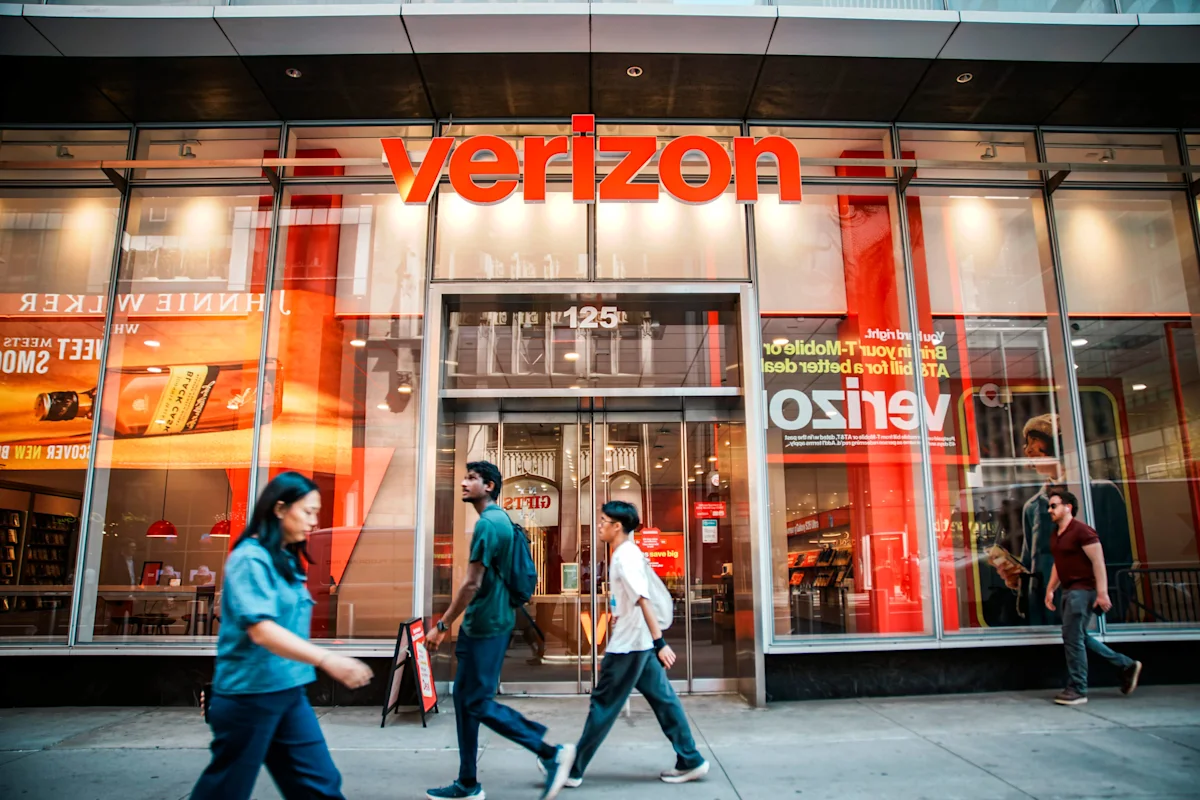
AT&T may recover FCC location data fine as Verizon runs out of legal options
T +0.56%
VZ +0.53%
TMUS +1.00%
AT&T and Verizon both sold customers’ real-time location data to aggregators that then resold the information to buyers willing to pay. Both companies were fined, and both challenged the penalties in court. Verizon has now exhausted its options, while AT&T still has a possible path to recover its payment.
On Aug. 17, the Supreme Court denied Verizon’s petition to recover the $47 million it paid the Federal Communications Commission over the sale of customer location data, ending the carrier’s effort without explanation, according to QZ.
AT&T’s case is in a different procedural posture and could still result in recovery of the $57 million it paid. That difference is significant and stems from the way the two cases moved through the courts, making the AT&T dispute the one still worth watching for a possible refund or a ruling on the merits.
Verizon’s $47 million FCC location data fine
The FCC’s penalties date back to April 2024, when the agency fined four carriers a combined $196 million for selling customers’ location data to aggregators without meaningful consent.
T-Mobile received the largest penalty at $80 million. AT&T was fined $57 million, Verizon $47 million and Sprint $12 million.
The carriers did not simply pay and accept the outcome. They paid under protest and argued in court that the FCC’s enforcement process violated their Seventh Amendment right to a jury trial.
Their position was that the agency acted as both judge and jury by imposing penalties through an administrative process instead of bringing the matter to court.
The Supreme Court ruled 8-1 against the carriers on that argument in June. The majority said the companies were not denied a jury trial because they could have refused to pay and forced the government to sue them, which would have allowed them to request a jury.
Justice Clarence Thomas dissented, writing that the carriers paid in good faith because they believed payment was mandatory and should therefore be made whole.
After losing that argument, Verizon filed another petition contending that the FCC had mischaracterized the nature of its forfeiture order to induce payment and later changed its position before the Supreme Court. The justices denied that petition without comment.
Verizon has no further options in the dispute, according to The Next Web.
Why AT&T still has a chance to recover its $57 million
AT&T’s case went through the Fifth Circuit rather than the Second Circuit, and that procedural difference matters.
The Fifth Circuit initially sided with AT&T and vacated the fine. The Supreme Court later reversed that decision and sent the case back. But in doing so, it left open the question of whether AT&T had been misled into paying.
AT&T attorney Pratik Shah filed arguments at the Fifth Circuit on Aug. 7 pressing that issue.
"The Commission's every action culminating in its final forfeiture order required AT&T to pay the $57 million forfeiture immediately," Shah wrote. "At the very least, the Court should order the Commission to issue AT&T a refund."
AT&T is also separately arguing that the location data at issue was not covered by the FCC’s authority under Section 222 of the Communications Act. That is a different argument from the jury-trial question. If AT&T succeeds on that point, the fine could be vacated on the merits rather than on procedural grounds, according to Broadband Breakfast.
T-Mobile is also still contesting its $80 million penalty. Its position is that selling device-location data did not violate U.S. telecommunications law. That case is proceeding separately.
What happened with the customer location data
The fines are only part of the story. The underlying conduct involved the sale of real-time GPS location data for more than 140 million wireless subscribers between 2014 and 2019.
Verizon and AT&T sold that data to commercial aggregators, which then resold access through chains of buyers with little oversight.
One aggregator, LocationSmart, left a public demo online that could pinpoint nearly any mobile phone in North America.
The practical consequences were documented by journalists who paid $300 to a bounty hunter and watched him locate a test phone in real time using data that traced back to the carriers. Law enforcement agencies also accessed the same data streams through commercial vendors rather than through legal process.
The FCC told the carriers in February 2020 that their practices were likely illegal. The fines followed four years later.
What the Verizon decision means for AT&T and customers
For Verizon, the financial impact is limited. The company reported second-quarter revenue of $34.3 billion and net income of $3.9 billion. A $47 million loss does not materially change those results. It does, however, close a major privacy enforcement case against the carrier.
For AT&T, the procedural advantage creates a possible financial recovery. While $57 million would not be transformative for a company of its size, a ruling that the FCC lacked authority to issue the fine would be a broader legal victory and could affect future enforcement disputes involving carrier data-sharing practices.
For customers, the case underscores how location data can move once it leaves a carrier’s systems. The carriers sold access, the aggregators resold it, and the buyers included law enforcement, bail bondsmen and data brokers. The subscribers generating the data had little practical visibility into how it was used.
The FCC’s $196 million in fines was aimed at that conduct, and the legal fight over who pays how much has continued alongside the broader privacy issue.
This story was originally published by TheStreet on Aug. 20, 2026, where it first appeared in the Retail section.

