Atomic Eagle regains Niger uranium project after permit dispute
Key Takeaways
- •Atomic Eagle’s new agreement gives it a revised exploration permit for Madaouela and a 60% interest in the project, with Niger holding the remaining 40%.
- •The arbitration against Niger is set to be withdrawn within a week after the convention is signed.
- •Madaouela had previously reached feasibility, and Atomic Eagle plans to update the resource estimate and feasibility work within a two-year period.
- •Atomic Eagle shares rose almost 20% in Sydney on Monday following the announcement.
- •Red Cloud Securities said the settlement and a separate permit award in Niger could help reduce country-risk concerns for uranium lenders and investors.
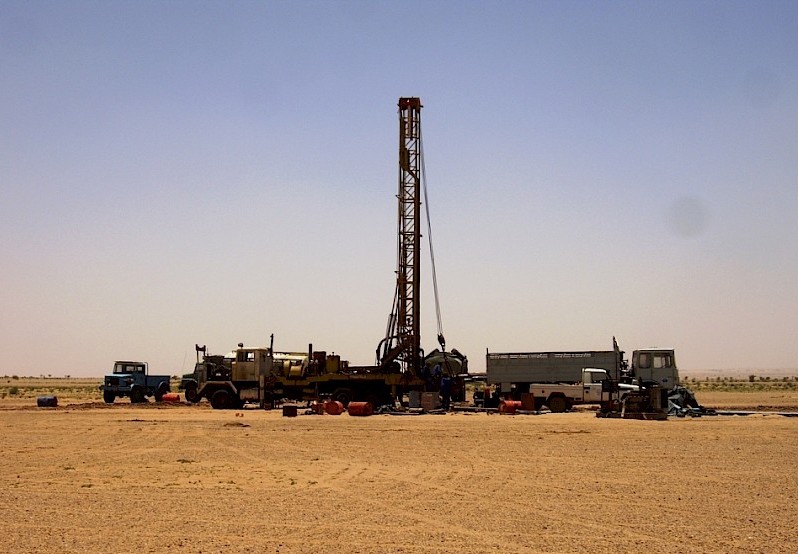
Atomic Eagle (ASX: AEU) has regained control of its Madaouela project in Niger, two years after the government revoked the mining permit of predecessor company GoviEx Uranium amid a dispute that led to international arbitration. Shares surged.
The Mining Convention Atomic Eagle negotiated with the Niger military government includes a revised exploration permit for Madaouela and gives the company a 60% stake in the project, with the government holding 40%, Atomic Eagle reported Monday.
The agreement restores a path forward for a project that had already reached the feasibility stage before the permit dispute, giving the company a clearer framework to revisit development work, financing and permitting. It also comes as Niger, which supplies about 5% of global uranium demand and is the world’s seventh-largest producer of the nuclear metal by volume, continues to draw attention from miners and lenders watching how the country handles long-running resource disputes.
The government also awarded a permit to state miner Tsumco for the In Azaoua area, where French miner Orano held a 63% interest in the Somaïr uranium mine before Niger nationalized the site last year.
“The Atomic Eagle settlement is exactly the kind of precedent that helps lenders underwrite country risk on a new build, while the Somaïr award makes it clear that the government wants uranium production to continue,” Red Cloud Securities equity research head David Talbot said in a note on Monday.
Sahel shift?
The developments point to a possible change in Niger after it and other governments in the Sahel region have, in recent years, clashed with Western miners as they sought to renegotiate mining rules amid rising resource nationalism.
“Re-establishing our interest in Madaouela represents a transformational outcome for Atomic Eagle significantly increasing our resource base and adding a second advanced uranium project to our project portfolio,” Atomic Eagle CEO Phil Hoskins said in a release.
“This agreement has been achieved through constructive engagement with the government of Niger and delivers a strong, commercially balanced outcome following a period of dispute.”
Atomic Eagle shares jumped almost 20% on Monday in Sydney to A55¢ apiece, valuing the company at A$210.8 million (C$208.6 million). The stock has traded in a 12-month range of A22¢ to A75¢.
Arbitration to end
Under the new agreement, the arbitration against the Niger government will be withdrawn within one week of the Convention’s signing, expected in the coming days. GoviEx launched arbitration proceedings against Niger in December 2024 through the Washington-based International Centre for Settlement of Investment Disputes. The two sides agreed to pause the case one year ago while negotiations continued.
GoviEx was acquired last year by Tombador Iron, which then changed its name to Atomic Eagle.
Before the permit dispute, GoviEx had advanced Madaouela to the feasibility stage. Its 2022 study described a mid-tier project in terms of deposit size and grade by global rankings. The study outlined a 19-year mine life with total production of 50.8 million lb. uranium oxide (U 3 O 8), an after-tax net present value at an 8% discount rate of $140 million (C$194 million) and an internal rate of return of 13.3%. Initial capital costs were forecast at $343 million.
Atomic Eagle also said Monday that Madaouela’s 2022 resource estimate is “foreign,” comprising 96.9 million measured and indicated lb. grading 1,275 parts per million (ppm) U 3 O 8 and 19.6 million inferred lb. at 1,330 ppm U 3 O 8. The company plans to update the resource to JORC-compliant standards.
Atomic Eagle said it has a two-year window to update the feasibility study, conduct environmental and social studies and secure financing.
Dasa loan possibility
The developments at Atomic Eagle and Tsumco also bode well for Canadian uranium miner Global Atomic (TSX: GLO), Talbot said. Global Atomic holds the Dasa project in Niger and, unlike some of its foreign peers, has avoided disputes with the government.
“Perceived Niger jurisdictional risk has been the single biggest overhang on the Dasa debt package, with U.S development bank Credit/Investment Committee and Board sign-off repeatedly slipping, and the time required to arrange financing pushed our Dasa start-up estimate to the second quarter of 2029 from the fourth quarter of 2028,” Talbot said.
“Nothing here accelerates the Credit Committee timeline, but it de-risks the backdrop for that decision and supports our view that debt, or a partial joint venture or asset sale management now discusses with potential ‘joint venture partners’ in the plural, remains achievable.”
The proposed $295-million debt facility was initially delayed after the U.S. called Niger’s 2023 military takeover a coup, temporarily halting the development bank’s involvement. Later delays came as the loan went through extended credit, investment and board-level review because of Niger’s political risk.
Once in production, the proposed underground mine at Dasa is expected to produce 68.1 million lb. of U 3 O 8 over 23 years, based on throughput of 1,000 tonnes per day. The site hosts 73 million lb. in probable reserves of U 3 O 8 in 8 million tonnes, grading 4,113 parts per million uranium oxide. Global Atomic has signed offtake agreements for 1.3 million lb. of uranium a year.

