Satellite Images Show Seven Tankers Loading Iraqi Crude at Once
Key Takeaways
- •Seven crude carriers were moored at Iraq’s Persian Gulf export facilities on August 24, with a combined capacity of about 13 million barrels.
- •TankerTrackers.com said it counted 13 million barrels loading at Iraq’s Al Basrah Oil Terminal on Monday.
- •The latest activity is a clear increase from recent weeks, when satellite images usually showed only one or two tankers at the offshore export facilities.
- •Iraq said earlier this month that it was still exporting around 2 million barrels per day despite disruption in the Strait of Hormuz.
- •Iran’s crude exports remain sharply lower, with August loadings near 300,000 barrels per day versus a 2025 average of about 1.7 million barrels per day.
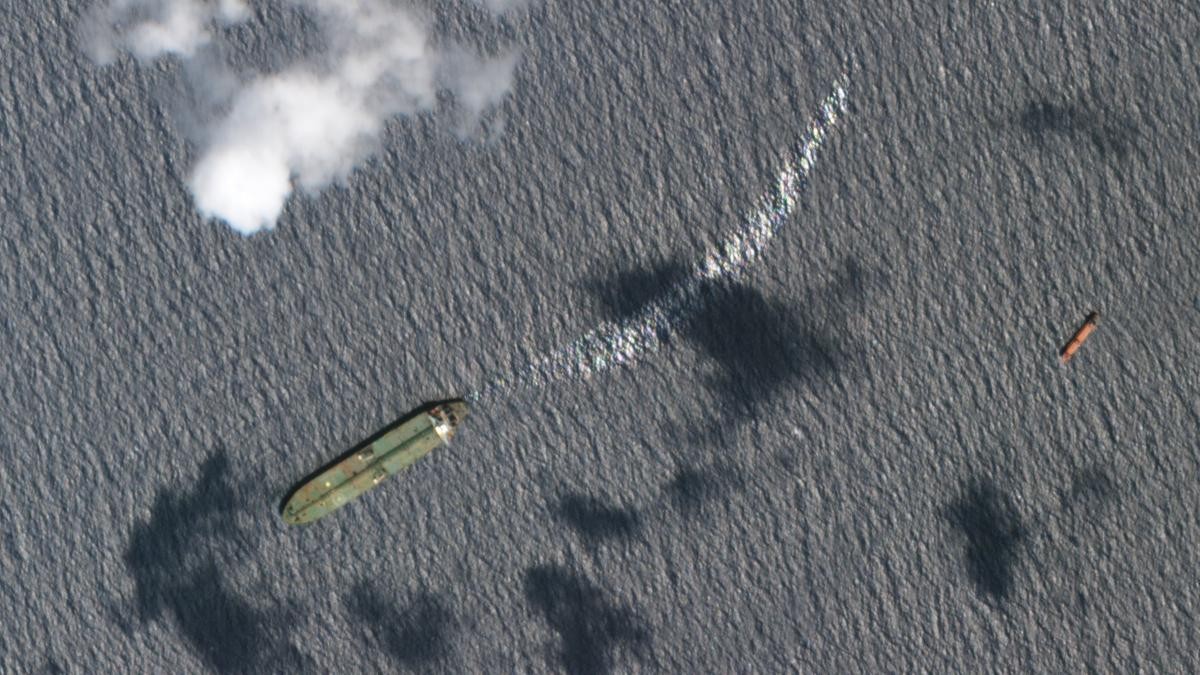
Seven crude carriers were moored at Iraq’s Persian Gulf export facilities on August 24, a sharp increase from recent weeks, according to satellite imagery analyzed by Bloomberg. The vessels had a combined carrying capacity of roughly 13 million barrels.
TankerTrackers.com separately said it counted and identified 13 million barrels loading Monday at Iraq’s Al Basrah Oil Terminal.
The activity marks a significant departure from the past several weeks, when satellite passes typically showed only one or two tankers at Iraq’s offshore export facilities on any given day. Before the Iran war, six tankers occupying the terminal’s eight berths at once was normal.
That matters because Iraq’s southern export system is one of the region’s key pressure points: when berth occupancy rises, more crude can move out, but only if ships, terminals and the Strait of Hormuz all remain available. Monday’s loading activity does not mean Iraqi exports have returned to pre-war levels. It was only a one-day snapshot, and every one of those barrels still has to make it through the Strait of Hormuz.
Regional oil flows have remained well below pre-war norms even as more Gulf producers have experimented with covert transits, ship-to-ship transfers and alternative export routes.
Iran’s own crude exports have been especially hard hit. August loadings are running at around 300,000 barrels per day (bpd), compared with a 2025 average of roughly 1.7 million bpd, while floating Iranian storage outside the Gulf has fallen to about 24 million barrels.
Iraq has had considerably more success keeping barrels moving. The country said earlier this month that it was exporting around 2 million bpd despite the Hormuz disruption, and Chinese refiners have been buying Iraqi Basrah Medium and Basrah Heavy as supplies from elsewhere in the Gulf tighten.
Seven tankers loading at once does not prove the Gulf oil crisis is easing. But after weeks of sparse activity at Basra, it is at least evidence that Iraq is managing to push more crude toward the exit.
By Julianne Geiger for Oilprice.com

