Norway’s Troll Gas Expansion Starts Early, Extending Europe’s Supply Lifeline
Key Takeaways
- •Production from Troll Phase 3 Stage 2 began on August 22, several months earlier than planned and at a cost below the original estimate.
- •The project accelerates 55 billion cubic meters of gas from the Troll West reservoir but does not add to the field’s recoverable resources.
- •Troll A, which started producing in 1996, remains one of Europe’s key gas assets and supplies gas equal to about 10% of European consumption.
- •Equinor said the development could bring forward as much as 7 billion cubic meters of gas in a single year, or roughly 6% of Norway’s recent annual gas exports.
- •Norway’s broader challenge remains unchanged because maintaining current export levels will require new projects and discoveries to replace volumes moved forward now.
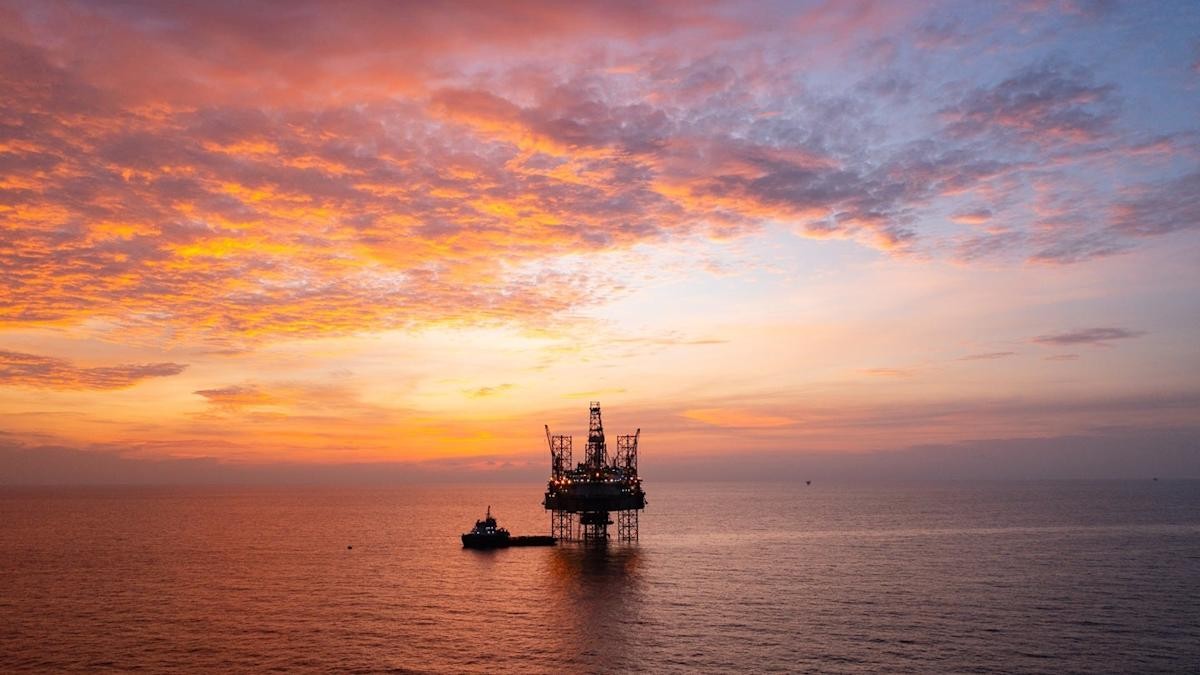
Norway has begun production from the second stage of the Troll Phase 3 development, accelerating 55 billion cubic meters of natural gas from the Troll West reservoir and helping sustain high deliveries to Europe from one of the continent’s most important energy assets.
Production started on August 22, several months ahead of schedule and at a cost tens of millions of dollars below the original estimate of about $1.2 billion, according to Equinor.
The project does not add to the Troll field’s recoverable resources. Instead, it brings existing gas reserves forward, supporting output through Troll A and the Kollsnes processing plant as production from other mature Norwegian fields declines.
That distinction matters: Europe is not gaining a new source of gas. Norway is improving the timing and reliability of supply from an existing one.
The 55 billion cubic meters covered by the project is equivalent to almost two years of French gas demand. According to the Norwegian Offshore Directorate, the development could accelerate as much as 7 billion cubic meters in a single year, equal to roughly 6% of Norway’s recent annual gas exports.
“Troll is the backbone of Norwegian gas exports to Europe,” Lill Harriet Brusdal, Equinor’s vice president for Troll and Kvitebjørn, said. “This project accelerates production from the reservoir, helping maintain today’s high level of gas exports from Troll and Kollsnes for as long as possible.”
A 30-Year-Old Platform Still Supplying Europe
Troll A began production in 1996 and remains one of the pillars of the European gas system. The Troll field contains about 40% of the remaining gas reserves on the Norwegian Continental Shelf and alone supplies gas equivalent to around 10% of European consumption.
The platform sends gas through pipelines to Kollsnes on Norway’s west coast, where it is processed before entering the European pipeline network.
Its continuing importance reflects the transformation of Europe’s gas market since Russia’s invasion of Ukraine. Norway has replaced Russia as Europe’s largest supplier of pipeline gas, so operational performance at a small number of large Norwegian fields and processing facilities now has a more direct impact on European energy security.
Troll is especially significant because of its scale, low production emissions and access to established infrastructure. Both Troll A and Kollsnes are powered from shore, giving the field a much lower operational emissions intensity than many competing gas sources.
The startup also came one day after Equinor signed a 15-year agreement to supply Germany’s Uniper with more than 30 terawatt-hours, or about 2.8 billion cubic meters, of gas annually from 2027.
The timing underscores the link between Norway’s upstream investments and Europe’s growing demand for long-term supply certainty. Contracts extending into the 2040s require more than gas in the ground. They depend on wells, compression, processing capacity and pipelines remaining available as fields mature.
Existing Infrastructure Drives the Economics
Troll Phase 3 Stage 2 consists of two subsea templates, eight production wells and a 28-kilometer pipeline connected to Troll A.
The project reuses facilities and standardized designs from the first stage of Troll Phase 3, which started production in 2021. That allowed the development to move from investment decision to first gas in just over two years.
The eight-well drilling campaign was completed in five and a half months, 25% faster than planned. Equinor said the early start and lower cost were the result of efficient drilling and marine operations.
This is increasingly the model for development on the Norwegian Continental Shelf: use existing platforms, pipelines and processing plants to bring additional resources into production faster and at a lower cost.
The strategy improves project economics, but it also reveals a growing structural dependency. As Norwegian fields mature, maintaining production increasingly depends on pushing more volumes through infrastructure built decades ago.
Earlier this year, the Troll partners approved the next development, Troll West Increased Gas Recovery North, or TWIN. The roughly $400 million project is expected to add between 2 million and 2.5 million cubic meters of gas per day during its first eight years, with production scheduled to begin in 2028.
Taken together, the projects show that Troll is not nearing the end of its commercial life. Its large resource base and existing infrastructure can support European gas deliveries for decades.
Norway Is Buying Time
For Europe, the startup is clearly positive. It helps preserve pipeline supply from a politically stable producer at a time when the continent remains exposed to volatile global LNG markets.
But the project should not be mistaken for a reversal of Norway’s longer-term production challenge.
Troll Phase 3 Stage 2 changes the timing of supply, not the size of the resource base. Bringing more gas forward protects Norway’s current export capacity, but it also means that part of tomorrow’s production is being moved into the market today.
Maintaining today’s export levels will therefore require new projects and discoveries to provide replacement volumes later. So far, most recent discoveries on the Norwegian Continental Shelf have been too small to support standalone developments, while production continues to outpace resource growth.
Troll can remain a cornerstone of European energy security for years. Yet accelerated production is ultimately a bridge, not a substitute for new supply. Without sufficient replacement volumes, sustaining today’s export plateau by accelerating existing production could lead to a steeper decline later.
By Jan-Thore Bergsagel for Oilprice.com
More Top Reads From Oilprice.com
Treasury Expands Iran Sanctions Without Targeting Major Chinese Banks
Europe Dodges a Rhine Crisis for the Worst Possible Reason
Oil Nears $100 as Trump’s ‘Economic D-Day’ Raises the Stakes

