Korean Food Exporters Urged to Prepare for Tightening Southeast Asian Regulations
Key Takeaways
- •The Korea Agro-Fisheries & Food Trade Corporation and the Ministry of Agriculture, Food and Rural Affairs co-hosted an online briefing attended by approximately 200 exporters to address non-tariff barriers affecting Korean food exports to Southeast Asia.
- •Indonesia has been progressively expanding its mandatory halal certification requirements under its Halal Product Assurance Law, applying them to a widening range of food and beverage products entering the market.
- •Exporters were advised to verify product-specific requirements such as food registration and quarantine procedures before shipping and to ensure consistency between product information and documents submitted by local importers.
- •Vietnam is updating its food safety regulatory framework to align more closely with international standards, and speakers urged Korean exporters to strengthen safety controls across the entire production process rather than focusing solely on registration and labeling.
- •The ASEAN region, particularly Indonesia and Vietnam, has become an increasingly important destination for Korean agricultural and processed food exports as global demand for K-food products continues to grow.
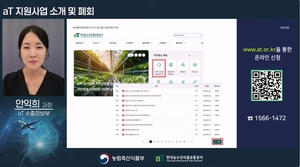
The Korea Agro-Fisheries & Food Trade Corporation (aT) announced Thursday that it co-hosted an online briefing with the Ministry of Agriculture, Food and Rural Affairs to address non-tariff barriers affecting Korean food exports to Southeast Asia. The session, held Wednesday, was designed to help Korean exporters proactively navigate regulatory changes in Indonesia and Vietnam—two of the most significant export markets for Korean food products in the ASEAN region, which has become an increasingly important destination for Korean agricultural and processed food exports as the global popularity of Korean culture continues to drive demand for K-food products.
The event featured presentations from the Korea Food Research Institute alongside local experts from Indonesia and Vietnam. Approximately 200 exporters and industry officials attended the briefing.
For the Indonesia segment, the Korea Food Research Institute outlined procedures and key precautions for obtaining halal certification. An Indonesian expert organization then discussed recent developments in Indonesia's mandatory halal certification framework as well as Indonesian National Standards (SNI) requirements. The session covered trends in non-tariff barriers, detailed the mandatory halal certification and SNI requirements, and walked through certification procedures. Participants were advised to verify product-specific requirements—including food registration and quarantine procedures—before shipping, and to ensure consistency between product information and the documents submitted by local importers.
Indonesia has been progressively expanding its mandatory halal certification requirements, which apply to a widening range of food and beverage products entering the market. The changes reflect Indonesia's implementation of its Halal Product Assurance Law, which phases in mandatory certification obligations across product categories.
The Vietnam portion focused on non-tariff barriers and revisions to the country's food safety laws. A Vietnamese expert organization provided updates on the legal changes and offered guidance for exporters. Speakers emphasized that Korean exporters should strengthen food safety controls across the entire production process—from raw material sourcing and manufacturing through to quality inspections and product information management—rather than limiting their compliance efforts to product registration and labeling alone.
Vietnam has been updating its food safety regulatory framework to align more closely with international standards.
"Regulations that exporters need to prepare for in advance, including halal certification, food safety and labeling requirements, are rapidly increasing in Indonesia and Vietnam," said Jeon Gi-chan, director of aT's Export Food Division.
