ASIC Warns Generative AI Is Powering Vast Networks of Investment Scams
Key Takeaways
- •ASIC warned that generative AI is enabling scammers to create networks of fake websites, endorsements and fabricated news articles, including deepfake videos of celebrities and politicians, to deceive investors.
- •ASIC removed more than 19,400 online scams during FY26, a 182% increase from the previous year, covering fake websites, phishing attempts, social media advertisements and cryptocurrency investment scams.
- •Losses from impersonation scams reported to Scamwatch reached $7.4 million in FY26, with Prime Minister Anthony Albanese, Senator Jacqui Lambie and broadcaster Alan Kohler among the most impersonated Australian public figures.
- •ASIC Chair Sarah Court urged consumers to verify Australian Financial Services Licence details through ASIC's public registers, warning that scammers clone legitimate licence numbers to appear credible.
- •Australia's Scams Prevention Framework, passed in early 2025, obliges banks, telecommunications providers and large digital platforms to prevent, detect, disrupt and respond to scams, with multi-million-dollar penalties for serious breaches.
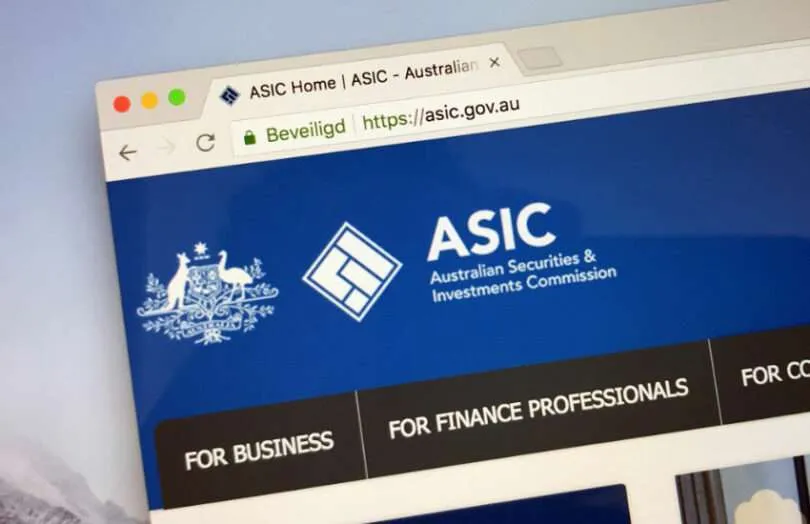
Australia's corporate regulator warned on Monday that generative artificial intelligence is enabling scammers to build sophisticated networks of fake websites, endorsements and fabricated news articles designed to trick investors into parting with their money.
The Australian Securities and Investments Commission (ASIC), the country's integrated corporate, markets and financial services regulator, said it has observed a sharp increase in scams using deepfake videos of celebrities and politicians, with criminals capitalising on topical news events to lend their schemes false credibility. The warning echoes concerns raised by financial regulators internationally as generative tools have made fabricated endorsements cheap to produce at scale.
According to the National Anti-Scam Centre, the Australian government's coordination hub for scam reports and intelligence, which was established within the Australian Competition and Consumer Commission (ACCC) in 2023, the most impersonated Australian public figures in FY26 included Prime Minister Anthony Albanese, Senator Jacqui Lambie, and broadcaster Alan Kohler.
The enforcement figures underline the scale of the problem. ASIC removed more than 19,400 online scams during FY26, a 182% increase from the prior year. The removals covered fake websites, phishing attempts, social media advertisements and cryptocurrency investment scams. Separately, losses tied to impersonation scams reported to Scamwatch, the ACCC's long-running consumer reporting service, reached $7.4 million in FY26.
ASIC Chair Sarah Court said that polished branding and convincing testimonials no longer guarantee legitimacy. "AI is making investment scams more convincing and harder to detect," Court said, adding that a simple online search is insufficient to confirm whether an opportunity is genuine.
Court urged consumers to verify Australian Financial Services Licence details directly through ASIC's public registers rather than relying on advertisements or search results, noting that scammers frequently misuse licence numbers belonging to legitimate firms — a tactic known as "cloning" that ASIC has long warned can make fraudulent operators appear legitimate on first inspection.
ASIC pointed to its takedown efforts as part of its broader response to the growing threat, including a 151% jump in fake investment platform removals and a near 30% rise in cryptocurrency scam takedowns. The warning also lands as Australia formalises its government-wide anti-scam response: the Scams Prevention Framework, passed by federal Parliament in early 2025, obliges banks, telecommunications providers and large digital platforms to prevent, detect, disrupt and respond to scams, backed by multi-million-dollar penalties for serious breaches.

