Asian Stocks Fall as Yen Surge and Oil Gains Revive Fed Rate Hike Concerns
Key Takeaways
- •The yen strengthened to 152.89 per dollar, its highest since February, as carry trades unwound and expectations grew that the Bank of Japan could tighten policy sooner.
- •Brent crude rose to around $98.34 a barrel, its highest in several weeks, after Iran threatened retaliation against attacks on Gulf energy infrastructure.
- •Markets are pricing about a 60% probability of a 25-basis-point Fed rate hike at the September 16 meeting, with Friday's U.S. inflation report the week's key catalyst.
- •Japan's Nikkei 225 fell 1.7% as the stronger yen reduced the value of exporters' overseas earnings, while the KOSPI gave back morning gains after Monday's 4% AI-driven surge.
- •China's exports jumped 25% year over year in August on demand for high-tech and AI-related products, keeping the Shanghai Composite slightly higher.
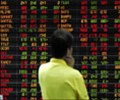
Asian stocks traded mostly lower on Tuesday as a sharp rally in the Japanese yen weighed on equities and renewed U.S.-Iran tensions pushed oil prices higher, reviving concerns over inflation and tighter monetary policy.
The pullback came after a strong technology-led rally in South Korea and Japan on Monday, underscoring how quickly sentiment in the region has swung between AI-driven optimism and macro-driven caution.
The move followed a mixed session on Wall Street, where the Nasdaq 100 gained 0.2% as semiconductor stocks rallied, while broader U.S. stocks remained under pressure. In Asian trade, Nasdaq 100 Futures rose 0.3%, while S&P 500 Futures fell 0.2%.
The stronger U.S. jobs report continues to shift the Fed outlook, with markets pricing about a 60% probability of a 25-basis-point rate hike at the September 16 meeting. The U.S. 10-year Treasury yield was around 4.788%, while Friday's inflation report remains the week's key catalyst — a print that will shape expectations for the Fed's path into the fall.
Oil extended gains for a third day as investors watched for developments around an Iranian arrangement with Oman on shipping through the Strait of Hormuz, a chokepoint that carries roughly a fifth of global oil shipments. Brent crude rose around 0.5% to $97.46 a barrel after Iran threatened retaliation against further attacks on Gulf energy infrastructure.
Yen Surge, Oil Gains Weigh on Regional Risk Appetite
The Nikkei 225 fell 1.7%, while South Korea's KOSPI dropped 0.6% and Hong Kong's Hang Seng declined 0.5%. China's CSI 300 fell 0.4%, while the Shanghai Composite rose 0.2%. Australia's S&P/ASX 200 fell 1%, Singapore's Straits Times lost 0.6%, and India's Nifty 50 declined 0.5%. Indonesia's Jakarta Composite rose 1.1%.
The yen has become the biggest swing factor for Asian markets after climbing to its strongest level since February. The currency strengthened to as much as 152.89 per dollar as investors unwound carry trades — positions built by borrowing cheaply in yen to fund higher-yielding assets elsewhere — and increased expectations that the Bank of Japan could tighten policy sooner. A rapid unwinding of such trades can force selling across a wide range of assets, amplifying market moves.
That shift has particularly hurt Japanese exporters. The stronger yen reduces the value of overseas earnings when they are converted back into yen, making export-heavy stocks less attractive. The Nikkei has therefore given back ground after Monday's sharp rally.
The broader risk backdrop has also deteriorated as tensions in the Persian Gulf escalate. Brent crude rose to around $98.34 a barrel, its highest level in several weeks, after Iran threatened further retaliation and tensions around regional energy infrastructure intensified. Higher oil prices raise the risk of renewed inflation and can make central banks more reluctant to cut rates — a dynamic that matters doubly for Asia's oil-importing economies, from Japan to India, which are sensitive to imported energy costs.
Korean Chips Retreat After Monday's AI Rally
South Korea's KOSPI has now surrendered the earlier gains seen at the open, after the index surged more than 4% on Monday as semiconductor stocks rallied on renewed optimism over artificial intelligence earnings momentum. Samsung Electronics and SK Hynix are the two largest weights on the index, so their direction often sets the tone for the broader market.
Both companies had led that earlier advance, but the broader market has since come under pressure as higher oil prices and the stronger yen weigh on risk appetite. Yonhap reported that the KOSPI had been up nearly 2% during Tuesday morning trading before subsequently giving back those gains.
The region's economic picture remains mixed. Japan's revised data showed the economy grew at an annualized 1.4% in the second quarter, although the pace was still below economists' expectations. Real wages rose 2.4% in July, the strongest increase since May 2021, strengthening the case for the Bank of Japan to tighten policy. Sustained wage growth has long been the precondition Japanese officials have cited for normalizing ultra-loose monetary settings, making the figure a key input for policy expectations.
China provided one of the few bright spots. August exports jumped 25% year over year, helped by demand for high-tech and AI-related products, while the Shanghai Composite remained slightly higher despite weakness elsewhere in the region.
Australia's S&P/ASX 200 fell 1% after weak consumer sentiment added to concerns about household conditions. India's Nifty 50 and BSE Sensex also remained lower.
Source: Investing.com, via Hellenic Shipping News
