Asian Markets Surge as Microsoft and Amazon Results Reignite AI Confidence
Key Takeaways
- •South Korea's Kospi surged as much as 16.5% on Friday, marking its largest single-day rally on record, yet the index remained nearly 25% below its July starting point after a brutal sell-off earlier in the week.
- •Microsoft reported quarterly revenue of $90 billion with an 18% year-over-year increase, while Azure sales climbed 43% and Microsoft Cloud revenue reached $59.3 billion.
- •Amazon's AWS revenue grew 37% to $42.2 billion, its fastest expansion in 18 quarters, and the company raised its 2026 capital expenditure plan to approximately $220 billion.
- •The Bank of Japan voted 8-1 to hold its policy rate at 1%, after which the yen depreciated roughly 0.8% to 160.76 per dollar despite suspected coordinated currency intervention the prior day.
- •Long-dated US Treasury yields stayed near 19-year highs even as short-term yields eased, signaling persistent concerns about anchoring inflation expectations.
Asian Markets Surge as Microsoft and Amazon Results Reignite AI Confidence
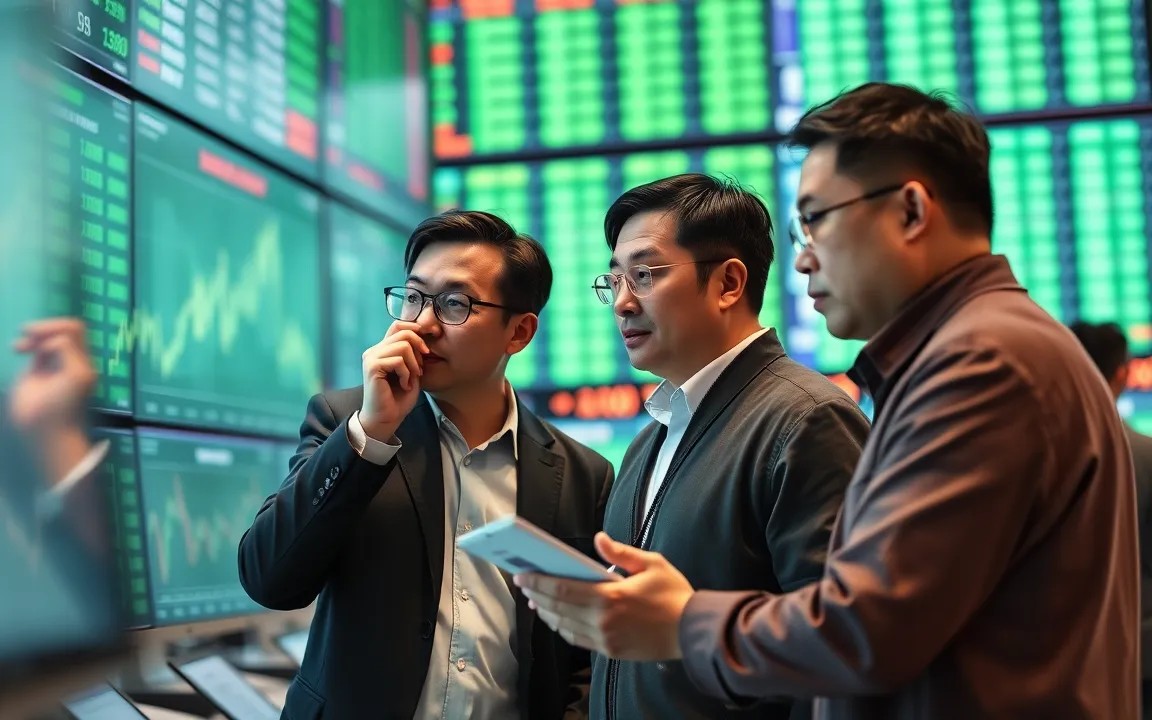
Asian equities rallied sharply on Friday after robust quarterly earnings from Microsoft and Amazon renewed investor confidence in artificial intelligence spending, enabling South Korea's battered market to stage a record comeback.
South Korea's Kospi soared as much as 16.5%, while Japan's Nikkei 225 climbed over 5% and Taiwan's Taiex advanced more than 7%. The three markets are among the most semiconductor-exposed in the world: the Kospi is dominated by Samsung Electronics and SK Hynix, the Taiex by TSMC, and the Nikkei by semiconductor equipment and materials leaders such as Tokyo Electron and Advantest. The broad-based advance followed a powerful Wall Street rally driven by technology stocks. Even so, the Kospi was still on track for its worst monthly performance since 1997 — a year synonymous with the Asian financial crisis — following a violent sell-off earlier in the week.
Microsoft and Amazon Reset the AI Narrative
The rebound was underpinned by fresh evidence that massive capital deployment in data centres and semiconductors is translating into accelerated cloud growth.
Microsoft reported quarterly revenue of $90 billion, representing an 18% year-over-year increase. Azure sales surged 43%, and Microsoft Cloud revenue climbed 27% to $59.3 billion.
Amazon delivered a second catalyst. AWS revenue grew 37% to $42.2 billion — its fastest expansion rate in 18 quarters — while group sales rose 20% to $200.6 billion. Amazon also raised its 2026 capital expenditure plan to approximately $220 billion, reinforcing the view that demand remains robust enough to warrant further infrastructure investment. Together with Alphabet and Meta, Microsoft and Amazon account for the lion's share of global hyperscale data-centre spending, making their results a direct read-through for the Asian semiconductor and component supply chains that dominate Kospi, Taiex, and Nikkei weightings.
IG market analyst Fabien Yip noted that the preceding sell-off had become overdone, given that the underlying AI demand thesis had not materially deteriorated. Deutsche Bank strategists characterized the correction as a recalibration of expectations following an extraordinary rally, rather than a structural breakdown in the investment case.
The market is no longer rewarding AI spending indiscriminately. Microsoft's strong cash generation and Amazon's accelerating cloud growth demonstrated that some of the industry's largest programs are now generating measurable returns.
Korea's Rebound Does Not Undo the Damage
Samsung Electronics and SK Hynix spearheaded the reversal after both companies absorbed historic losses earlier in the week. Their recovery helped propel the Kospi higher, but the index still sat nearly 25% below its July starting point and well under its June peak.
Friday's sharp move thus appears more consistent with a violent repricing than a definitive restoration of stability.
South Korean regulators have already tightened oversight of leveraged single-stock products after the sell-off compounded losses for retail investors. Sustaining the rally will likely require more than strong US corporate earnings. Market participants will be monitoring margin balances, foreign capital flows, and whether chipmakers can defend pricing power as Chinese competitors scale up capacity.
The semiconductor sector continues to grapple with the central question that triggered the rout: whether capital expenditure can continue climbing without eroding free cash flow or returns on invested capital.
Yen Weakness and Bond Markets Keep Risks Intact
The Japanese yen depreciated approximately 0.8% to 160.76 per dollar after the Bank of Japan voted 8-1 to maintain its policy rate at 1%. Board member Hajime Takata dissented in favor of a quarter-point hike, but the central bank offered limited forward guidance on the timing of any further move.
The decision came after suspected coordinated currency intervention had driven the yen sharply higher on Thursday. SMBC analysts said the rate hold was widely expected, though Takata's dissent raised the probability of an October increase. Capital Economics argued that intervention alone may prove insufficient to engineer a durable yen recovery without firmer monetary policy support. The yen's volatility carries broader regional significance because of the large carry-trade positions in which investors borrow in low-yielding yen to fund higher-yielding assets across Asia; sharp yen swings can force rapid unwinding of those positions, amplifying equity turbulence from Seoul to Taipei.
Bond markets flashed an additional caution signal. Long-dated US Treasury yields remained near 19-year highs even as short-term yields eased, reflecting concerns that inflation expectations are becoming increasingly difficult to anchor.
Oil prices declined despite fresh threats to Middle East shipping lanes, with Brent crude trading near $88 per barrel. The muted reaction averted another inflation shock, yet it also highlighted how rapidly geopolitical risk could resurface.
Friday's rally repaired sentiment around the AI trade. It did not, however, eliminate the currency, interest rate, and geopolitical risks that made Asia's sell-off so acute.

