Asia Economic and Event Calendar for 3 August 2026: Australia on Holiday, China Manufacturing PMI in Focus
Key Takeaways
- •China's official July manufacturing PMI registered 49.2, missing the 50.0 consensus and indicating contraction in the factory sector.
- •Australian markets will be closed on 3 August 2026 for a national holiday, reducing liquidity during a session when key Chinese manufacturing data is scheduled for release.
- •New Zealand dwelling consents fell 3.6% month-over-month but rose 32.1% compared to the same period a year earlier.
- •Japan's Nikkei 225 declined over 2% as the yen strengthened, while South Korea's KOSPI dropped 4% driven by a broad semiconductor selloff.
- •A Reuters poll indicates the Reserve Bank of India is expected to keep interest rates unchanged as inflation remains within its comfort zone.
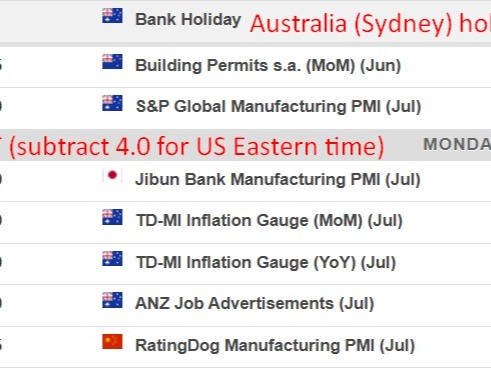
Asian Economic Calendar: Key Events and Consensus Expectations for 3 August 2026
Markets in Australia will be closed on 3 August 2026 for a national holiday, resulting in thinner liquidity during the Asian trading session. With Australia a major exporter of iron ore, coal, and LNG to China, the holiday removes a key regional pricing venue precisely when fresh Chinese manufacturing data is due.
New Zealand Dwelling Consents
New Zealand has already released its latest data on new dwelling consents:
- Month-over-month: -3.6%
- Year-over-year: +32.1%
China Manufacturing PMI in Focus
The primary focus for Asian markets will be the private survey version of China's manufacturing Purchasing Managers' Index (PMI). The official government data, released earlier, came in below expectations:
- China July manufacturing PMI: 49.2 vs. 50.0 expected
A reading below 50.0 indicates contraction in the manufacturing sector. The official figure missing the consensus forecast of 50.0 has raised concerns about the pace of recovery in the world's second-largest economy. China is the largest trading partner for most Asian economies and the dominant consumer of industrial commodities such as copper, iron ore, and crude oil, so softness in its factory sector carries implications across regional supply chains.
Market-Moving Headlines Relevant to Asian Trading
Several developments are shaping the market backdrop heading into the session:
- Oil prices slumped following claims by former U.S. President Donald Trump regarding Iran.
- The Nikkei 225 sank over 2% as the Japanese yen surged, while South Korea's KOSPI dropped 4% amid a broad chip-sector selloff. A stronger yen pressures Japanese exporter earnings repatriated from overseas, while semiconductor stocks are a key driver of both indices.
- USD/JPY held lower to start the week as the United States entered the intervention discussion.
- UBS forecast gold at $5,200 by June 2027, despite near-term pullback risk.
- The Reserve Bank of India is expected to hold rates as inflation remains within its comfort zone, according to a Reuters poll. India is Asia's third-largest economy and one of the fastest-growing major markets globally.
- Germany's retail sales slumped in June, despite another increase in petrol station sales.
- The U.S.–Iran conflict situation continues to develop with no clear resolution in sight.
- FX option expiries for 3 August at the 10:00 a.m. New York cut are in focus for currency traders.
Additional Context
Australia's public holiday means no domestic economic data releases or equities trading during the session. Traders will be watching regional data and global headlines for direction, particularly the private Caixin/Markit China manufacturing PMI, which often differs from the official government gauge due to its greater weighting toward smaller, private enterprises. The divergence between the two surveys provides a fuller picture of conditions across both state-backed heavy industry and the private light-manufacturing sector.

