Kenya's Arc Ride Raises $33.3 Million to Scale Battery-Swapping Network Across Africa
Key Takeaways
- •Arc Ride raised $33.3 million in a round led by Novastar Ventures and Norrsken22, with backing from IFC, British International Investment, Proparco, Musashi Seimitsu, Talanton, and debt from BII's Kinetic program and Mirova.
- •The company operates a battery-as-a-service model in which riders lease batteries and swap them at automated stations, reducing upfront costs and shifting battery degradation costs to the operator.
- •The new funding will add 5,000 electric motorcycles, enhance swapping technology and battery lifecycle management, and support expansion into Ghana, South Africa, Tanzania, and Uganda.
- •Arc Ride positions itself as a multi-brand infrastructure provider rather than a vehicle manufacturer, aiming to become the standard battery-swapping network across the electric mobility ecosystem.
- •In South Africa and other markets, Arc Ride will compete with battery-swapping rivals such as Ampersand in Rwanda and Spiro in West Africa.
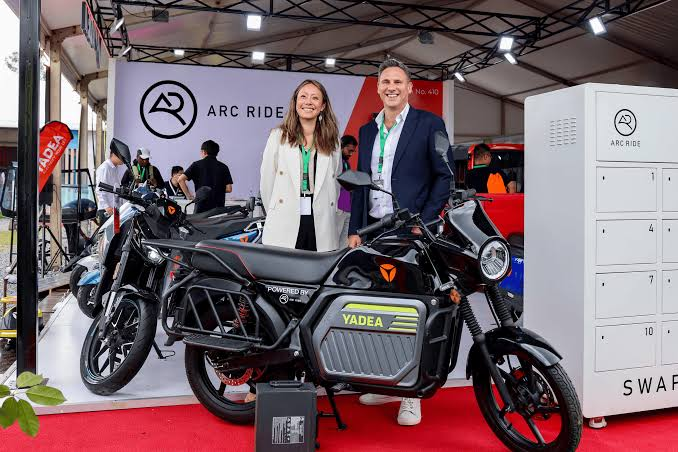
Kenyan electric mobility company Arc Ride has raised $33.3 million in a funding round led by Novastar Ventures and Norrsken22. The capital will support the expansion of the company's battery-swapping infrastructure across sub-Saharan Africa and fund its entry into the South African market. The round is one of the larger financing deals in Africa's electric mobility sector to date, reflecting growing investor attention to the continent's two- and three-wheeler transport market.
The round drew participation from a diverse group of investors, including the International Finance Corporation, British International Investment, and Proparco, alongside existing backers such as Musashi Seimitsu, a Japanese automotive parts supplier, and Talanton, an impact investor focused on Africa. The financing also includes a debt facility provided through BII's Kinetic program and Mirova, a sustainable investment manager affiliated with Natixis, underscoring the substantial capital required to build a large-scale battery-swapping network. The blend of equity and debt reflects the capital-intensive nature of swap-station infrastructure, which requires upfront investment in hardware, batteries, and site networks before revenue from riders materializes.
Arc Ride operates a "battery-as-a-service" model for electric two- and three-wheelers. Rather than buying a battery outright, riders lease one and can exchange it for a fully charged unit at automated stations whenever needed. This approach significantly lowers the upfront cost of switching to an electric motorcycle, removing a common barrier for riders, particularly in regions where motorcycle taxis serve as an essential source of income. The model also shifts the burden of battery replacement and degradation costs from riders to the operator. The company's infrastructure is designed to be compatible with vehicles from multiple manufacturers, including Yadea, a Chinese producer of electric two-wheelers.
With the new funding, Arc Ride plans to add 5,000 electric motorcycles to its fleet, improve battery lifecycle management, enhance its automated swapping technology, and integrate more renewable energy into its charging stations. The company will also expand operations to Ghana, South Africa, Tanzania, and Uganda, extending beyond its Kenyan roots. How quickly the company can densify its swap-station coverage in each new market will be a key indicator to watch, since riders depend on reliable station access for daily operations.
Arc Ride positions itself as an infrastructure provider rather than a vehicle manufacturer, a distinction that matters to its investors. Its battery swap stations are built to work across multiple vehicle brands rather than a single one, enabling network effects: the more brands and riders that adopt its battery-swapping standard, the more valuable and robust the network becomes. Ngetha Waithaka, a partner at Norrsken22, emphasized this approach, saying he believes Arc Ride's technology, data, and network effects could establish it as the go-to standard for the entire electric mobility ecosystem.
In many sub-Saharan African cities, two- and three-wheelers, especially motorcycle taxis, are vital to transportation because public transit options are limited. This makes electric mobility in the sector a significant climate solution rather than merely a niche opportunity, which is why development finance institutions such as IFC, BII, and Proparco are participating. Chris Chijiutomi, BII's managing director for Africa, identified electric mobility as a key component of the institution's climate investment strategy.
Arc Ride's entry into South Africa represents one of its most significant tests to date. The market carries higher vehicle ownership costs and more advanced transport infrastructure than many of the company's current locations, while also featuring strong competition from established logistics and mobility players. Arc Ride will compete with other battery-swapping services, including Ampersand in Rwanda and Spiro, which operates across several West African countries. Winning market share will depend on building a dense rider base and solid unit economics in this competitive landscape.
Company website:
