Ocasio-Cortez Suggests Speaker Johnson Is Blocking Bipartisan Deepfake Victims' Bill Over Her Name
Key Takeaways
- •The DEFIANCE Act (S.1837) aims to create stronger legal protections for individuals targeted by non-consensual AI-generated explicit images and videos.
- •Ocasio-Cortez stated that Speaker Johnson has not advanced the bill because it carries her name, a dynamic she says has occurred under both Republican and Democratic leadership.
- •Some Republicans reportedly oppose advancing the legislation out of concern that a legislative victory could strengthen Ocasio-Cortez's profile ahead of a potential 2028 presidential campaign.
- •No comprehensive federal law currently establishes a private right of action for victims of non-consensual explicit deepfakes, leaving affected individuals with inconsistent legal recourse across states.
- •Deepfake technology has become increasingly accessible, drawing bipartisan concern about its use in harassment, extortion, and the dissemination of fabricated intimate imagery, particularly against women and minors.
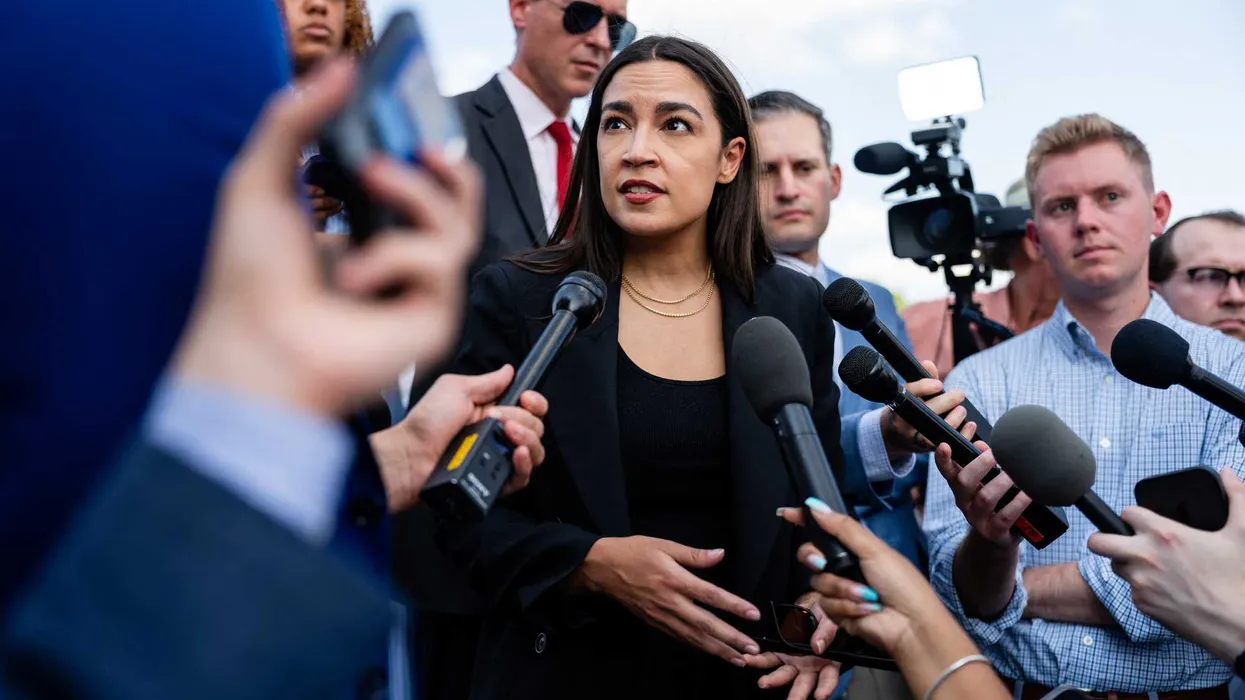
Representative Alexandria Ocasio-Cortez (D-NY) has offered a possible explanation for why House Speaker Mike Johnson (R-LA) has not brought a bipartisan deepfake victims' rights bill to the floor, suggesting that her association with the legislation is the reason it remains stalled.
The measure, known as the Disrupt Explicit Forged Images And Non-Consensual Edits (DEFIANCE) Act, is designed to strengthen legal protections for individuals targeted by AI-generated explicit images and videos — commonly referred to as deepfakes — that place real people in sexualized scenarios that never occurred. The bill text is available on Congress.gov.
Speaking with Emma Vigeland on The Majority Report podcast, Ocasio-Cortez said she believes Johnson is reluctant to advance the legislation simply because it carries her name.
"I have bills that are so commonsense that passed committee unanimously, that everyone agrees on, Republicans agree on, Democrats agree on, swing-seat folks agree on," Ocasio-Cortez said. "And having people on my team be told, this can't move because it has her name on it, that has happened in the past, under both party leaderships."
She noted that, in general, her team finds alternative avenues to make progress on legislative priorities. However, she urged Republican leadership to act on this specific issue.
"But I do think that when it comes to this issue, I would really implore Speaker Johnson and Republicans ... we should not allow pedophiles and sexual abusers to run amok because you just don't like a girl. Hot take."
Previous reporting has indicated that some Republicans are reluctant to see an Ocasio-Cortez-sponsored bill advance out of concern that a legislative victory could strengthen her credentials ahead of a potential presidential run in 2028.
The DEFIANCE Act, introduced as S.1837, is part of a broader legislative push in Congress to address the growing proliferation of non-consensual, AI-generated explicit content. No comprehensive federal law currently exists that specifically establishes a private right of action for victims of non-consensual explicit deepfakes, leaving affected individuals with limited and inconsistent legal recourse. While a patchwork of state-level measures has emerged to address the issue, advocates have argued that a federal framework is needed to provide uniform protections. Deepfake technology has become increasingly accessible in recent years, prompting bipartisan concern about its use in harassment, extortion, and the dissemination of fabricated intimate imagery, particularly targeting women and minors.

