Anthropic Courts Investors as AI Giant Builds Momentum for Potential September IPO
Key Takeaways
- •Anthropic has been meeting with prospective investors ahead of a possible IPO in September or early October, but the timing could still change.
- •The company was reportedly valued at about $965 billion in the latest Wall Street Journal report.
- •Claude and Claude Code are central to Anthropic’s growth strategy, with a strong focus on enterprise customers and software developers.
- •Investors are expected to scrutinize Anthropic’s revenue growth against its large infrastructure and computing costs.
- •Anthropic faces major competition from OpenAI as well as political, regulatory, and infrastructure-related risks.
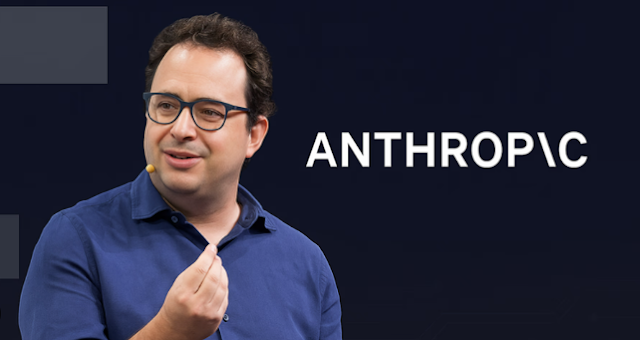
Anthropic Courts Investors as AI Giant Builds Momentum for Potential September IPO
Anthropic is intensifying discussions with potential investors as the artificial intelligence company prepares for what could rank among the largest technology initial public offerings in history. The company has been holding meetings with prospective investors to build confidence ahead of a possible public listing as soon as September or early October, according to The Wall Street Journal.
Anthropic has not publicly confirmed a final IPO date, and the timing could still shift. However, the discussions indicate that the developer of Claude is increasingly preparing to enter public markets at a moment when investor interest in artificial intelligence remains exceptionally elevated.
A listing would place Anthropic directly before public-market investors and could serve as one of the clearest tests yet of how Wall Street values the enormous spending required to build frontier AI systems. The company has rapidly expanded its business around Claude, its family of AI models, with a heavy emphasis on enterprise customers and AI-powered coding tools.
At the same time, Anthropic confronts a series of challenges that investors will need to weigh, including intense competition, enormous infrastructure costs, political scrutiny, and questions about whether the current pace of AI spending can yield sustainable long-term returns.
Anthropic Moves Closer to the Public Markets
The possibility of an Anthropic IPO has circulated for months as the company has grown into one of the world's most valuable private AI firms. The latest investor meetings represent a meaningful step because public-market investors will ultimately need to evaluate Anthropic under a different set of standards than private venture capital backers.
Private companies can raise capital based largely on future growth expectations. Public companies, by contrast, face quarterly reporting requirements, shareholder scrutiny, and constant market valuation pressure. That transition can expose both strengths and weaknesses that may remain less visible while a company stays private.
For Anthropic, the central question will be whether its rapid growth can justify the enormous capital requirements tied to developing and operating frontier AI systems.
Anthropic's Valuation Has Surged
Anthropic's valuation has climbed dramatically as demand for advanced AI technology accelerates. The company was valued at roughly $965 billion in the latest WSJ report, placing it among the world's most valuable private technology companies.
Such a valuation reflects investor expectations that AI will become one of the most consequential technologies in the global economy. It also creates substantial pressure. At nearly a trillion-dollar private valuation, Anthropic would enter public markets with expectations typically associated with some of the world's largest established technology companies.
Investors will therefore seek evidence that revenue growth, customer adoption, and technological advantages can continue expanding at a rapid clip.
Claude Has Become Anthropic's Core Asset
Anthropic's strongest asset is Claude, the company's family of AI models. Claude competes directly with products developed by OpenAI, Google, and other major AI companies. The platform has gained particular traction among businesses and software developers.
One of the company's most successful products has been Claude Code, an AI coding tool designed to help developers write, analyze, and modify software. The product has become a key pillar of Anthropic's growth strategy.
Anthropic's focus on coding and enterprise customers has differentiated it from competitors that have placed greater emphasis on consumer-facing AI applications. That strategy could prove especially important as the company prepares for public-market scrutiny.
Enterprise AI Could Drive Long-Term Revenue
Anthropic has increasingly positioned Claude as a business tool rather than simply a consumer chatbot. Companies are deploying AI for software development, customer service, research, document analysis, data processing, and other tasks.
If businesses continue integrating AI into everyday operations, demand for enterprise AI services could expand substantially. Anthropic is working to capture that demand by selling access to Claude through direct subscriptions and cloud partnerships.
The enterprise market also carries a significant advantage for AI companies: businesses may be willing to spend considerably more than individual consumers if AI tools can demonstrate measurable productivity gains. That makes enterprise customers particularly valuable to Anthropic's long-term growth strategy.
AI Coding Has Become a Major Battleground
Software development has emerged as one of the most competitive areas of the AI industry. AI coding assistants can generate software, identify bugs, explain existing code, and automate repetitive programming tasks.
Claude Code has helped Anthropic gain visibility in this market. The company's success in coding demonstrates how specialized AI applications can create significant commercial value. Rather than relying solely on general-purpose chatbots, Anthropic is increasingly building products designed around specific professional workflows — an approach that could help the company forge deeper relationships with enterprise customers.
Anthropic Faces OpenAI Competition
The most prominent competitor is OpenAI. Both companies are racing to develop increasingly capable AI models while competing for customers, engineers, computing resources, and capital. The rivalry has a deeply personal dimension: Anthropic was founded in 2021 by Dario Amodei, a former vice president of research at OpenAI, who departed alongside several colleagues over disagreements about OpenAI's direction and approach to AI safety. That founding story now underpins one of the most consequential competitive dynamics in the technology industry.
OpenAI is also reportedly preparing for a potential public listing, creating the possibility of a remarkable contest between two of the world's most important AI startups. If both companies enter public markets around the same period, investors could directly compare their growth rates, margins, infrastructure spending, and technological performance — intensifying competition to an entirely new level.
Google and Amazon Are Also Critical Partners
Anthropic's competitive environment extends beyond OpenAI. Google has invested heavily in the company and provides important cloud infrastructure. Amazon has also become a major strategic partner and investor.
These relationships give Anthropic access to enormous computing resources and infrastructure. They also underscore how closely the AI race has become tied to the world's largest technology companies.
Cloud computing capacity is essential for training and operating advanced AI models. As models grow more capable, the amount of computing power required can increase substantially.
Infrastructure Costs Are a Major Concern
One of the biggest questions surrounding Anthropic's potential IPO is the cost of AI infrastructure. Training frontier models requires vast amounts of computing power. Running those models for millions of users also demands significant energy, data-center capacity, and specialized hardware.
Anthropic's financial projections indicate that these costs remain substantial. The Wall Street Journal previously reported that Anthropic and OpenAI expect to spend tens of billions of dollars combined on training and operating AI systems in 2026, with costs projected to rise sharply in subsequent years.
This creates a difficult financial equation: AI companies need enormous investments to build better models, yet they must also demonstrate that revenue can eventually exceed those costs.
Revenue Growth Will Be Closely Watched
Anthropic's ability to generate revenue will likely be one of the most critical factors in its IPO valuation. The company reportedly had a revenue run rate of about $47 billion as of May, according to the latest WSJ report.
If that pace continues, investors could view Anthropic as a rapidly scaling technology company rather than an experimental AI laboratory. But revenue growth alone will not suffice. Public-market investors will also scrutinize customer retention, operating margins, infrastructure expenses, and the capital required to sustain growth. The relationship between revenue and computing costs will be particularly important.
The AI Profitability Question
The broader AI industry faces a major profitability debate. Technology companies are investing hundreds of billions of dollars in data centers, chips, energy infrastructure, and AI research. The expectation is that AI productivity gains will eventually produce enormous economic value. Yet investors are still trying to determine how much of that value will flow back to AI model developers.
Anthropic's IPO could offer one of the clearest opportunities yet to examine the economics of frontier AI. The company's financial disclosures would give public investors a far deeper look into the cost of building and operating advanced AI models.
Political and Regulatory Risks
Anthropic also faces political and regulatory challenges. The company has been involved in disputes with U.S. government agencies over how AI systems should be used, particularly in sensitive areas involving national security.
Those disputes have highlighted the increasingly political nature of advanced AI development. As AI systems become more capable, governments are paying closer attention to how the technology is developed and deployed. Regulation could affect everything from data-center construction to model safety requirements. Investors will therefore need to account for political risk alongside traditional business risks. Anthropic's founding emphasis on AI safety research — including its development of Constitutional AI, a training method designed to align model behavior with a defined set of principles — could influence how regulators and policymakers view the company relative to peers that have faced greater scrutiny over safety practices.
Public Opposition to AI Infrastructure
Another challenge involves the physical infrastructure required to support AI. AI data centers consume large amounts of electricity and require significant investment in power generation and transmission infrastructure.
Communities in some parts of the United States have raised concerns about energy use, water consumption, noise, and the environmental impact of large data centers. Anthropic is exploring ways to demonstrate that AI can deliver benefits in areas such as healthcare and biology, potentially helping address concerns about the broader social impact of the technology.
The company's future growth could depend partly on whether governments and communities continue allowing rapid expansion of AI infrastructure.
The September or October Timeline
The possibility of an IPO as soon as September or early October has drawn significant attention. However, the reported timeline should not be interpreted as a guaranteed listing date. Companies can delay IPOs for numerous reasons — market volatility, regulatory considerations, valuation negotiations, and internal readiness can all affect timing.
Anthropic could also decide that private capital remains more attractive than public markets. Nevertheless, the company's active engagement with potential investors suggests preparations are becoming more serious.
A Potential Landmark IPO
If Anthropic eventually goes public at a valuation approaching the levels reported by private-market investors, the IPO could rank among the largest technology offerings ever. That would make the listing significant well beyond the company itself. It could influence how investors value other AI companies and help determine whether the current AI investment boom can transition into a sustainable public-market cycle.
A successful listing could encourage more capital to flow into AI infrastructure and startups. A disappointing debut could have the opposite effect.
Anthropic and the Future of AI Investing
The potential Anthropic IPO arrives at a turning point for the AI industry. The first phase of the AI boom was driven largely by technological breakthroughs. The next phase will increasingly be judged by economics.
Investors want to know whether AI companies can convert technological advantages into durable revenue and profits. Anthropic's public-market debut, if it happens, could become an important test of that transition. The company has built a strong position in enterprise AI and coding, but it must now convince investors that its growth can justify the massive resources required to remain competitive.
What Investors Will Watch
If Anthropic moves forward with an IPO, investors are likely to focus on several key areas:
- Revenue growth — whether the current run rate can accelerate or at least be sustained.
- Computing and infrastructure costs — the trajectory of expenses tied to training and inference.
- Customer concentration and retention — how reliant revenue is on a small number of large enterprise clients.
- Competition — the threat posed by OpenAI, Google, and other AI developers.
- Regulatory and political risk — potential restrictions on AI development and deployment.
- Path to profitability — whether Anthropic can achieve sustainable margins without slowing its technological development.
These factors will ultimately determine whether the company's valuation can withstand public-market scrutiny.
Anthropic's Biggest Opportunity
Anthropic's biggest opportunity lies in the rapid adoption of AI throughout the global economy. If businesses continue using AI to automate tasks and increase employee productivity, demand for advanced models could grow substantially.
Software development is only one part of the opportunity. AI could eventually become deeply embedded in healthcare, finance, education, scientific research, customer service, and industrial operations. Anthropic is positioning Claude to participate in that transformation. The company's enterprise-first approach could give it a strong foundation if businesses continue moving from experimental AI projects toward large-scale deployment.
The Risks Are Equally Significant
The potential rewards come with commensurate risks. AI competition is intensifying at extraordinary speed. A technological breakthrough by a rival could weaken Anthropic's position. Model costs could remain higher than anticipated. Regulation could constrain certain applications. Customers could switch between competing AI providers. And public-market investors could become less willing to pay extreme valuations for companies that remain heavily dependent on external capital.
These risks will become far more visible once Anthropic operates under the scrutiny of public investors.
The Bigger Picture
Anthropic's reported investor meetings mark another important development in the rapidly evolving AI industry. The company is no longer simply competing to build better AI models — it is preparing for the possibility of becoming a publicly traded technology giant.
A September or October IPO would place Anthropic directly in the public markets at a critical moment for artificial intelligence. Investors would gain a closer look at the economics behind one of the world's leading AI laboratories, including how much it costs to build advanced models and how quickly those investments can be converted into revenue.
The company enters the potential IPO process with significant advantages. Claude has established a strong position in enterprise AI, Claude Code has emerged as an important coding product, and strategic relationships with major technology companies provide access to substantial infrastructure.
But the challenges are equally formidable. Anthropic must navigate intense competition, enormous computing costs, regulatory uncertainty, and rising expectations from investors.
If the company succeeds, its IPO could become a defining event for the AI market and establish a benchmark for how Wall Street values the next generation of artificial intelligence companies.
For now, the listing remains a possibility rather than a certainty. But Anthropic's growing engagement with potential investors suggests the company is preparing for a new chapter — one in which its technology, financial performance, and long-term strategy will face the full scrutiny of the public markets.

