After Failing to Raise for MendHQ, Amarachi Nwachukwu Now Decides Who Gets Funded at MarlVC
Key Takeaways
- •Amarachi Nwachukwu closed MendHQ, a proptech startup launched in February 2022 to help landlords recover unpaid rent, in May 2023 after two prospective funding deals fell through.
- •She joined MarlVC as an investor early this year after initially being rejected, earning the role through a trial and her completion of the Newton Venture Programme.
- •MarlVC writes $50,000 initial cheques with $100,000 to $250,000 in follow-on capital, and Nwachukwu weights team composition and relevant sector experience heavily when evaluating founders.
- •She views the absence of a bridge to follow-on capital, rather than a shortage of seed funding, as Africa's biggest unsolved structural problem.
- •Her advice to founders is to raise capital while runway remains, for example with six months left, in order to negotiate from a position of leverage.
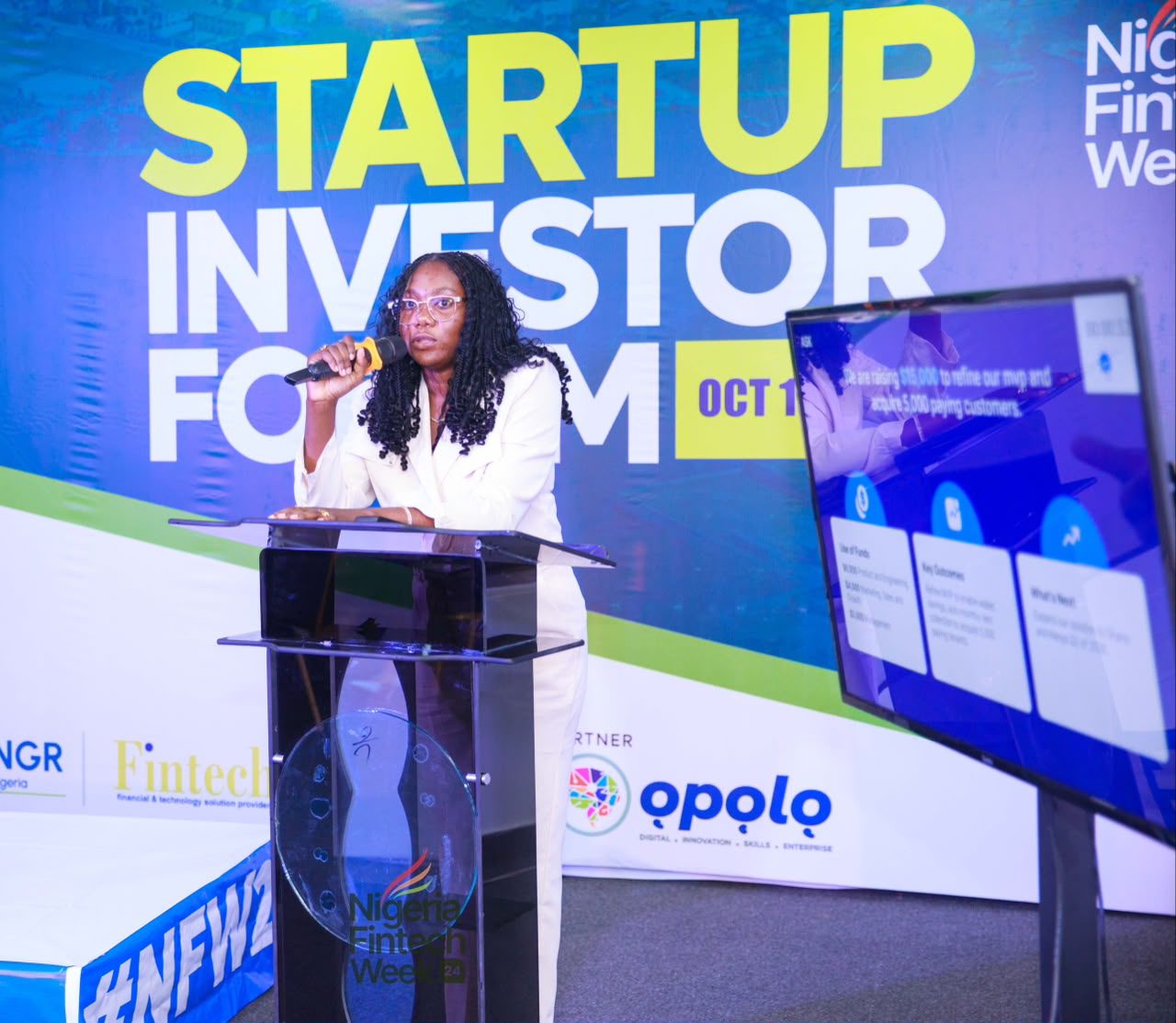
In May 2023, Amarachi Nwachukwu shut down MendHQ, a proptech startup she had built to fix a problem she had watched up close in her uncle’s law chambers: landlords losing rent because nobody had the resources to chase it manually. Three years later, she sits on the other side of the table at MarlVC, deciding which young founders receive the cheques she never did.
The story of how she got there says less about resilience than about a structural gap she now spends her career trying to close, especially in a funding market where many startups can get seed attention but still struggle to find the capital needed to survive beyond the first cheque.
Building MendHQ, and losing two backers
MendHQ launched in February 2022. Nwachukwu, fresh out of law school, had spotted the opportunity from within her family’s chambers, where she was compiling annual reports for landlords because the lawyers were too busy. She built a team, onboarded lawyers and property owners onto the platform, and brought on an angel investor.
That relationship soured almost immediately.
“The angel investor also wanted to be a co-founder,” she says — a demand she was not equipped to negotiate around as a first-time founder still learning deal structure.
A second attempt to raise funds fell apart just as fast. A prospective co-founder based in the United States had agreed to bring in financing, and the team had already started interviewing field marketers to help close estate deals. Then, walking back from a meeting, Nwachukwu got a text: her backer was withdrawing to focus on her Master’s degree.
“I’m like, why is it that relying on people’s money to run this always breaks you down in the middle, maybe when you’ve already engaged people to work?” she recalls.
That was the moment she decided to step away and earn money elsewhere before returning to build. She told her CTO first, then her newly hired marketing team, helping some of them find their next roles before formally closing the company in May 2023, roughly fifteen months after launch.
A delayed plan, accelerated
Nwachukwu’s path into venture capital was not a discovery so much as a return. Long before MendHQ, before law school, she wanted to study banking and finance. Her uncle — the same one whose chambers gave her a front-row seat to property mismanagement — had other plans.
“I wanted to study banking and finance, but my uncle said, ‘Where is the money you want to bank and finance? You should do law and join us in the chambers,’” she recalls. “I said okay, the closest thing to finance in tech is VC. But I just felt like I needed to make a lot of money, maybe have an exit in my late 30s or 40s, and then I’d come and do VC.”
MendHQ’s collapse accelerated a timeline she had expected to take another two decades. What was supposed to be a distant second act became the thing she pivoted to almost immediately.
The fundraising advice she now rejects
Ask Nwachukwu what fundraising advice turned out to be false, and she does not hesitate: raise money only when you need it.
“I don’t recommend that for anybody,” she says. “Raise it before you need it. Maybe you still have six months of runway. It gives you room to negotiate better.”
She is equally sceptical of founders who tell investors they will reach out “when they’re ready.” By then, she argues, the relationship should already exist. The advice is shaped directly by what she did not do: both times MendHQ’s funding fell through, the company was negotiating from a position of dependency rather than leverage — exactly the trap she now tells founders to avoid.
The weeks after the shutdown were not as bleak as the arc suggests. Nwachukwu credits her family and friends for absorbing the emotional weight, and she landed a new job as a product manager within a month. What stayed with her longer was advice from a mentor: grow alongside your peers rather than measuring yourself against founders further ahead.
“He told me age is the leverage you have over these people; take your time. That stuck with me,” she says. “I think it’s good to have people at the top, but growing with your peers reduces the pressure. It helps you fall out and figure things out together and express yourself better.”
Because MendHQ folded early and quietly, the shutdown barely registered in the wider ecosystem. “Founders understand this stuff is very hard,” she says. “I was just starting, so I didn’t get any backlash.” The anonymity of failing small, she suggests, is its own kind of protection.
A non-linear route into venture
Her entry into the industry was not linear either. She met a MarlVC-backed founder through Lagos’s meetup circuit, and when she saw on LinkedIn that the firm’s investor was coming to Lagos, she cold-messaged him, offering to send her deal flow ahead of his visit.
That turned into a coffee meeting and eventually an application, submitted while she was still midway through the Newton Venture Programme, a global training course for early-career VCs that she had not yet completed.
She was rejected.
“They said they passed on me. I was heartbroken,” she says. “But I didn’t give up.”
She spent the following months studying the ecosystem, joining a US investor-relations WhatsApp group, and immersing herself in Silicon Valley’s market dynamics. Then she went back.
“I told him, this is what I’ve learned in the last couple of months. Let’s do a trial.”
That trial, and the Newton certification she was completing, were what eventually got her hired early this year. “Funny thing is, I didn’t lead with my founder background when I was applying,” she admits. What convinced MarlVC, she believes, was her read on the African market and her willingness to support portfolio companies both before and after a cheque is written.
How she evaluates founders
MarlVC writes $50,000 initial cheques, with $100,000 to $250,000 in follow-on capital. Nwachukwu’s diligence is built almost entirely around one question: can this money get a founder to the point where institutional investors take notice?
“I look at your MRR, then I ask, ‘If I give you $50k, can you double that to reach even the African pre-seed standard so that you don’t die?’” she says.
She weighs product roadmaps against sector dynamics and studies team composition closely. Sector experience, she has learnt, matters more than she once assumed: “If a founder is building cross-border payments and nobody on the team has worked in fintech or a bank before, that might not be the best bet, because you don’t understand compliance.”
She does not hunt for red flags so much as test commitment. A founder running a startup as a side project while co-founding another company is an automatic no. “Everything else,” she says, “is closer to 60 to 70 per cent about the team. You might wake up tomorrow, and it’s not working. But we pivot with you.”
Africa’s missing bridge to follow-on capital
Pressed on Africa’s biggest unsolved structural problem, Nwachukwu does not point to seed funding at all. She points to what comes after it.
“There’s no bridge to follow-on capital. Trust me, if some of the startups that died had gotten follow-on funding, they wouldn’t have died,” she says.
Her prescriptions: more “idea labs” to sharpen what founders build before they build it, more corporate venture participation, and closer collaboration between foreign investors — who, she says, have largely operated in isolation — and local funds already holding relevant portfolios.
Her advice to a founder calling mid-collapse, the call she never got to make in 2023, depends entirely on the business model.
“If I see there’s no scalability, I’ll tell you to pivot; don’t die,” she says. “But if the business model is okay and you just need more funds to scale, explore other forms of investment. Private credit, convertible notes. It depends on the type of business you’re running.”
Source: TechNext24

