Carlos Alcaraz Withdraws from Player Group Demanding Bigger Share of Grand Slam Prize Money
Key Takeaways
- •Carlos Alcaraz has withdrawn from the group of elite players negotiating with grand slam executives for a bigger share of prize money, a move seen as a setback for the players' campaign.
- •The top 10 men's and top 10 women's players have spent 18 months pushing for each grand slam's prize pot to reach 22 per cent of tournament revenue by the end of the decade.
- •Unlike team sports, tennis players have no union negotiating a collective bargaining agreement, so the grand slams are lobbied individually by top players.
- •Prize-money tensions have already surfaced at the French Open, where players cut back media duties, and at Wimbledon, where complaints persisted despite the purse rising above £64m.
- •Alcaraz publicly criticized tennis's crowded calendar, warning players face around 40 weeks of mandatory play and saying he will miss some tournaments in the future.
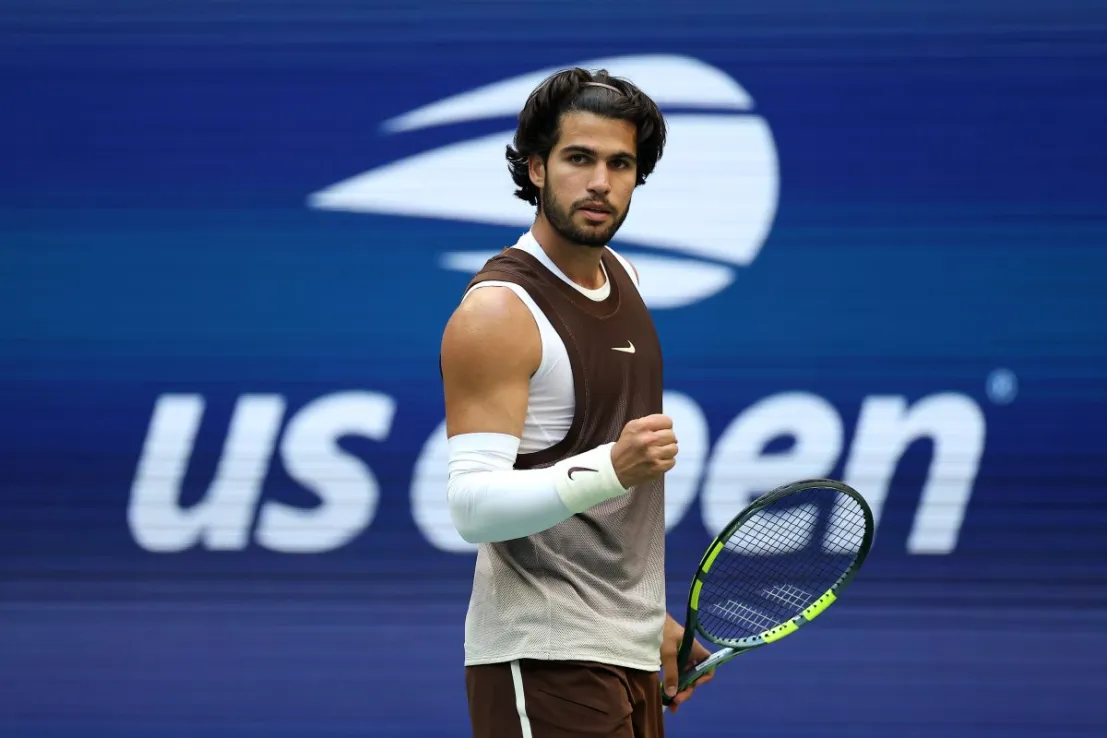
Carlos Alcaraz, the reigning US Open champion, has pulled out of a group of leading tennis players who are demanding a larger share of prize money from the four grand slam tournaments.
The Spaniard, who is set to face American Ben Shelton in a quarter-final match this evening, had originally joined a group of elite players taking on some of the sport's most powerful executives — the leaders of the US Open, French Open, Australian Open and Wimbledon — in a push for a greater proportion of prize money relative to grand slam revenue.
However, the World No3 has now broken ranks, according to people with knowledge of the matter who confirmed the move to City AM — a decision many will view as a significant setback for the players' campaign. Player-led pressure campaigns in professional sport typically depend on top names staying unified to maintain leverage, and the withdrawal of a figure of Alcaraz's stature — a multiple major champion and one of the sport's biggest draws — reduces that collective weight.
The 20 best players in the world — the top 10 men and the top 10 women — have been locked in negotiations with tennis chiefs for 18 months. Their stated goal is for the prize pot at each of the four grand slams to reach the equivalent of 22 per cent of that tournament's revenue by the end of the decade. The four grand slams are run separately from the ATP and WTA tours, and unlike team sports there is no players' union negotiating a collective bargaining agreement on their behalf, leaving the top players to lobby individually.
US Open prize money
Tensions over prize money have already surfaced at other majors. At the French Open, players protested by cutting back their media obligations, while there were complaints about the total purse on offer at Wimbledon, despite a major increase taking it to more than £64m.
The dispute comes amid a broader shift in the sport's scheduling. The ATP, the governing body of men's tennis, announced earlier this year a reduction in players' appearance obligations, while the WTA, the women's tour, is considering a similar move that could reshape the calendar and reduce physical strain on players.
Alcaraz, a seven-time grand slam champion, voiced his own concerns about the packed schedule at a press conference this week following his win over Tommy Paul. "I think they [tennis bosses] are adding more important tournaments," he said. "You know, in a way they are making us play.
"But there are some Masters 1000s, some grand-slams, and we'll be playing 40 weeks if we have got to play every mandatory tournament that the ATP requires us to, so it's impossible, and we are seeing a lot of players getting injured, a lot of players getting tired.
"I'm going to miss some tournaments in the future, for sure."
