Trump's Dallas Midterm Convention: A High-Risk 'Hail Mary' That Underscores the GOP's Central Problem
Key Takeaways
- •Republicans are holding an unprecedented two-night midterm convention in Dallas at President Trump's own insistence, hoping to boost the party's prospects for the 2026 elections.
- •Many GOP candidates are skipping the event to avoid being tied to Trump, whose approval rating is lower than that of many congressional Republicans.
- •Democratic Senate candidate James Talarico plans a statewide 'Love Thy Neighbor' food drive as counter-programming to highlight the affordability crisis.
- •Dallas officials estimate the city will spend about $2.5 million on security and related services for the convention.
- •Historically, the president's party loses midterm seats, and this cycle is expected to be worse than usual with Trump and GOP approval at record lows.
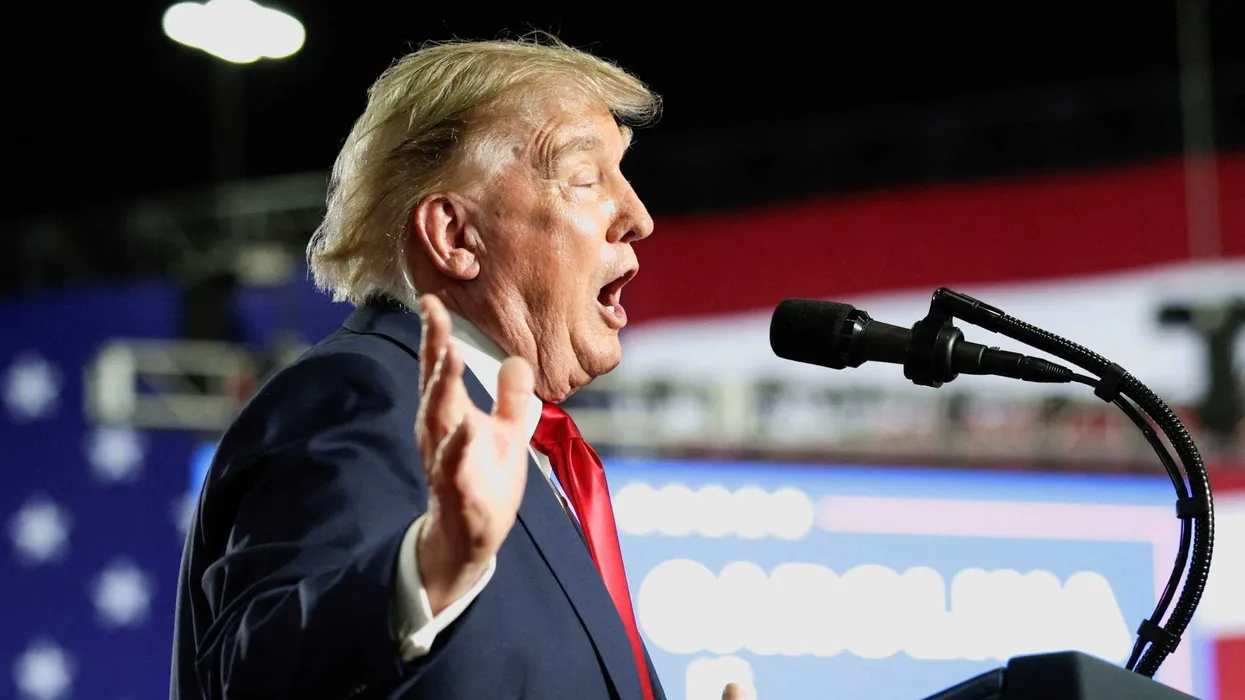
The Republican Party is betting heavily that President Donald Trump's "celebrity" can rescue it from a poor showing in the 2026 midterm elections.
The Dallas Morning News reported on Monday that the party is heading this week to the Democratic-leaning Texas city for a two-night convention — a final "Hail Mary" attempt to reverse the slide forecast for the GOP in the upcoming election, according to Dirk Hautkapp, Washington correspondent for the German newspaper The Berliner Morgenpost. Borrowing the American football metaphor, he described the gathering as a high-risk political gamble intended to revive the party's midterm prospects.
"A desperate political stunt with television, floodlights, flags and a whole lot of Donald Trump," Hautkapp wrote, in a translated version of his column.
The convention was Trump's idea. Last November he demanded that a midterm convention be held.
"That's not a thing," House Speaker Mike Johnson (R-LA) reportedly explained to him. Conventions exist to nominate a party's presidential candidate through delegates from every state; in a year without a presidential race, there is no real purpose for one. But Trump wanted a convention — and the free media coverage he believes it will generate.
"Make it a thing," Trump demanded.
"It's really unprecedented," Thomas Gray, a political science professor and researcher at the University of Texas at Dallas, told Houston Public Media. "That they're doing this unusual, seemingly kind of risky or innovative thing kind of implies that the Republican Party feels on the back foot, and that they maybe need to try to do something different than the usual to make up for the sort of disadvantage that they see in the polling."
As that report explained, GOP organizers hope to frame the midterm election as a referendum on the president — even though Trump will not appear on any ballot. Notably, that is the same message Democrats are pushing. A CNN data analyst reported last month that the Republican president is considerably more unpopular than many of his congressional counterparts.
Politico reported that Democratic U.S. Senate candidate James Talarico plans to use the GOP convention as the focus of a mobilization effort that both helps people and reinforces his message about the affordability crisis. The seminarian will host a statewide "Love Thy Neighbor" food drive designed to draw a contrast between the GOP's lavish spending and high ticket prices and the economic pressures facing ordinary voters.
"Next week, billionaire mega-donors and their puppet politicians will gather at a convention in Dallas to clink champagne glasses and toast their own corruption. They're paying $20,000 for entry to a Billionaire Ball celebrating corrupt tariffs, billionaire tax breaks, and a new forever war that are all driving grocery costs through the roof," Talarico said in a statement to Politico last week.
According to The Dallas Morning News, the city estimates it will spend roughly $2.5 million on security and related services, and organizers have complained that Dallas taxpayers should not be forced to bear most of that cost.
As Tucson.com explained, the GOP risks tightening the association between Republican candidates and Trump at the very moment many are urgently trying to distance themselves from him. That is one of many reasons, the New York Times reported, that GOP candidates are skipping the event altogether.
"One of the problems that the party is having right now is the president's approval rating is not good," said GOP strategist Charlie Black. "So the more candidates can get the voters to focus on them and the issues that they're promoting, and less on the president, the better in most states and most districts."
Historically, the president's party loses seats in midterm elections — a pattern that has held in nearly every midterm since World War II, including the 63 House seats Democrats lost in 2010 under Barack Obama and the roughly 40 House seats Republicans lost in 2018 during Trump's first term, the last time his party faced voters in a midterm. But this cycle is shaping up to be far worse than usual, with approval ratings for both Trump and the GOP at record lows.
Republicans avoiding the event have pointed to fears that the president will continue his "affordability is a hoax" messaging — the claim that all is well in the economy while people are struggling. Even the First Lady is not expected to attend. Trump loyalists, however, argue that his presence is essential to turning out the MAGA base.
"The president's going to look right into the camera and say 'I am on the ballot,'" Speaker Johnson said. "Because even though his name isn't, his administration, his legacy, the America First agenda is. We've got to get people to turn out."
