Democrats' Midterm Gains Could Reshape the Political Landscape for AI Oversight
Key Takeaways
- •Democrats won control of both the House and Senate in the midterms, giving the party authority over which bills reach the floor and which topics congressional committees investigate.
- •President Trump retains veto authority over legislation and control of executive-branch regulatory agencies, meaning congressional majorities alone cannot halt AI-related data center construction.
- •Data centers' heavy electricity consumption and its effects on local communities have emerged as central points of political friction surrounding the AI buildout.
- •UBS strategists estimate that potential state-level data center pauses could impact roughly 30% of expected 2028 capacity additions, with Texas alone accounting for 18 gigawatts of that exposure.
- •Analysts expect AI investment to remain robust in 2027 despite heightened scrutiny, though tempered by supply chain strains and tighter credit.
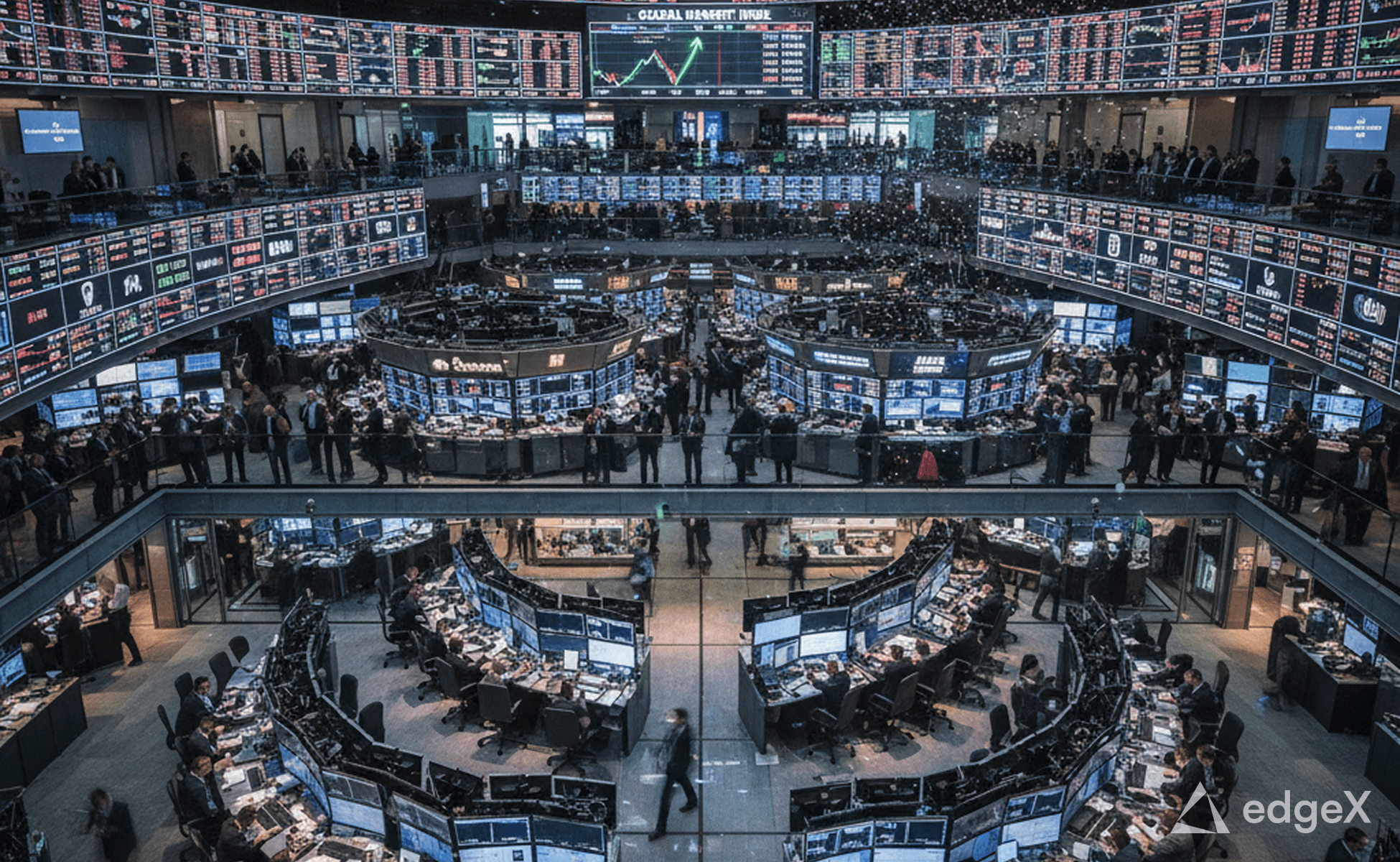
The midterm elections handed Democrats majorities in both the House and Senate for the next two years, accompanied by state-level gains that could shake up oversight of the artificial intelligence (AI) sector. Midterm contests, held halfway through a president's term, set the composition of Congress for the two years that follow, and the party that controls each chamber decides which bills reach the floor and which subjects its committees investigate.
The AI industry has drawn political scrutiny on a range of fronts, including the volume of electricity consumed by data centers and its impact on consumers, as well as cybersecurity and labor force implications. Data centers — the facilities that house the computing hardware used to train and run AI models — are intensive electricity consumers, and their power needs have become a point of friction in the communities where they are built.
President Donald Trump has made the development of artificial intelligence — which he has rebranded in official White House policies as "superintelligence" — a priority of his administration. He retains the authority to veto legislation passed by the Democratic-controlled Congress, while also keeping control of regulatory agencies within the executive branch.
With the AI buildout advancing at a rapid pace, Democratic policymakers at the federal and state levels could make moves that affect how companies approach those investments as they contend with oversight and political pressure. Wall Street strategists and industry consultants say the shift is likely to intensify examination of the sector, even as AI investment remains a priority for both parties. Congressional leverage also extends beyond enacted laws: hearings, investigations and the drafting of federal spending bills give the majority party channels to examine the industry.
State Street Investment Management chief macro policy strategist Elliot Hentov and investment strategist Christine Norton wrote that "Democratic gains could create additional headwinds for… and increase scrutiny of AI providers and data center development, particularly the impact of power demand on local communities."
"These concerns are heightened by some of the state gubernatorial results," Hentov and Norton added. "Yet at a federal level, congressional control alone would not be enough to curtail AI-related data center construction in the face of a presidential veto."
"AI also remains a strategic priority for both parties, suggesting that greater policy scrutiny should not automatically be equated with an end to the AI capital spending cycle. AI investment will likely continue to be robust in 2027, albeit tempered by strains on the supply chain and tighter credit," they added.
Dallas Dolen, technology, media and telecom lead at PwC, told FOX Business that with Democratic control of Congress, "we're likely to see greater scrutiny around AI safety, bias, labor, copyright and transparency, but more oversight doesn't necessarily mean more certainty."
"Companies will still be navigating an evolving patchwork of state requirements, and they can't put major AI investments on hold while the rules take shape," Dolen said. "They need a strong governance baseline that allows them to keep investing, building and scaling AI responsibly."
Strategists at UBS noted that potential pauses on data center construction in states such as Texas — where Democrats flipped the governorship and state House — could affect the outlook for AI infrastructure and cloud computing companies. Governors and state legislatures hold direct leverage over data center projects through permitting, zoning and utility regulation, which is why statehouse outcomes carry weight for infrastructure plans.
"Data center pauses will slow the pace of buildout into 2028 with ~30% of expected 2028 additions now at risk of being impacted, and Texas alone is 18 GW of that. Congress is less likely to go beyond the states in our view with data centers now more likely to pay for grid upgrades – which has the potential to raise costs," the UBS strategists wrote.
"The slowdown is a negative for Semis and AI infrastructure, but a lot is already priced into Semis with valuations nearing multi-year lows. Additionally, Semis positioning has been cut sharply," they added.
From here, the signposts are concrete: whether the potential state-level pauses flagged by analysts materialize, how the cost of grid upgrades is allocated in fast-growing data center markets such as Texas, and whether any congressional AI proposals advance far enough to test the president's veto.

