OuiLife CEO Says Female Founders Should Strengthen Investability as Funding Share Remains Low
Key Takeaways
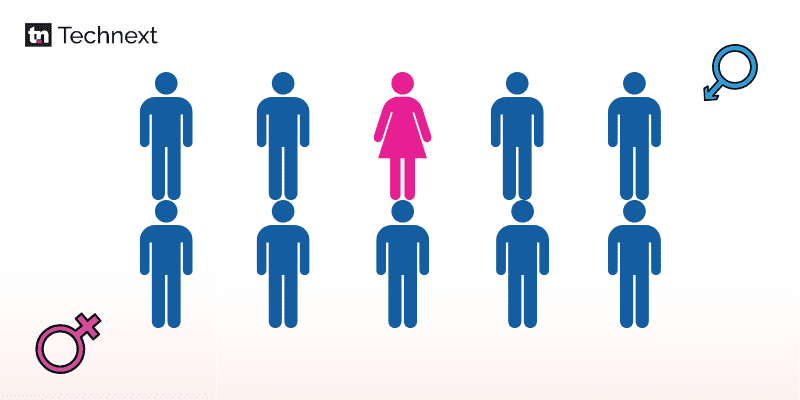
- •Female founders raised 2.7% of the $1.37 billion secured by African startups in the first half of 2026.
- •Women-led startups received 0.9% of the $3.2 billion in African venture capital funding raised in 2025.
- •Obidiebube said female founders can strengthen investment prospects through governance, traction, financial discipline and market-focused products.
- •She said dedicated funds for female founders can improve early-stage access but are not a complete long-term solution.
- •Limited access to capital can slow hiring, research and development, market expansion and competitiveness for women-led startups.
Female founders cannot direct investors on where to allocate capital, but they can influence how investable their companies become, according to Dinma Obidiebube, founder and CEO of beauty-tech company OuiLife.
Obidiebube made the comments in an interview with Technext following a report that female founders raised only 2.7 per cent of the $1.37 billion secured by African startups in the first half of 2026. That share represents roughly $37 million of the reported total, underscoring how small the pool remains for women-led companies even when overall startup funding is measured in billions.
Asked whether women founders can help reverse the trend, Obidiebube said the issue cannot be solved by founders alone because investment decisions ultimately sit with investors. However, she said women can focus on building businesses that meet stronger investment standards.
“Women founders cannot solve this challenge alone because investment decisions ultimately rest with investors. However, they can control how investable they become. That means building companies with strong governance, measurable traction, clear financial discipline and products that solve real market problems.”
“The stronger the fundamentals, the stronger the investment case,” she added.
Obidiebube also said female founders should think beyond local markets from the beginning. In her view, companies that show scalability, disciplined execution and global relevance are naturally more attractive to investors.
The share of total African venture funding secured by female founders has fallen significantly and consistently in recent years. In 2025, women-led startups received only 0.9 per cent of the $3.2 billion in venture capital funding raised across the continent. Although the figure for the first half of 2026 suggests an improvement and is above the global average of two per cent, a share below three per cent remains extremely low.
Describing the current share as “disproportionate,” Obidiebube said venture capitalists often overlook female founders because many operate in sectors or business categories perceived as risky.
“Investors often back sectors and founder profiles that have previously generated outsized returns. That can unintentionally reinforce existing funding patterns and make it more difficult for founders operating outside those patterns – including many women to access capital at the same scale,” she explained.
She pointed to the challenges of investing in sectors dominated by women, including beauty care. According to Obidiebube, businesses in such sectors can be capital-intensive and often require substantial spending on equipment, facilities, compliance and inventory long before they are able to scale.
That dynamic can make fundraising more difficult regardless of the founder’s gender, she said.
“When you combine that with the historical underrepresentation of women in venture funding, the challenge becomes even greater,” she said.
Some industry stakeholders have called for investment funds dedicated exclusively to female founders as a way to increase funding access for women and narrow the gap. In response, some investors have announced funds focused solely on female founders.
Obidiebube said such dedicated funds can play an important role by helping to address historical funding imbalances and by giving more women access to early-stage capital. However, she said these funds are mostly corrective measures responding to years of underrepresentation, rather than proof that the funding gap has been closed. For that reason, she does not see them as the long-term solution.
“Dedicated funds can help bridge today’s gap, but long-term success depends on building a broader investment culture that recognises quality businesses across different sectors and founder backgrounds. The ultimate goal should be an investment ecosystem where funding decisions are driven by the strength of the business rather than the gender of the founder,” Obidiebube said.
She added that while there has been encouraging progress, the goal should not simply be to create more programmes for women. Instead, she said strong businesses should have equal access to capital and should be assessed on their ability to create long-term value, regardless of the founder’s gender. That makes future funding data, as well as the behaviour of mainstream venture funds, important measures of whether dedicated initiatives are translating into broader access to capital.
The limited flow of funding to women-led startups affects female founders because access to capital influences how quickly a company can hire, invest in research and development, enter new markets and compete. When capital is limited, growth can become slower and more dependent on the founder’s personal resources or on operating cash flow.
Still, Obidiebube said the funding gap should not discourage women from building ambitious companies.
“Venture capital is only one source of financing. Many successful companies have been built through customer revenue, strategic partnerships, angel investment, grants and debt financing. For founders, the priority should be building businesses with real demand and strong fundamentals. Capital is an accelerator, not a substitute for a viable business model,” she said.

