African Edtech Startups Need Patient Capital, Not Fintech-Style Funding, Founders Say
Key Takeaways
- •Dami Oguntunde said edtech companies should be assessed on learning impact and long-term viability, not only on how quickly they generate revenue.
- •Hardé Business School recorded about 30,000 enrolments in one month for micro-courses, but many learners lacked enough disposable income to pay.
- •Boye Oshinaga said African edtech founders must present the continent as their market while showing a clear path to recurring revenue.
- •Founders identified cross-border payments, regulation and trust as barriers that make expansion more complex than launching an app in another country.
- •Speakers said African edtech growth will depend on patient capital, institutional partnerships, affordable products and locally trained AI tools.
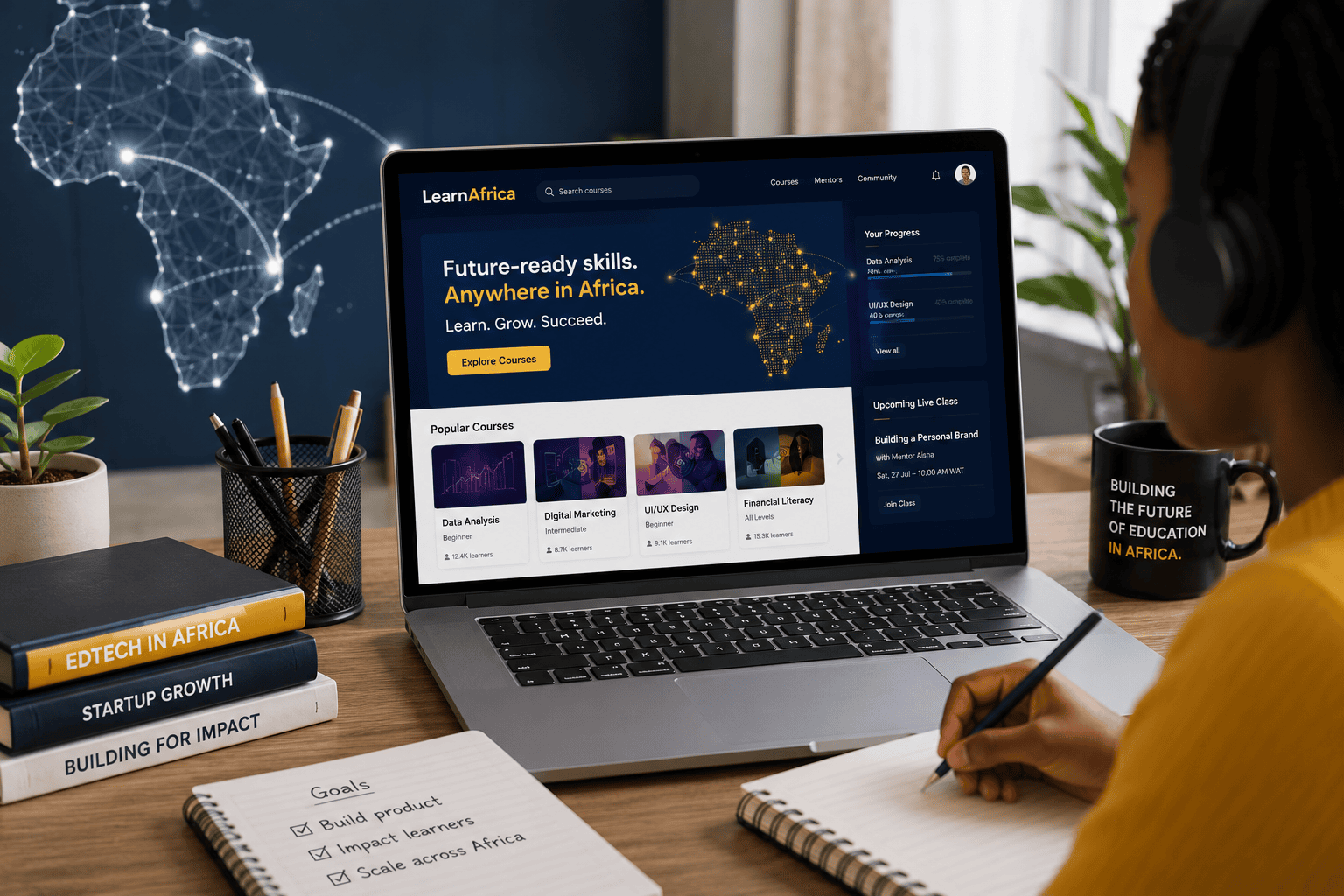
African edtech startups need patient capital and impact-focused financing instead of the rapid-growth funding models often used for fintech companies, according to Dami Oguntunde, co-founder and CEO of Hardé Business School.
Speaking at the BRINT EdTech Summit 2.0 in Lagos, Oguntunde said education companies should not be judged only by how quickly they can generate revenue. He described education as a “patient sector” that requires investors prepared to support companies as they build products, prove learning outcomes and develop viable business models.
Other founders at the summit made similar arguments, saying education businesses generally need more time to produce returns because they serve learners with limited spending power and operate in a sector where results may take months or years to become clear. They warned that applying fintech-style expectations to edtech companies could push startups to chase user numbers without building sustainable businesses.
The issue matters for founders because the funding model can shape what companies optimise for. In education, a product may need time to show whether learners complete courses, improve skills or keep using a platform, while revenue may depend on schools, employers, foundations or governments as much as on individual learners.
The discussion was held during a panel titled “Scaling African EdTech Beyond Borders.” The speakers included Ruby Igwe, Regional Director at ALX Africa; Boye Oshinaga, founder of Gradely; Kelechi Uchenna, co-founder and CEO of Nigenius; and Oguntunde.
Oguntunde used Hardé Business School’s experience with micro-courses for young people entering the workforce as an example. He said the platform recorded about 30,000 enrolments in one month. However, many of the learners did not have enough disposable income to pay for the courses.
The enrolment figures showed demand for the product, but the company could not generate the level of revenue typically expected by venture capital investors. Oguntunde said this gap between demand and users’ ability to pay is one reason edtech startups need a different funding approach.
“There has to be very high-level institutional thinking that stimulates the growth of edtech solutions without placing too much of an instant burden for revenue generation,” Oguntunde said.
He called on governments, development organisations and global foundations to provide grants and impact-focused capital to education companies.
Oguntunde cited the Mastercard Foundation EdTech Fellowship as an example of a programme that evaluates companies based on their potential impact and the education problems they are trying to solve. He said programmes of that kind could help startups build long-term solutions without forcing them to put short-term revenue ahead of learning outcomes.
Beyond the funding problem
Boye Oshinaga said the funding challenge is also tied to how African edtech founders explain the size of their markets to investors. He said founders must show that they are building for a market beyond one country and must present a clear path to recurring revenue.
“The market is not one country; it is an entire continent,” Oshinaga said.
According to him, investors want to see that customers are returning, payments are increasing and the business is growing consistently. Large registration and download numbers may attract attention, but they are less useful if startups cannot convert those users into paying customers.
Oshinaga said African edtech companies therefore need to develop a stronger narrative around the continental education market while also showing how their products can generate sustainable revenue.
The founders also pointed to cross-border payments, regulation and trust as barriers to expansion.
An edtech company entering a new African country may need to persuade learners and institutions to trust an unfamiliar platform while also adapting to different payment systems and regulatory requirements. Local partnerships, they said, could help companies address some of those challenges by providing market knowledge, distribution and access to customers.
Those barriers make expansion different from simply making an app available in another country. For education companies, growth across borders can require alignment with local institutions, curricula, payment habits and buyer expectations, which may slow expansion but also make trusted local distribution more valuable.
Partnerships, local products and African data
Oguntunde said partnerships with governments, corporations and large institutions could give edtech companies access to much larger groups of learners. While business-to-consumer operations allow companies to engage directly with individual users, institutional partnerships can strengthen credibility, distribution and revenue.
He said, for example, that a partnership with a telecommunications company could expose an education platform to millions of subscribers faster than years of direct customer acquisition. However, he acknowledged that institutional partnerships often involve long negotiations and delayed payment cycles.
For Kelechi Uchenna, partnerships should be treated as clear commercial exchanges rather than vague agreements between companies. He said companies do not need to work together simply because they operate in the same industry, especially when they offer similar products to the same customers.
According to Uchenna, a school-financing company could introduce Nigenius to schools that need robotics education, while Nigenius could connect the finance provider to institutions already using its services.
“It is a give and take,” Uchenna said.
He also rejected the idea that partnerships with larger international platforms would automatically weaken African startups or reduce them to minor features inside another company’s product. Uchenna said he would accept Nigenius being integrated into a larger platform if the partnership produced active users, transactions and revenue.
“A partnership is a partnership. It is not an acquisition,” he said, adding that the company would continue operating its own products and distribution channels.
The discussion also focused on the need for edtech companies to design products around Africa’s infrastructure and affordability constraints.
Nigenius, for instance, started RoboLearn with a physical robotics workbook linked to additional digital materials through QR codes. The company also uses locally sourced components for its robotics kits to lower costs. The model allows learners to begin with a physical product and access more content when an internet-enabled device is available, instead of making constant connectivity a requirement.
Uchenna said companies must find a balance between quality and access. A sophisticated learning platform will have limited impact if its intended users cannot afford the data, devices or subscriptions needed to use it.
Ruby Igwe also urged African edtech companies to ensure that artificial intelligence tools used in education are trained with local languages, curricula and classroom experiences. She said uploading curriculum documents into an AI platform may not be enough. The systems should also learn from the ways experienced African teachers explain concepts, assess students and respond to learning difficulties.
The founders said African edtech companies will need a combination of patient capital, institutional partnerships, affordable products and locally trained AI to expand beyond their home markets. The next test for many of these companies will be whether they can turn demonstrated learner demand into repeat usage, trusted partnerships and revenue models that fit the realities of the education market they serve.

