Pantera Leads $52.5 Million Locked WLD Token Round for World Foundation
Key Takeaways
- •World Foundation raised $52.5 million through a locked WLD token sale led by Pantera Capital.
- •The capital will be used to expand World ID, a biometric credential system designed to verify human users online.
- •Investors in the token sale are subject to a 12-month lockup that restricts immediate liquidity.
- •World ID relies on biometric verification through a hardware device called the World Orb before issuing a digital credential.
- •The project remains under regulatory scrutiny in multiple jurisdictions over privacy, data protection and consent issues tied to biometric identity systems.
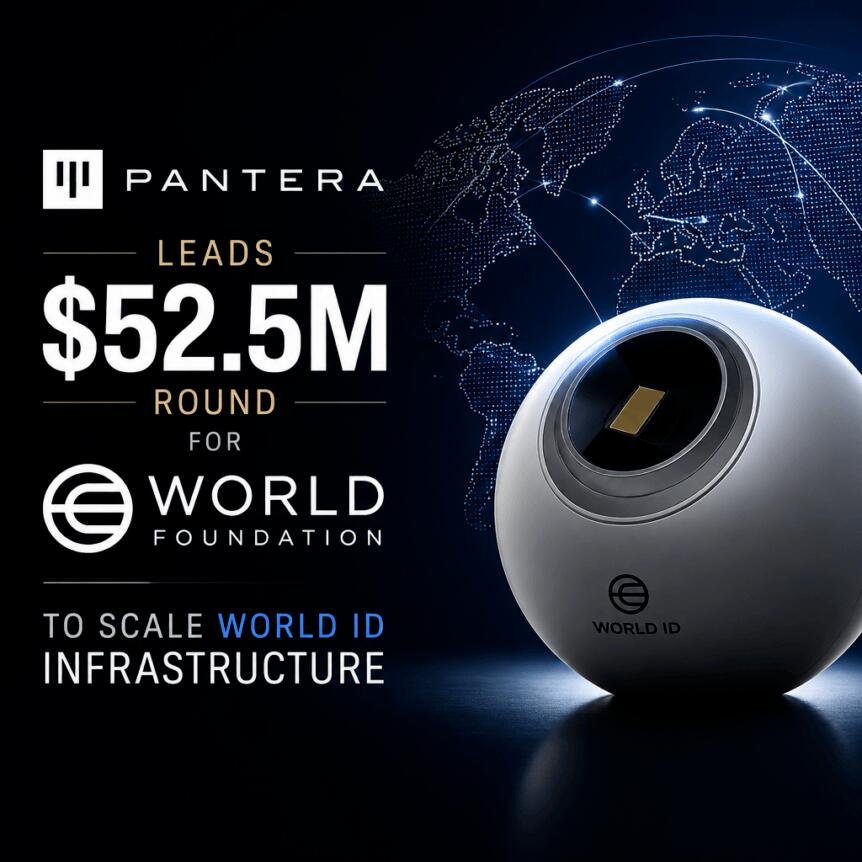
World Foundation, the nonprofit organization behind the World protocol — formerly known as Worldcoin — has raised an initial $52.5 million through the sale of locked WLD tokens to strategic investors, with Pantera Capital, one of the longest-standing cryptocurrency investment firms, leading the round.
The fundraising was announced on Friday and shared with Cointelegraph. The new capital is intended to support the expansion of World ID, World's biometric-based credential system designed to help platforms verify whether an online user is a real person.
According to the announcement, the WLD tokens sold in the round are subject to a 12-month lockup, limiting immediate liquidity for the strategic investors. Other reported participants include Bain Capital Crypto, Eightco Holdings, Selini Capital, and Susquehanna Crypto, along with additional investors.
Locked WLD token sale supports World ID expansion
World Foundation's financing centers on WLD, the token associated with the World protocol ecosystem. The organization said the initial $52.5 million raised from the locked token sale will be used to expand World ID, a system intended to verify online identities as synthetic content and automated agents become more common across digital platforms.
World describes World ID as a credential issued after users complete biometric verification at a hardware device known as a World Orb. After the verification process, users receive a digital credential that is intended to help services determine whether an account interacting with them is connected to a real person rather than an automated agent.
The organization has said demand for verification infrastructure is increasing as AI-generated content and autonomous agents grow. Rather than relying only on behavioral bot-detection methods, World's approach seeks to connect identity claims to a biometric verification step completed through the World Orb process.
AI agent activity increases focus on verification tools
World Foundation's fundraising comes as crypto and adjacent technology investors continue to fund AI-related infrastructure and applications built for agent-driven workflows. Cointelegraph has highlighted several recent deals that reflect this shift.
Brokerage infrastructure provider Alpaca raised $135 million in equity financing earlier this month and reportedly obtained access to as much as $300 million in debt financing. The company said the funding would support infrastructure for AI-powered financial applications, indicating that agent-based workflows are moving beyond experimentation into more developed systems.
Cointelegraph also previously reported that Coinbase introduced tools allowing businesses to accept USDC payments from autonomous AI agents. That development was presented alongside rising AI-generated activity on Coinbase's Base developer ecosystem, including a claim that AI-generated traffic exceeded human traffic on Base developer documentation for the first time last month.
As commerce, messaging, payments, and platform interactions become more automatable, identity and trust systems have become relevant to several operational needs, including onboarding, fraud prevention, and resource allocation. In that context, tools that verify whether a given interaction represents a human user are becoming part of broader discussions about infrastructure for automated online activity.
Regulatory scrutiny remains part of World's identity model
World's biometric identity approach has drawn controversy. The organization was originally conceived by Sam Altman — CEO of OpenAI — alongside Max Novendstern and Alex Blania, and World protocol efforts have faced regulatory scrutiny in multiple jurisdictions over the biometric identity verification system.
Although the current fundraising announcement focuses on scaling World ID, regulatory pressure remains a significant part of the project's operating environment. Biometric verification can intersect with privacy expectations, data protection requirements, and consent frameworks that differ widely by jurisdiction. Those requirements can affect rollout timelines, compliance costs, and the design of how credentials are issued and used.
The 12-month token lockup limits near-term liquidity for participating strategic investors, but it does not address the broader question of how World ID will navigate legal and regulatory requirements as the system expands.
AI-related investment extends to security and frontier technology
The investment environment around AI is also visible in cybersecurity funding. Cointelegraph noted that capital is increasingly moving into AI-adjacent security efforts. One example is AegisAI, a cybersecurity startup that raised $36 million in Series A funding to expand AI-powered email security. The company said the financing is intended to improve defenses against more sophisticated AI-generated phishing attacks.
Large crypto investment firms have also been expanding their focus toward AI and frontier technologies. According to Cointelegraph reporting, Paradigm raised a $1.2 billion fund in July to invest across crypto, artificial intelligence, robotics, and other frontier technologies. Framework Ventures also reportedly closed a $400 million fund in June with a mandate spanning crypto, AI, robotics, and energy.
These fundraising moves place World ID within a wider sector focus on infrastructure, trust, and security for systems affected by automation. World ID's biometric verification model is positioned as one possible human-verification layer for platforms confronting increased AI-generated activity and autonomous agents.
A central issue for World Foundation is how World ID scales beyond its current verification workflow while meeting compliance expectations in jurisdictions that have scrutinized biometric identity systems. As platforms adapt payment and interaction tools for autonomous agents, adoption milestones for World ID and updates on its regulatory posture remain key areas of attention.

