Wall Street Wavers as Trump Tariffs Take Effect and Brent Crude Tests $100
Key Takeaways
- •The Magnificent Seven lost about $800 billion in combined market value on Thursday after Alphabet and Tesla reported sharply higher AI-related capital spending.
- •President Trump's new Section 301 tariffs took effect overnight, applying 10% to 12.5% duties to nearly all US imports from major trading partners.
- •Brent crude fell 2.8% to below $98 per barrel Friday but remained on track for a weekly gain after briefly trading above $100 earlier in the week.
- •Intel shares rose after the chipmaker exceeded analyst profit expectations, offering a rare positive move in the technology sector.
- •The equal-weight S&P 500 ETF gained 0.5%, indicating broader market resilience even as the iShares Semiconductor ETF dropped 4.3%.
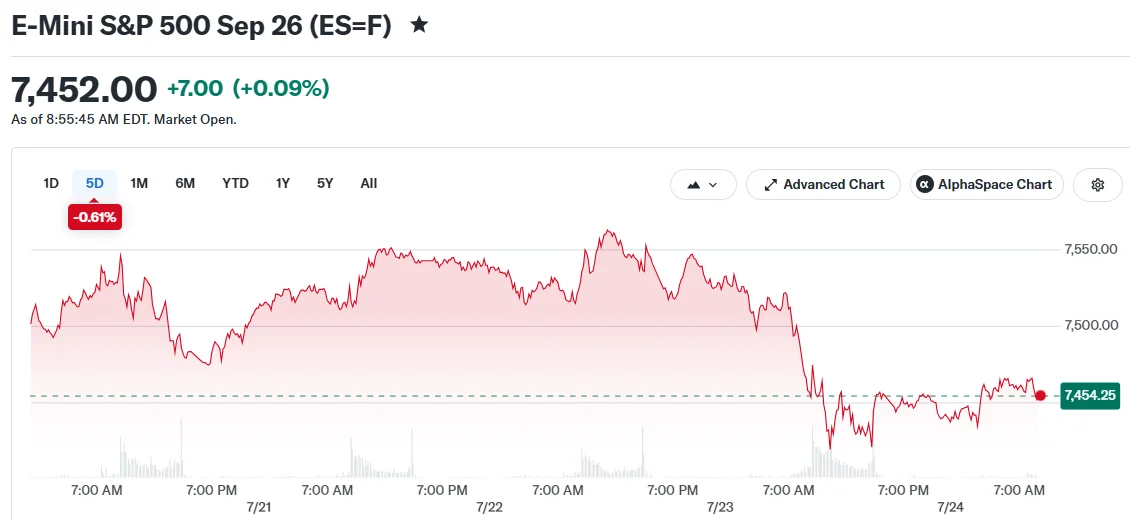
US equity benchmarks struggled for direction Friday morning after one of the most severe technology-sector sell-offs of 2024, as investors navigated a convergence of new trade barriers, surging artificial intelligence infrastructure spending, and elevated energy prices.
The Dow Jones Industrial Average posted a modest 0.3% gain, while the S&P 500 hovered near breakeven. The Nasdaq Composite fell 0.4% as technology stocks continued to drag. All three major indices were on pace for a negative weekly close.
Thursday's session alone wiped out approximately $800 billion in combined market capitalization from the Magnificent Seven group of mega-cap technology companies. The steep drop came after quarterly reports from Alphabet and Tesla revealed sharply rising capital expenditures tied to AI infrastructure, prompting a negative market reaction to the escalating cost burden. For investors, the issue was not only near-term earnings, but also how quickly large AI investments can translate into revenue growth, productivity gains, or wider margins.
Intel stood out as a notable exception. The chipmaker's shares advanced in morning trading after it surpassed analyst profit expectations in its Thursday evening earnings release.
New Section 301 Tariffs Take Effect
President Trump's latest round of comprehensive tariffs became operational during overnight hours. The Section 301 levies apply to nearly all US imports, with rates between 10% and 12.5% imposed on the nation's principal trading partners.
Section 301 is a US trade-law mechanism used to impose duties after findings related to foreign trade practices. In market terms, broad import tariffs can matter because they may affect corporate input costs, pricing decisions, supply chains, and inflation readings.
Administration officials said the revised tariff structure was designed to better withstand potential legal challenges compared to earlier versions.
Certain energy commodities were exempted from the tariff schedule. Officials defended the decision by noting that oil markets were already under upward price pressure that could hamper inflation-reduction efforts.
Brent crude futures dropped 2.8% Friday, trading below $98 per barrel. However, the global benchmark remained on track for a positive weekly result after briefly exceeding the $100 mark earlier in the week. Energy prices remain a key input for transportation, manufacturing, and consumer fuel costs, keeping crude oil in focus alongside the new tariff regime.
Mixed Corporate Earnings
Verizon Communications and American Express each beat profit estimates but fell short on revenue growth. Both stocks declined despite the earnings beats.
NextEra Energy topped per-share earnings expectations while also missing revenue targets; unlike Verizon and American Express, its shares moved higher.
Intel's strong quarterly results provided a rare bright spot for the technology sector during an otherwise difficult week.
Market Breadth Diverges from Headline Indices
The equal-weight S&P 500 ETF, which weights each constituent equally, gained 0.5% Friday, suggesting that weakness was concentrated in a handful of large-cap technology names while the broader market held up.
The iShares Semiconductor ETF tumbled 4.3%, creating a significant drag on broader index recovery efforts. Technology and consumer discretionary were the only major sectors to finish in negative territory.
Scheduled economic data releases for the day included S&P Global's July purchasing managers' index figures for both the services and manufacturing sectors, along with the latest residential sales figures. The PMI readings are closely watched as timely gauges of business activity, while housing data can offer clues on consumer demand and the effect of borrowing costs on rate-sensitive parts of the economy.

