Todd Blanche Confirmation Compromise Raises Questions About Trump's Grip on the GOP
Key Takeaways
- •Todd Blanche agreed to Republican senators' demands for a written commitment to eliminate an IRS slush fund in order to advance his attorney general nomination.
- •Trump's political leverage has relied heavily on his capacity to influence Republican primary outcomes, a tool that diminishes as the primary season concludes.
- •A growing number of Republican legislators are supporting Democratic-sponsored bills aimed at withdrawing the United States from the conflict in Iran.
- •Midterm election cycles historically pressure incumbents in competitive districts to demonstrate independence from the White House on high-profile votes.
- •Commentators are divided on whether the Blanche compromise represents an isolated incident or the beginning of a larger shift in GOP willingness to resist presidential authority.
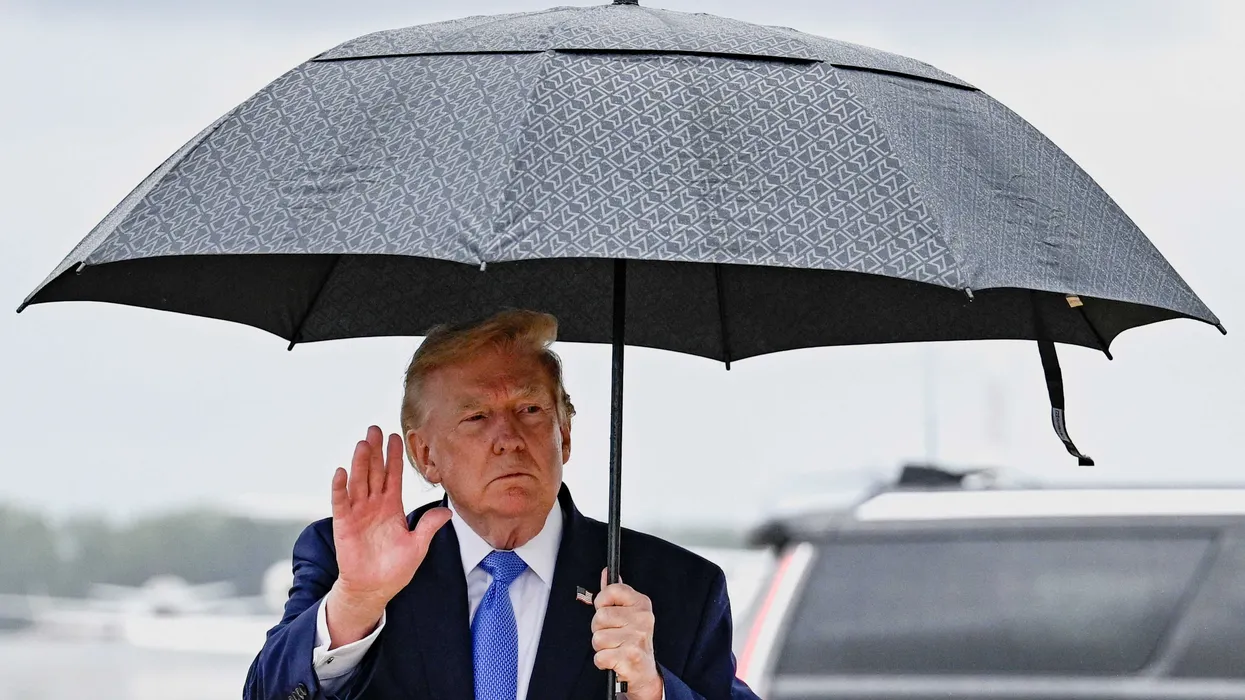
President Donald Trump's influence over the Republican Party is facing new scrutiny after he failed to secure the nomination of Todd Blanche as attorney general without a written guarantee that an IRS slush fund would be formally eliminated.
Blanche conceded to demands from Republican senators over the weekend, a development that has sparked broader discussion about whether Trump is genuinely losing his hold on the GOP or whether the episode represents an isolated incident. The attorney general nomination is one of the most consequential in any administration, overseeing federal law enforcement priorities and regulatory enforcement, making any confirmation compromise a signal of where Senate Republicans may draw lines on presidential authority. Greg Sargent of The New Republic discussed the matter with writer Emma Janssen on the Monday episode of his podcast, where the two debated whether the Blanche compromise signals the start of a larger shift within the party.
Janssen noted that the primary election season is nearing its end, and that Trump's leverage has long depended on his capacity to mobilize his base in Republican primary contests.
"This major source of power for him to enforce his agenda and elect the people that he wants elected, or make sure that the people he doesn't like don't get elected — that might actually be the more important part. That tool for him is disappearing now that the primaries are coming to a close," Janssen said.
"And so I think it's exactly what you said. It's a grip on power. And we might start seeing more resistance from his own party. I mean, I wouldn't put a ton of money on that, but he's losing this tool. And that could open up a space for more Republicans to jump ship on a war powers resolution, for example," she added.
Sargent described the current political landscape as a "split screen," in which Trump continues to exert control over the GOP on one side while non-Republican voters grow increasingly angered by his policies.
"He's just able to get Republican voters to stampede away from their own representative or senator and go back whoever Trump says they should vote for instead," Sargent said. "So, you know, I don't know how well that reflects on these Republican voters — not very well — but it surely shows that Trump does wield some real power over them."
At the same time, Sargent argued, Trump no longer commands the same level of authority over GOP legislators that he once held.
"And that drives him absolutely crazy. And he can't stand that. So he won't let them get distance from him in order to position themselves for the midterms, which they absolutely desperately have to do," Sargent said. "I really wonder whether Trump in his head doesn't understand that the midterm electorate is a different thing than the Republican primary electorate."
Midterm election cycles historically put pressure on the president's party, and incumbents in competitive districts and states often face pressure to demonstrate independence from the White House on high-profile votes. The practical implications of this dynamic could become evident in whether Republicans, once their primary elections have concluded, prove more willing to challenge Trump's increasingly unpopular war in Iran. Janssen observed that a growing number of Republicans are signing on to recent Democratic-sponsored bills aimed at withdrawing from the conflict — a war that is also becoming increasingly unpopular among the American public.

