Wall Street Journal Reveals Trump's Corporate Fundraising Operation, Drawing Corruption Allegations
Key Takeaways
- •President Trump has raised more than $800 million from corporate donors during his second term through dedicated fundraiser Meredith O'Rourke, according to The Wall Street Journal.
- •Trump personally directs the fundraising operation, requesting near-nightly progress updates and often increasing solicitation amounts to between $5 million and $50 million per donor.
- •The fundraising practices appear legal under current law, which imposes no limits on presidential fundraising for nonprofits or super PACs and does not require public donor disclosure for most transactions.
- •Critics including Senator Elizabeth Warren and multiple commentators have compared the solicitation tactics to organized crime rackets, highlighting that many targeted companies have pending federal business.
- •Presidential library private financing dates to the Franklin D. Roosevelt administration, while the super PAC framework enabling unlimited independent expenditures stems from the 2010 Citizens United Supreme Court ruling and a subsequent federal appeals court decision.
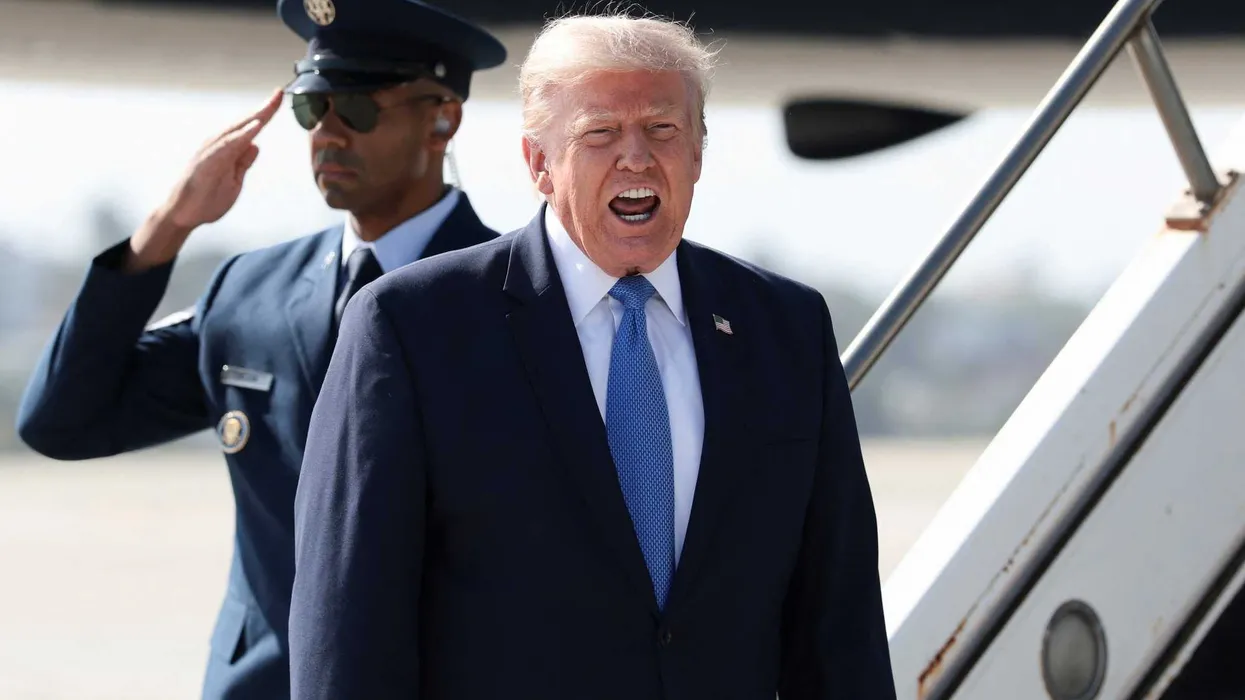
A report published Thursday by The Wall Street Journal uncovered new details about President Donald Trump's efforts to solicit large-scale contributions from corporate donors to finance projects including a luxury ballroom at the White House and his presidential library.
According to the Journal, Trump retains a fundraiser named Meredith O'Rourke, whose role involves pressing corporations to direct funds toward the president's initiatives. The newspaper reported that Trump asks O'Rourke for near-nightly progress updates on her fundraising efforts.
"Trump asks O'Rourke which companies and donors have cut checks and which haven't, and for how much," the Journal reported. "He often asks her to make much larger financial requests than she was planning—for some donors the ask is $5 million, for others it is $50 million. And the president gives her names to call, often including people who have recently met with him, according to people with knowledge of the calls."
The Journal estimated that Trump has raised more than $800 million from corporate donors over the course of his second term. The newspaper concluded that the practice appears to be entirely legal under current law.
"No laws prohibit presidents from raising unlimited sums of money for nonprofits, like the ones used for the ballroom and his presidential library, his super PAC, or political issue committees," the Journal explained. "For most of these types of transactions, public disclosure of donors isn't required and reporting on spending is infrequent."
Presidential libraries have been built with private funds raised through nonprofit foundations since the Franklin D. Roosevelt administration. The super PAC framework traces to the 2010 Citizens United Supreme Court ruling and a subsequent federal appeals court decision in SpeechNow.org v. FEC, which together eliminated contribution limits for independent political committees. Both channels permit largely undisclosed corporate giving, leaving the practices described in the Journal's reporting without clear legal barriers.
Despite the apparent legality, numerous critics characterized the president's actions as deeply corrupt, noting that many of the companies targeted for contributions have pending business before the federal government. The direct solicitation of corporate donors—some of whom had recently met with the president—adds to a broader set of ethics concerns raised during Trump's political career, including Emoluments Clause litigation during his first term and scrutiny of the continued operation of his private businesses while in office.
Senator Elizabeth Warren (D-Mass.) wrote: "Donald Trump is the most corrupt president in our nation's history."
Adam Serwer, staff writer at The Atlantic, remarked that Trump technically "can't be bought" because "he is subscription based." Serwer quipped: "You have to keep bribing him forever."
Eric Rauchway, a historian at the University of California, Davis, highlighted the Journal's reporting that O'Rourke sometimes tells prospective corporate donors that "the boss wants this money," drawing a comparison to organized crime tactics.
"Guys, 'the boss wants this money' is not 'fundraising,'" wrote Rauchway. "it's a Piranha Brothers operation."
Scott Horton, contributing editor at Harper's, drew a similar parallel. "I am trying to see how this operation differs from a classic organized crime protection racket," Horton wrote. "I see little distinction."
Amanda Carpenter, writer and editor at Protect Democracy, argued that corporations that accede to such demands share responsibility. "If a politician is selling access and favors, CEOs aren't off the hook," she observed. "They don't get to just pay to play. It's not a free pass to bribe and extort and corrupt our economy. There are many legal tools to track that on the private side and hold them account for their end of these dirty deals."
