NYT's Bouie: Trump's Celebrity Charisma Built a Coalition No Republican Can Replicate
Key Takeaways
- •Jamelle Bouie attributes Trump's electoral success to decades-long celebrity status that mobilizes low-propensity voters who often only cast ballots for Trump himself.
- •Trump's coalition has underperformed in midterm and off-year elections, contributing to losses for high-profile endorsed candidates in 2022 despite favorable conditions for Republicans.
- •Bouie argues that Trump's celebrity insulates him from accountability because many supporters do not perceive him as a traditional Republican politician.
- •No current Republican contender, including figures like Ron DeSantis and JD Vance, possesses the level of pre-political national fame that Bouie considers essential to rebuilding Trump's coalition.
- •The 22nd Amendment's two-term limit means Republicans could face an open primary as early as 2028 without a candidate capable of matching Trump's celebrity-driven appeal.
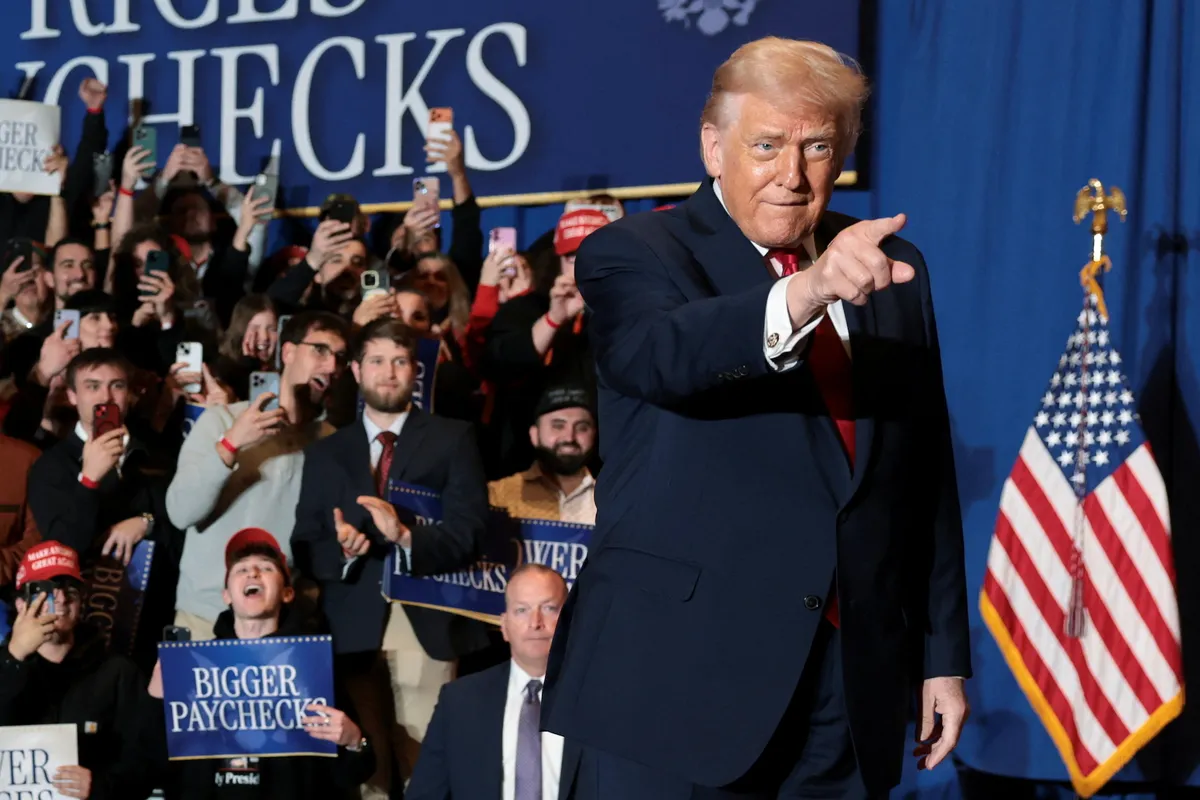
President Donald Trump possesses a singular quality that has made him considerably harder to defeat than a typical politician while simultaneously rendering him virtually impossible for the Republican Party to replace, according to New York Times columnist Jamelle Bouie.
The Times released a video on Tuesday featuring Bouie, a prominent liberal political commentator, as a guest on its podcast "The Opinions." In the segment, Bouie argued that political observers have consistently underestimated one attribute central to Trump's political success: his celebrity charisma, which he said forged a durable and unique coalition around the former president. Trump's celebrity predates his political career by decades, spanning real estate branding, best-selling books, and a 14-season run as host of NBC's "The Apprentice" — a level of mainstream cultural familiarity no other Republican figure has brought to a presidential campaign.
"I think people understate the importance of Trump's kind of celebrity charisma," Bouie said. "The thing that has delivered him victories or near-victories in presidential elections is that he can turn out loosely attached voters, people who otherwise would not be voting and who, critically, in some cases, don't even vote down ballot. They just vote for Trump. And in doing so, they've delivered him these very narrow victories. And I tie that explicitly to the fact that he's a celebrity first and foremost to many, many Americans."
Trump's capacity to mobilize so-called low-propensity voters during presidential election cycles has been widely discussed. However, that same dynamic has created difficulties for the Republican Party during midterm and off-year elections. In those contests, higher-propensity Democratic voters have tended to exceed expectations, while many voters within Trump's coalition have stayed home — even when Trump has actively campaigned for endorsed candidates. The 2022 midterms illustrated this tension: despite historically favorable conditions for the out-party, several high-profile Trump-endorsed candidates in swing-state Senate and gubernatorial races lost, contributing to a Republican performance that fell short of widespread projections of a "red wave."
This pattern has generated growing concern within the GOP about voter turnout in a post-Trump political landscape, particularly once the former president is no longer eligible to seek the presidency. Under the 22nd Amendment, a president is limited to two terms, meaning that if Trump were to win another term, Republicans would face an open primary in 2028 with no incumbent — and, by Bouie's analysis, no candidate capable of replicating the coalition Trump built.
Bouie further contended that Trump's celebrity status has insulated him from political accountability, as his supporters frequently dismiss or disbelieve controversial statements and actions.
"They don't register or read him as a Republican," Bouie continued. "Which does two things. First, it's hard to convince voters that he'll do things that Republicans do that they don't like. You can say, 'He's going to cut taxes for rich people.' He may have already done it, but precisely because he's not associated with the Republican Party in this intimate way, a lot of voters say, 'Oh, well, you know, is he really? He signed the checks. Is he really going to be that bad?'" Bouie's reference to tax cuts aligns with the 2017 Tax Cuts and Jobs Act, the signature Republican legislation of Trump's presidency, which lowered individual and corporate tax rates and whose provisions for high earners drew sustained Democratic criticism.
Looking ahead, Bouie suggested that this dynamic poses a significant challenge for any future Republican presidential contender seeking to inherit Trump's base of support. Figures such as Florida Governor Ron DeSantis and Senator JD Vance have been frequently discussed as potential standard-bearers, but none entered politics with the kind of pre-existing national celebrity that Trump carried from his decades in entertainment and business.
"So I think there's no other Republican politician who has that, who had this decades-long, pre-political career where they essentially became a byword for wealth," he concluded. "Trump was associated with wealth and pop culture. That doesn't exist for anyone else. And I'm very skeptical that any of the people who seem to be presidential contenders have the ability to reconstitute or pull together anything like the Trump coalition."
The full discussion is available through The New York Times.

