SpaceX Ends Falcon 9 Bookings Beyond 2028, Pivoting Fully to Starship
Key Takeaways
- •SpaceX has stopped accepting new dedicated Falcon 9 launch bookings for missions scheduled beyond 2028, alongside halting rideshare program reservations extending into early 2029.
- •A significant portion of remaining Falcon 9 availability has been allocated to internal projects, including SpaceX's planned orbital AI data center initiative.
- •Small satellite operators face mounting pressure as alternative launch providers typically charge higher per-kilogram costs and have less proven track records compared to Falcon 9.
- •Starship has not yet demonstrated operational commercial payload delivery, creating uncertainty about whether it can fill the gap left by reduced Falcon 9 availability.
- •Shares of commercial space companies including AST SpaceMobile and Rocket Lab declined following the announcement, though Rocket Lab could benefit from displaced Falcon 9 customers over the longer term.
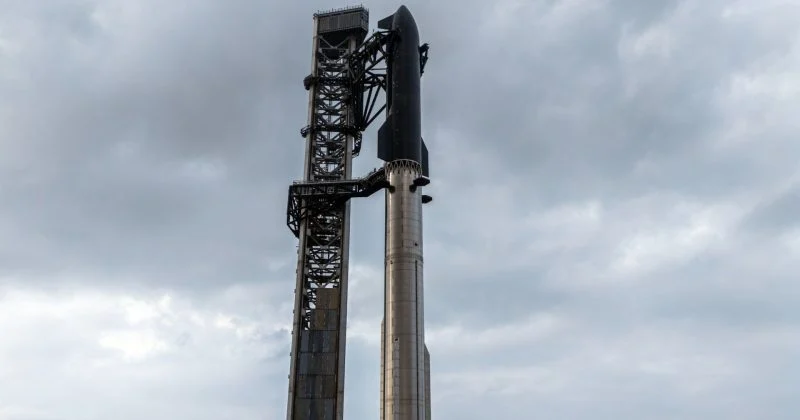
SpaceX has stopped accepting new dedicated launch bookings on its Falcon 9 rocket for missions scheduled beyond 2028, a move that effectively signals the beginning of the end for the most prolific launch vehicle in history. Falcon 9 has been the workhorse of the global launch market for years, responsible for the vast majority of U.S. orbital launches and a cornerstone of the deployment of SpaceX's own Starlink broadband constellation. The company is now channeling its resources toward Starship, the massive next-generation rocket that Elon Musk has positioned as the future of endeavors ranging from Mars colonization to orbital infrastructure.
Falcon 9 Manifest Nears Capacity
SpaceX's Falcon 9 launch schedule is approaching full capacity. A significant portion of the remaining availability has been set aside for internal projects, including the company's planned orbital AI data center initiative, leaving increasingly limited room for external customers.
The company has also halted future reservations for its widely used rideshare programs — the Transporter sun-synchronous orbit missions and the Bandwagon mid-inclination launches — for dates extending beyond late 2028 into early 2029. These programs had become a critical access pathway for small satellite operators seeking affordable rides to orbit, offering pricing that dramatically lowered the barrier to entry for startups, universities, and government agencies building small spacecraft.
One of the few remaining bookable opportunities, the SEOPS Waymaker 2028 mission, is already fully sold out with substantial waitlists. According to reports, booking constraints first began surfacing in June 2026, with the formal policy shift becoming clear by mid-July.
Small Satellite Operators Face Mounting Pressure
As Falcon 9 availability tightens, small satellite operators are already confronting potential launch delays and growing waitlists. Alternative launch providers do exist — Rocket Lab's Electron, Firefly Aerospace's Alpha, and Relativity Space's Terran vehicles among them — but they typically come with higher per-kilogram costs, less proven track records, or limited launch cadence compared to Falcon 9's industry-leading reuse and turnaround capabilities.
For emerging remote-sensing and communications constellations that rely on getting satellites into orbit on schedule, delays could mean missed revenue windows and potentially broken commitments to both customers and investors. The timing is particularly sensitive given the rapid growth of the small satellite economy, with dozens of startups building networks for Earth observation, maritime tracking, and global connectivity.
If Starship does not scale its commercial operations quickly enough to fill the gap, the industry may face a genuine launch capacity crunch. Starship remains in development and has yet to demonstrate operational commercial payload delivery, creating uncertainty about how seamlessly the transition from Falcon 9 can be executed.
Market Reaction and Investor Implications
Stocks tied to the commercial space sector saw minor declines following the announcement. AST SpaceMobile (ASTS) and Rocket Lab (RKLB) both dipped as investors assessed the implications of a tightening launch capacity landscape. However, companies like Rocket Lab could also stand to benefit long-term from displaced Falcon 9 customers seeking alternative ride providers, though the near-term sector reaction reflected broader uncertainty.
SpaceX has not confirmed a formal retirement timeline for Falcon 9, leaving open the question of whether the rocket may continue flying beyond 2028 under existing contracts. The company's approach mirrors its broader strategy of treating each generation of launch vehicles as a stepping stone toward full reusability and interplanetary transport, the same philosophy that drove the earlier retirement of Falcon 1 and the planned phaseout of Falcon Heavy.

