South Korean Finance Minister Confident in Economic Strength, Pledges Stock Market Stability Measures
Key Takeaways
- •South Korea raised its 2025 economic growth forecast from 2 percent to 3 percent, attributing the upward revision to a semiconductor supercycle and easing Middle East geopolitical uncertainties.
- •The economy expanded 3.8 percent year-on-year in the first half, supported by record exports that reached $102.2 billion in June amid strong global demand for memory chips.
- •Surging demand for high-bandwidth memory chips used in artificial intelligence applications has further bolstered the current semiconductor upcycle, benefiting industry leaders Samsung Electronics and SK hynix.
- •The government announced restrictions on transactions involving single-stock leveraged ETFs to curb excessive market swings, particularly those tied to Samsung Electronics and SK hynix.
- •Finance Minister Koo pledged continued efforts to improve the structural health of the capital market and foster new industries to make South Korea a more reliable investment destination.
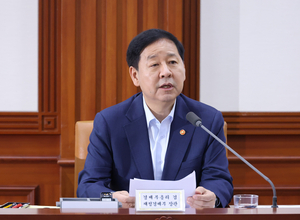
South Korea's Finance Minister Koo Yun-cheol expressed strong confidence in the nation's economic performance on Thursday, describing the country's results as "unprecedented" and pointing to sustained growth and robust export activity as evidence of underlying strength.
Speaking during a meeting with economy-related ministers in Seoul, Koo stated: "The South Korean economy is more solid than ever and is achieving unprecedented results."
"Both real-economy indicators and macroeconomic indicators, including growth, exports, inflation, and consumer and business sentiment indexes, continue to show a steady upward trend," he added.
The minister's remarks come after the government raised its 2025 growth forecast to 3 percent last month, up from a previous projection of 2 percent. Officials attributed the upward revision to an ongoing semiconductor supercycle and easing geopolitical uncertainties surrounding the Middle East.
South Korea, Asia's fourth-largest economy, expanded 3.8 percent in the first half of the year compared with the same period a year earlier, according to the latest data. Exports — the country's primary economic engine, accounting for roughly half of GDP — reached a record $102.2 billion in June, driven by firm global demand for memory chips. South Korea is the world's leading producer of memory semiconductors alongside China, with Samsung Electronics Co. and SK hynix Inc. dominating the global DRAM and NAND flash markets. The current upcycle has been further supported by surging demand for high-bandwidth memory chips used in artificial intelligence applications, a segment where both companies have expanded production capacity.
Addressing recent volatility in the domestic stock market, Koo said the government is taking active steps to restore stability and enhance the country's appeal to investors.
"The government is responding swiftly to mitigate stock market volatility, and recently, the stock index has shown signs of stabilization," he said. "We will continue our efforts to improve the structural health of the capital market and foster new industries to make it a more reliable investment destination."
To curb excessive market swings, the government has announced a package of measures, including restrictions on transactions involving single-stock leveraged exchange-traded funds. ETFs tied to Samsung Electronics and SK hynix, which were introduced in May, have been widely identified as a significant contributor to recent volatility in the domestic equity market. Leveraged ETFs use derivatives to multiply daily returns of an underlying stock, which can amplify price swings — particularly in a market where a few large-cap semiconductor names carry heavy index weightings.
(Yonhap)

