Seoul's Subsidized Bathhouse Program Provides Critical Shelter for Vulnerable Residents During Extreme Heat
Key Takeaways
- •Seoul's Companion Bathhouse program offers free overnight bathhouse stays for jjokbang village residents during July and August, with government subsidies covering the standard 12,000 won per-night fee.
- •Since launching six nighttime heat shelters last month, the city recorded 990 total visits, with Dongnam Sauna alone accounting for 360 visits at an average of 14 users per night.
- •The program also provides daytime bathing vouchers that increase from two to four visits per month during peak summer and winter months for residents lacking adequate bathing facilities.
- •A 2024 operator satisfaction survey rated the program 4.6 out of 5, with half of participating bathhouse businesses reporting that it helped increase their revenue.
- •Many jjokbang residents rely on South Korea's National Basic Livelihood Security Program and say they could not afford bathhouse visits without subsidies, raising concerns about the program's long-term viability.
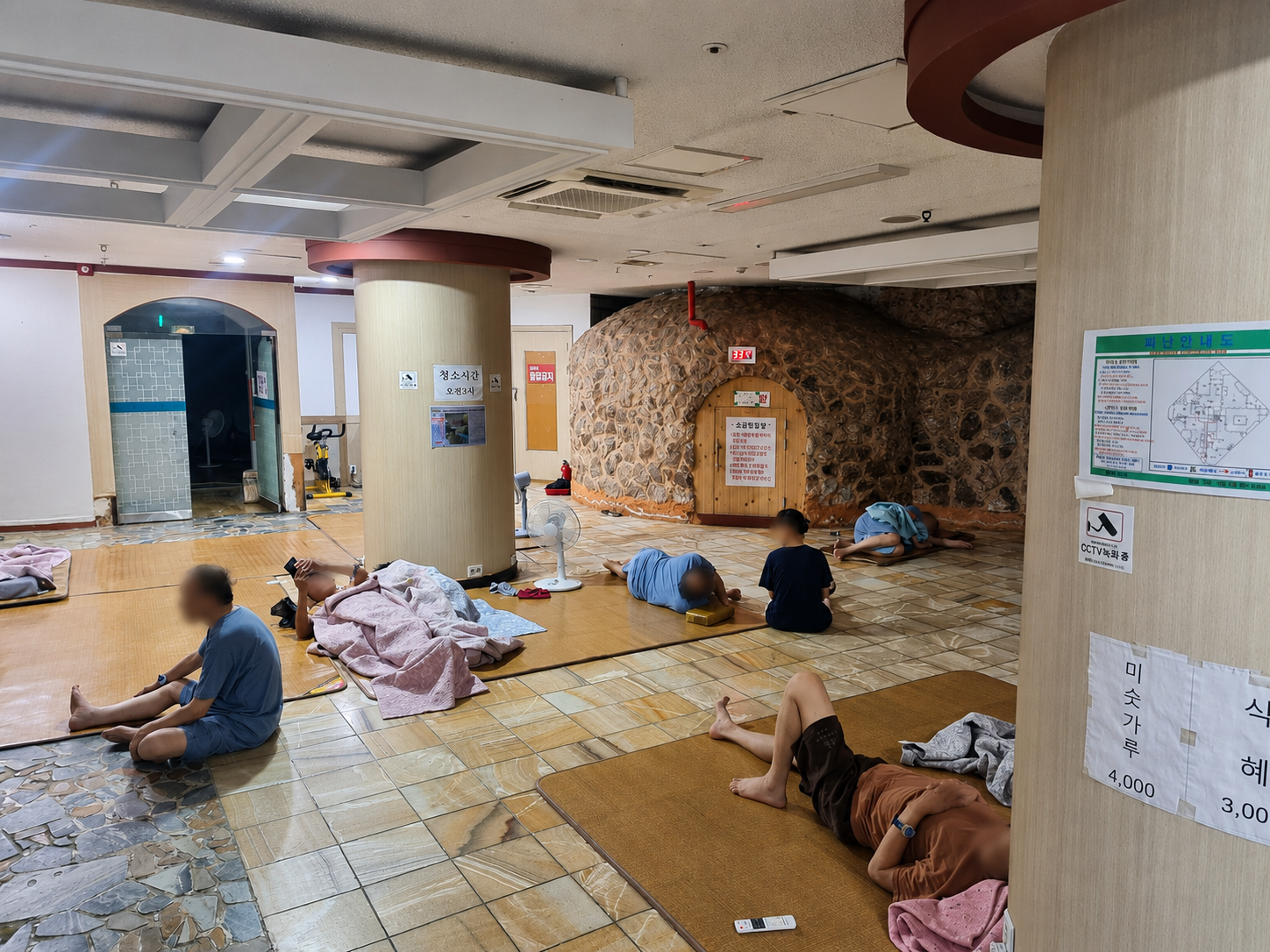
As Seoul grapples with extreme summer heat, the city's Companion Bathhouse program has emerged as a vital lifeline for residents of jjokbang (tiny room) villages — cramped living spaces, often just a few square meters, that typically lack fans or air conditioning and house some of the capital's most economically vulnerable residents, many of them older adults living alone.
At 9 p.m. on August 4, about 10 residents from nearby jjokbang communities gathered at Dongnam Sauna, located in the basement of a commercial building near Yeongdeungpo Market in western Seoul. The city's nighttime low had reached 29.1 degrees Celsius.
"This year, I can take a shower at the bathhouse and sleep somewhere with air conditioning, so I don't have to worry about anything," said 60-year-old Seo Jeom-yeol, a jjokbang village resident. "You start sweating just by standing outside. Here, I can sleep comfortably in the cool air, wash up in the morning and head out. I don't have to worry about waking up because it's too hot."
Using vouchers distributed by a local counseling center, jjokbang residents can use the facility free of charge every night from 9 p.m. to 6 a.m. the following day. The overnight stay normally costs 12,000 won, but Seoul Metropolitan Government subsidies cover the full cost throughout July and August.
A Refuge Beyond Cooling
South Korea has faced growing numbers of heat-related illnesses and deaths during increasingly intense summer heat waves in recent years, making such shelters especially critical for elderly and low-income residents who are disproportionately affected.
Since the city launched six nighttime heat shelters last month, they have recorded 990 visits. Dongnam Sauna alone accounted for 360 visits, averaging about 14 users per night.
After bathing, residents gather in the sauna lounge to socialize before sleeping. One resident, who has lived alone in a jjokbang room for decades, described the sense of community: "We gather with neighbors around the same age, watch TV, talk and sleep together. It feels like an old-fashioned neighborhood gathering place."
Kim Young-mi, 56, emphasized that the facility also serves a protective function for vulnerable neighbors. "These days, so many people are dying from heat-related illnesses that it's impossible not to worry about the elderly around us," she said. "Since everyone here knows each other, we can check on one another's health and make sure everyone is doing okay."
During the daytime, the facility operates as a regular public bathhouse. Residents who often lack adequate bathing facilities receive vouchers for two visits per month. The allocation increases to four visits during the peak summer months of July and August and the winter months of January and February.
Visible Changes in Participants
Dongnam Sauna owner Seo Hyun-jung, 66, said the program has brought noticeable changes to many participants.
"At first, most people simply came to wash and leave," she said. "Now they take better care of their hair and pay more attention to how they dress. It's not just their appearance that has changed — their expressions are softer and the way they speak has become gentler. It made me realize how something as simple as bathing can change a person."
Benefits for Small Business Owners
The program has also provided a boost to small business owners operating public bathhouses, many of which have struggled with declining customers and rising utility costs. In addition to receiving city subsidies for admission fees, participating bathhouses have gained a steady stream of regular customers.
From 2023 through last year, the Companion Bathhouse program recorded 90,835 visits. In a 2024 satisfaction survey of participating bathhouse operators, the program received an average rating of 4.6 out of 5. Half of participating businesses reported that it had helped increase their revenue.
Concerns About the Program's Future
Despite its success, many jjokbang residents worry that this refuge could disappear. The residents, most of whom rely on South Korea's National Basic Livelihood Security Program — a government assistance system for those with little or no income — say the subsidized bathhouse visits are an expense they cannot shoulder independently.
"A visit costs more than 10,000 won a day. If I had to pay for it myself, I simply couldn't afford it," Kim said. "Most of us rely on basic livelihood assistance. If we spent 200,000 to 300,000 won a month on bathhouse fees, we wouldn't know how we'd pay for food."
Seo Jeom-yeol expressed a single wish: "I just hope they keep the program going. That's all I ask."
This article from the Hankook Ilbo, the sister publication of The Korea Times, is translated by a generative AI system and edited by The Korea Times.
Source: The Korea Times
